Community Bulletin
Fred W. Eberle Technical Center in Buckhannon is enrolling students in its commercial driver’s license (CDL) training program, an accelerated course that can be completed in five to seven weeks. Both daytime and limited evening sessions are available. Read more →
This story brought to you paywall-free, courtesy of the My Buckhannon team and our community partners
With World Wildlife Day observed on March 3 and spring not far behind, a West Virginia University researcher is drawing attention to a living pharmacy hiding in plain sight across the Appalachian Mountains — and warning that the very plants that make those forests remarkable are in trouble.
Kirsten Stephan, teaching professor of forest resources management and program coordinator of forestry in the WVU Davis College of Agriculture and Natural Resources, says the region’s medicinal and aromatic plants support biodiversity, sustain rural economies and carry centuries of traditional knowledge. Overharvesting, she says, threatens many of them.
The richness of those forests has ancient roots. The Appalachian Mountains are among the oldest mountain ranges on Earth, and because they were largely unglaciated during the last ice age, plant species were able to survive and diversify across millions of years — an ecological legacy unlike almost anywhere else in the temperate world.
“The Appalachian Mountains are a global biodiversity hotspot for temperate flora,” Stephan said. “Ancient, unglaciated landscapes allowed species to persist and diversify over millions of years. In Appalachia’s mixed hardwood forests, shade-loving medicinal and edible plants thrive in remarkable abundance.”
Indigenous land management practices also shaped the forest communities we see today. Stephan notes that Native American burning transformed Appalachian forests into diverse, open systems long before European settlement.

“Native American burning shaped Appalachian forests into dynamic, open, oak-dominated systems with diverse plant communities living below the forest canopy,” she said. “Cultural fire practices increased light, recycled nutrients and created habitat mosaics that likely enhanced the diversity of many edible and medicinal species.”

Kirsten Stephan, teaching professor of forest resources management and program coordinator of forestry, WVU Davis College of Agriculture and Natural Resources (WVU Photo)
Among the most iconic of Appalachia’s medicinal plants is American ginseng — a slow-growing root that has drawn commercial interest from East Asian markets for centuries. Stephan said the plant is paying the price for its own value.
“American ginseng is perhaps the most well-known Appalachian medicinal plant, valued in East Asian markets for centuries as an adaptogen that supports immune and metabolic health,” she said. “It commands high prices, but slow growth and heavy harvesting pressure have led to population declines, making sustainable wild-harvest regulations and forest farming initiatives critical.”
Black cohosh, widely used for menopausal and hormonal support, faces similar pressure from the supplement industry.

“Its popularity in herbal supplements has created significant commercial demand,” Stephan said. “While still relatively widespread, localized overharvesting threatens wild stands, underscoring the need for monitoring, responsible sourcing and cultivated supply chains.”
Goldenseal, prized for its antimicrobial properties, has been hit even harder. Both American ginseng and goldenseal are listed in Appendix II of CITES — the Convention on International Trade in Endangered Species — because of concerns about their commercial trade.
“Goldenseal, known for its antimicrobial alkaloids, has become emblematic of conservation challenges in the herbal trade,” Stephan said. “Once abundant, it has been heavily exploited and is now considered at risk in many parts of its range. Protecting goldenseal requires habitat preservation and a shift toward propagation, away from extractive wild collection.”
Ramps — the wild leeks celebrated at festivals across Appalachia and increasingly sought by restaurants nationwide — present a more recent conservation concern.
“Ramps have gained national culinary fame. Their pungent flavor makes them a seasonal delicacy, celebrated in Appalachian festivals,” Stephan said. “Yet ramps reproduce slowly, and whole-plant harvesting can devastate colonies. Education around partial harvesting and cultivation is essential to prevent depletion.”

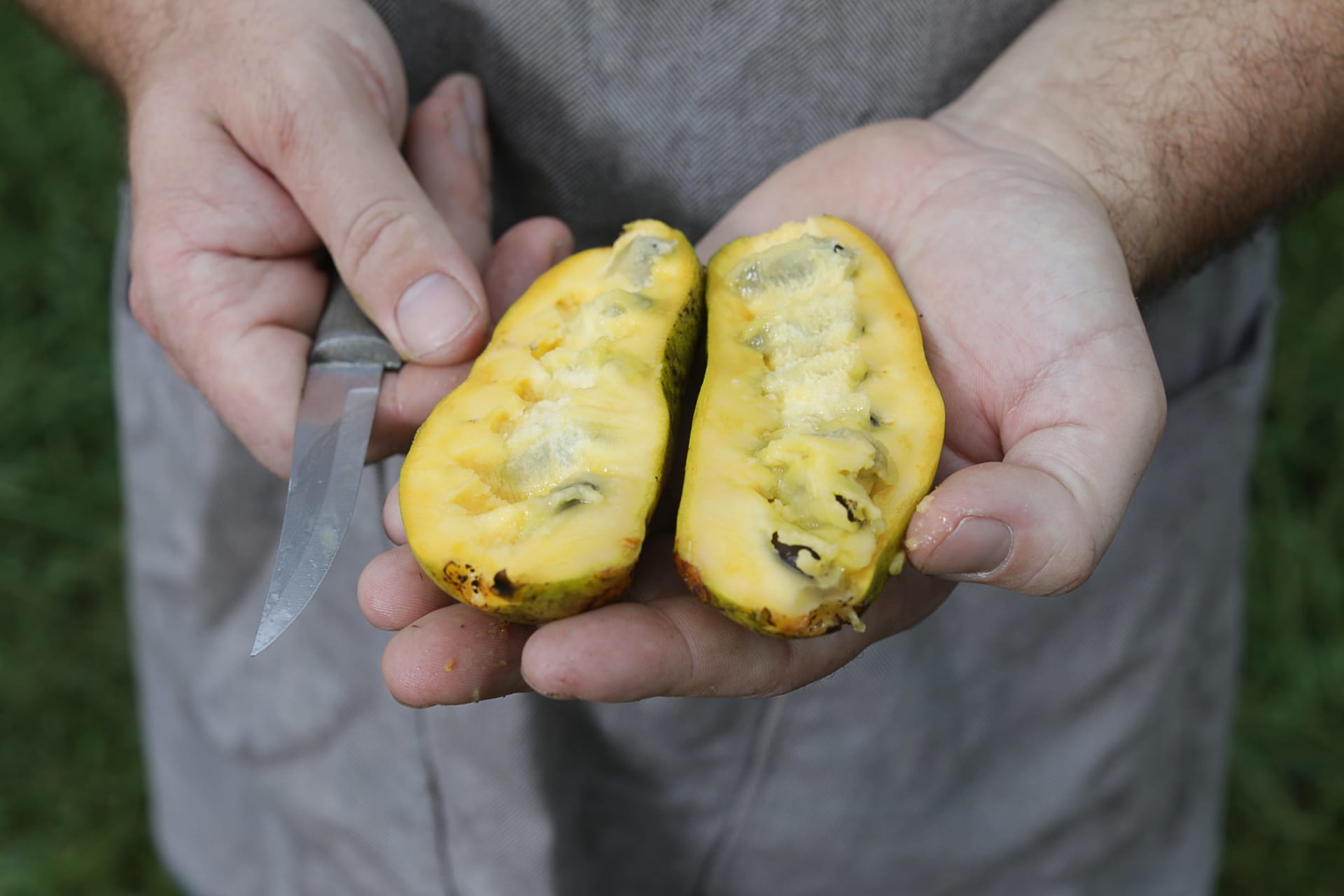
On a more hopeful note, Stephan points to the pawpaw — Appalachia’s largest native fruit — as a model for sustainable development.
“The pawpaw represents Appalachia’s largest native fruit. With tropical notes of banana and mango, pawpaw is gaining attention in regional food systems and agroforestry projects,” she said. “As interest grows, it offers an opportunity to promote perennial agriculture that mirrors forest ecology while strengthening local economies.”
The solution to many of these pressures, Stephan argues, already exists within the landscape itself. Forest farming — growing medicinal and edible plants beneath the existing forest canopy — is recognized by the USDA as one of its five core agroforestry practices.
“Many medicinal species are slow-growing perennials that require intact forest canopy, rich soils and stable microclimates,” she said. “Timber extraction, land conversion and invasive species disrupt these delicate environments, but forest farming has emerged as a promising solution. By cultivating high-value botanicals beneath existing tree cover, landowners can generate income without clearing forests. This model supports biodiversity, improves rural livelihoods and reduces pressure on wild plant populations — demonstrating that conservation and economic development need not be opposing forces.”
Climate change adds urgency to the challenge.

“Shifts in temperature, changing precipitation patterns and emerging pests threaten sensitive habitats,” Stephan said. “Species adapted to cool, moist microclimates may see their habitats get smaller, making monitoring essential for conservation planning.”
For Stephan, what’s at stake extends well beyond the fate of individual plant species.
“Protecting Appalachian medicinal and edible plants safeguards more than biodiversity. It preserves traditional knowledge, supports regional food sovereignty and maintains genetic resources with unexplored pharmacological potential,” she said. “Appalachia is a powerful example of how ecological stewardship, cultural heritage and sustainable enterprise can intersect to build a resilient future.”
World Wildlife Day is observed annually on March 3, a date set by the United Nations in 2013 to mark the signing of the Convention on International Trade in Endangered Species.