Community Bulletin
Since joining Vandalia Health, the former Davis Health System has widened access across central West Virginia. Primary care remains the front door — now at five clinics, including Buckhannon Medical Care, backed by a 190-location network. Read more →
This story brought to you paywall-free, courtesy of the My Buckhannon team and our community partners
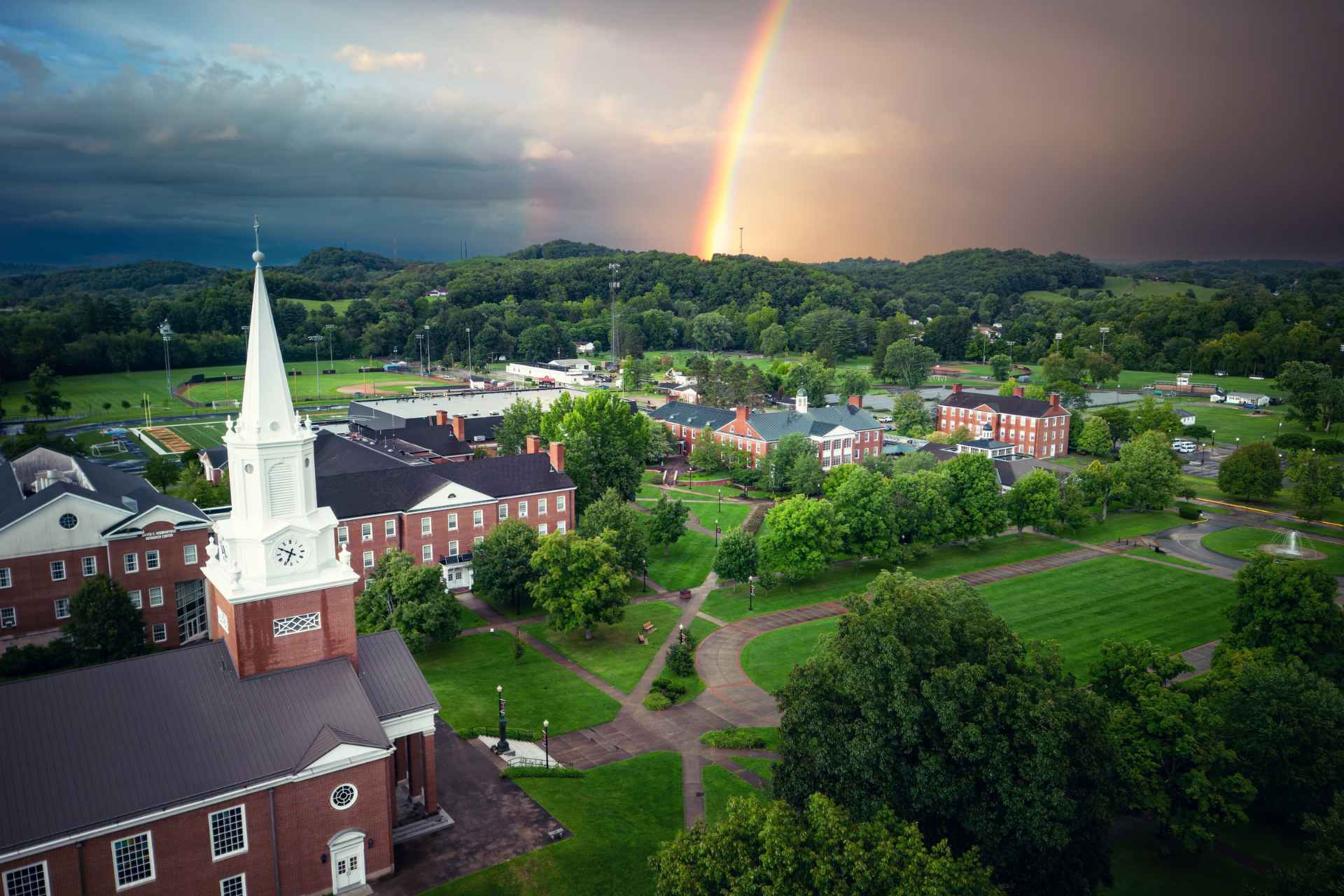
West Virginia Wesleyan College supports an estimated $75.5 million in annual statewide economic output and 605 jobs, according to a report from an association of six private nonprofit colleges in West Virginia.
The 2025 Economic Impact Report is a project of West Virginia Independent Colleges and Universities, which helps advance the interests of those colleges and their students. A grant from the Council of Independent Colleges funded the project.
The estimates use operating data supplied by the schools for 2025-26 and economic multipliers from the U.S. Bureau of Economic Analysis. They cover activity throughout West Virginia, and Wesleyan’s 605-job figure includes jobs supported beyond the college’s own payroll.
Wesleyan’s total includes $47.3 million in modeled direct economic activity, $10.7 million in estimated supplier activity and $17.5 million in estimated household spending effects. The direct activity includes college operations, student spending, visitors and capital improvements.
“West Virginia Wesleyan College believes that being part of a community means contributing to its success,” Wesleyan President James Moore said in an October 14 news release. “For more than 130 years, our impact has extended beyond the classroom and campus, from creating and supporting jobs to driving economic activity and preparing graduates to strengthen our workforce.”

Wesleyan ranks second among the six institutions in both total output and jobs supported. The University of Charleston leads with $118 million in estimated output and 1,024 jobs. Davis & Elkins College is listed at $63.8 million and 530 jobs.
“Here in Buckhannon, in Upshur County, and throughout our region, we take great pride in being an economic catalyst and a community partner,” Moore said.
Locally, Wesleyan Chief of Staff and Vice President for External Affairs Ryan Thorn told the Buckhannon-Upshur Chamber of Commerce in August that the college employed about 300 full-time and part-time faculty and staff and contributed roughly $40 million to $50 million in economic impact to the community each year.
He also described $3 million to $4 million in facility investments over the preceding 18 months.
Across all six schools, the report estimates $391.9 million in annual statewide output and 3,013 jobs supported. In addition to Wesleyan, D&E and Charleston, the other members are Appalachian Bible College, Bethany College and Wheeling University.

“When you consider the collective economic impact of West Virginia’s independent colleges and universities, it’s clear that WVWC and our fellow WVICU member institutions play a vital role in creating jobs and opportunities, strengthening communities, and advancing the economic future of our state,” Moore said in the release.
The colleges reported a combined 1,427 employees, about $72.1 million in annual payroll and $150.2 million in 2025-26 operating budgets. They also reported $37.6 million in capital improvement spending and a combined fall 2025 enrollment of 6,458 students.
College operations account for the largest share of the modeled output: $238.4 million. Student spending accounts for an estimated $78.2 million, capital and facility spending for $62.6 million and visitor and event spending for $12.8 million.
“Operations remain the largest driver, but nearly two-fifths of direct activity comes from students, visitors, and capital investment – demonstrating that the economic footprint of independent higher education extends beyond college payrolls and purchasing departments,” the report states.
The analysis estimates how spending circulates through suppliers and households using the Bureau of Economic Analysis’ Regional Input-Output Modeling System, known as RIMS II. The student model applies an annual spending benchmark of about $10,488, excluding tuition and fees, to an estimated 4,645 students with a physical connection to campus. Distance-learning students are excluded.

“This spending extends the institutions’ economic reach into businesses that may have no direct contractual relationship with a college but serve students as part of the broader campus economy,” the report states.
Visitor spending uses a benchmark of about $1,736 per campus-connected student because comprehensive visitor counts and spending surveys were not consistently available across all six schools. The report says that figure is a way to estimate visitor activity, rather than a claim that each student individually generates that amount.
“It is a gross economic contribution measure, not a return-on-investment calculation and not a prediction of tax revenue,” the report notes.
The schools also reported 1,850 graduates in 2024-25 and 22,941 alumni living in West Virginia.
“Their collective value is therefore both immediate, through annual economic activity, and durable, through education, institutional presence, and human capital,” the report concludes.