Community Bulletin
For more than 120 years, the Elkins hospital now known as Davis Medical Center has been where the Potomac Highlands turns for care. Today that includes expert kidney care close to home — sparing many patients a drive out of the region. Read more →
This story brought to you paywall-free, courtesy of the My Buckhannon team and our community partners
In spring 2020, Nesha Sanghavi had a warehouse full of inventory and nowhere for it to go.
Chicka-d, the women’s wholesale apparel brand she had launched from her parents’ garage in 2011, was 95% dependent on the college market. When the pandemic closed campuses and sports came to a halt, she sat down and did what any founder dreads: She ran the numbers, then ran them again.
“All of our college business got put on hold,” Sanghavi remembered. “We thought we had to shut the business down, so I went through three different scenarios.”
All of them pointed toward liquidating the business.
A new thread to follow
Just a week later, that began to change.
Independent retailers and boutiques across the country started reaching out to Sanghavi. No ties to college licensing. No prior relationship to her business. They’d discovered her styles and had one request: swap the school logos for custom graphics.
A dog print. Candy iconography. Quotes about travel and love. Whatever spoke to their customers.
She didn’t hesitate to say yes.
Sanghavi had started her company in 2011 as a way to solve a problem she had faced as a Mountaineer cheerleader: Women’s college apparel had never really been designed with women in mind.

It could fit better, Sanghavi knew. It could feel better.
In that pivotal moment of the pandemic, when things began to turn around for Chicka-d, she realized there was an even larger white space in the market that needed to be filled.
“I had this thought, ‘We’re onto something.’ There’s a lot bigger potential by focusing on having great elevated basics that women want to wear, that fit them well. It’s great fabric, and it flatters their body types,” she said.
She was correct. Chicka-d began fulfilling custom and wholesale orders weekly, and the business doubled over the course of a year.
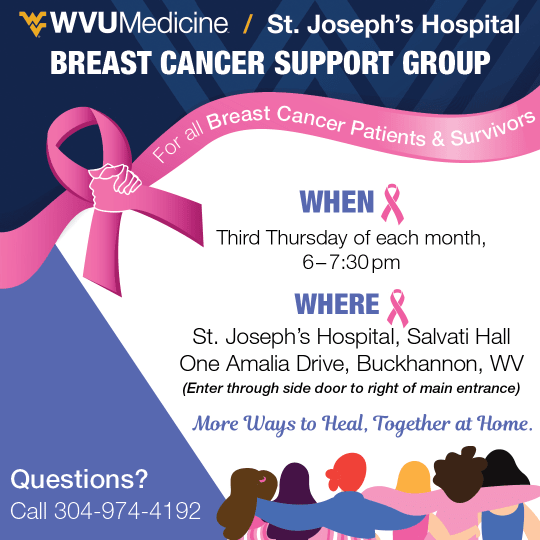
Today, Chicka-d operates across both the college licensing market and a growing wholesale business carried in boutiques, resort shops and national retailers. Sanghavi leads an all-women design team and a staff of 50.

“Going from my parents’ garage to this big warehouse, it feels like a dream, but it’s such an amazing reality to walk in here and be like, ‘This is my place,’” Sanghavi said.
In the changing room
Sanghavi was born and raised in Charleston. Her father had come to the United States from India to study engineering at WVU and stayed, building a business and raising a family. When it came time for college, family history gave the University a leg up.
“I always held WVU close to my heart and to our roots in the United States,” she said.
The Promise Scholarship helped seal her enrollment. And, according to Sanghavi, so did a promise her father made.

“He had told me if I went to WVU because I had a full scholarship, that he would buy me a new car after I graduated,” she said. “My dad tricked me. I never got that car.”
In 2004, she arrived on campus as an engineering major, following in her father’s footsteps. Engineering didn’t stick. Then came pre-med, which lasted about two years until organic chemistry.
“I got my first C in organic chemistry, and I realized, ‘I don’t think I want to be a doctor,’” she said.
She landed in what was then known as the College of Business and Economics, studying finance, good with numbers but uncertain about everything else. At the time, she felt she was falling behind. Looking back, she sees it was its own kind of education.
“I changed my major four times while I was at WVU, and I wouldn’t change that for the world. It really taught me to be courageous,” she said.
Hearing classmates rattle off their career plans while she had none was uncomfortable in a way that would later prove useful.
“I started talking to my friends like, ‘Hey, what are you pursuing?’ And everybody could answer it just like that,” she said.
“I was like, ‘Did you guys all have a secret meeting where you decided what your careers were going to be?’ And I was left out.”
Tailor-made merch
While Sanghavi’s academic path shifted, something else was taking shape.

As a varsity Mountaineer cheerleader from 2005 to 2008, she traveled the country with the men’s basketball and football teams: the Elite Eight, the Sweet 16, the Fiesta Bowl and the Sugar Bowl.
And every time she went looking for WVU women’s apparel to rep her team, she came back empty-handed.
“I went into almost every single store in Morgantown trying to find something that spoke to my personal taste. It wasn’t like I was looking for something so unique,” she said. “I just wanted something feminine and made for a woman’s body, not a unisex sweatshirt.”
So, she started making her own. She’d buy a tank top or T-shirt she liked, cut a Flying WV from gold and blue fabrics, stitch it on and wear it on the road.
“People on campus would approach me like, ‘Hey, I’ve never seen a WVU shirt like that. Where did you get it from?’ While in school, a little idea got planted in my brain, that maybe I’m not the only person who’s looking for better WVU women’s clothing,” Sanghavi said.

She filed that thought away.
Learning the pattern
In her senior year, she got a hint of what it might take to build something from the ground up.
Sanghavi entered a statewide business plan competition at WVU, partnering with a friend who had invented a whitewater rafting safety device. She wrote the business plan over spring break while on the road with the basketball team for the Sweet 16. The yearlong competition, hosted by the organization now known as the Encova Center for Innovation and Entrepreneurship, narrowed a pool of 250 applicants down to four finalists, who then pitched to a room of investors.
She and her partner finished third.

“They started coming at us with tons of questions and things that I hadn’t even thought of, and that really helped shape what I needed to do when I started my business,” she said.
That moment didn’t arrive right away. After graduating in 2008, Sanghavi took a banking job in Pittsburgh. It didn’t fit.
“This bug of entrepreneurship was kind of eating me alive. I knew that I wanted to be in more control of my destiny and what my path was going to be,” she said.
She left, moved to New York City and enrolled in fashion school. For nearly two years, she searched globally for the right manufacturer, someone who could meet her quality and design standards.
She would need one more piece: a license.
Making the cut
The first time she applied for the WVU retail license, the key to producing officially branded merchandise, the University turned her down.
“WVU is a huge institution to get the license from, and you have to compete against large conglomerates, it’s not an easy feat,” she said. “You need to have your ducks in a row, you have to prove that you have a unique concept and you have a go-to-market plan.”
She did.
Few brands were designing for the “missy” customer, the average-sized adult woman, while plus sizes were virtually nonexistent in the college apparel space. In a market dominated by unisex and junior sizing, their fit and style preferences were often ignored.
Sanghavi saw an opportunity to build Chicka-d with them in mind. WVU pushed her to prove it on paper: a full business plan, marketing strategy and projections for five and 10 years down the road.
“WVU really helped to train me and make sure that I had those things,” she said. “They poked me and said, ‘We’re not going to just give you the license, but we want to support you because you are a hometown girl.’
“I have WVU to thank for a lot of the jumping-off point. If I hadn’t gotten the license with WVU, I would not have the business today.”
Out in the world
Not long ago, Sanghavi was on a flight back from Europe. A woman boarded wearing a Chicka-d sweatshirt.

“I was like, ‘Wow, that’s crazy.’ This person was in Europe somewhere, enjoying my item,” she said.
It’s a moment she’s returned to, not because of how far the brand has traveled but because of why the woman was wearing it.
“They were connected to the product itself, and it spoke to them. That’s why they bought it. I love that feeling of letting women be able to express themselves,” she said.
Sanghavi’s path wasn’t predictable, she admitted, and it wasn’t guaranteed.
“My time at WVU, feeling insecure, taking risks with changing my major and trying to figure out what’s next for me really helped me with my business and my entrepreneurial journey.

“Being an entrepreneur, there is so much unknown. That uncomfortableness is something I actually got comfortable with. You have to be really comfortable being uncomfortable.”
What’s next for Chicka-d is still taking shape. New markets, new styles and new spaces. She doesn’t have a rigid 10-year plan, and she’s made her peace with that.
After all, the last time she made a 10-year plan, to hit $10 million in revenue, she achieved it the following year.
“I might not know where tomorrow is going to take me,” she said, “but I know I have all the tools within myself to figure it out.”