Community Bulletin
My Buckhannon's free weekly football pick 'em is back for 2026 with a rebuilt page, pick stats that go public once they lock and a leaderboard that crowns a season champion. Seven high school and college games a week, no entry fee and no password to sign in. Read more →
This story brought to you paywall-free, courtesy of the My Buckhannon team and our community partners
CHARLESTON, W.Va. — The following events happened on these dates in West Virginia history. To read more, go to e-WV: The West Virginia Encyclopedia at www.wvencyclopedia.org.
September 20, 1910: Dorothy Johnson Vaughan was born in Kansas City but moved at a young age to Morgantown, where she was valedictorian of Beechurst High School. Like fellow West Virginian Katherine Johnson, Vaughan became a mathematician and computer expert for NASA and made significant contributions to the U.S. space program.
September 20, 1911: Musician Frank De Vol was born in Moundsville. He scored more than 50 movies and earned five Oscar nominations but is best remembered for his theme music to the TV shows My Three Sons, Family Affair and The Brady Bunch.
September 20, 1914: Ken Hechler was born on Long Island, New York. Hechler served 18 years in the U.S. Congress and four terms as West Virginia’s secretary of state.
September 21, 1921: Musician Rex Parker was born in Maplewood, Fayette County. He performed on radio stations WCHS in Charleston and WJLS in Beckley. In 1941, he married Eleanora Niera, and they performed on radio and TV as Rex and Eleanor Parker until his death in 1999.

September 21, 1937: The West Virginia Conservation Commission acquired 6,705 acres in Kanawha County to create Kanawha State Forest. Redevelopment of the land, which had been heavily mined and timbered, was begun the next year by the Civilian Conservation Corps.
September 21, 1970: Filming began in Moundsville on the movie Fools’ Parade, based on the novel by Davis Grubb. The filming concluded one month later when Grubb came to Moundsville for a dinner, accompanied by his dog, making the $750 round trip from New York City in a taxi.
September 22, 1856: Albert Blakeslee “A. B.” White was born in Cleveland, Ohio. He was West Virginia’s 11th governor, serving from 1901 to 1905. He was the fourth person to serve as governor from Wood County, his adopted home.
September 22, 1893: Elizabeth Simpson Drewry was born in Virginia but soon moved to Elkhorn, McDowell County. In 1950, she became the first Black woman elected to the legislature. In 1956, she introduced a constitutional amendment allowing women to serve on juries in West Virginia.
September 22, 1948: Musician Buddy Griffin was born in Richwood. He performed on the Grand Ole Opry more than 200 times and contributed to over 150 recordings during a career spanning more than four decades. He also helped establish an accredited bluegrass music program at Glenville State College (now University).

September 22, 1975: Charleston native Sara Jane Moore failed in her attempt to assassinate President Gerald Ford in San Francisco. She later served prison time at the Alderson Federal Prison Camp.
September 23, 1923: Folk artist Herman Hayes was born in Elkview, Kanawha County. His woodcarvings were displayed in Washington and New York City, and he twice won the top award in the West Virginia Juried Exhibition.
September 23, 1938: The Mingo Oak was cut down after succumbing to the fumes of a burning coal refuse pile. The Mingo Oak, which stood near the Logan-Mingo County line, was more than 500 years old and may have been the largest white oak in the world.
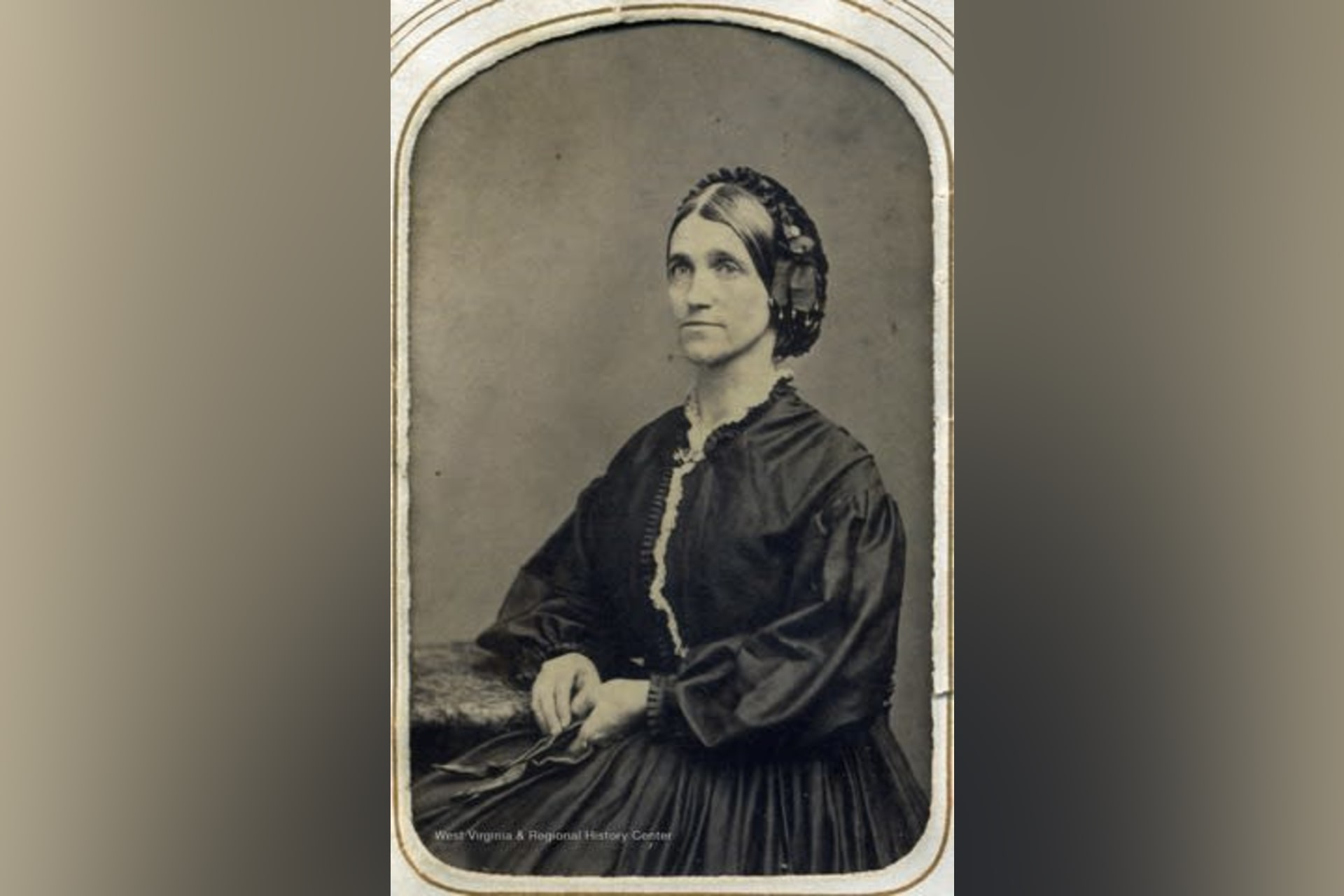
September 24, 1911: Laura Jackson Arnold died in Buckhannon. The sister of Stonewall Jackson, she was a staunch Unionist during the Civil War, opening her home to care for injured Union soldiers.
September 24, 1918: George Spencer “Spanky” Roberts was born in London, Kanawha County. He entered aviation cadet training with the first class of Tuskegee Airmen and became the first Black military pilot from West Virginia.

September 25, 1864: Confederate Col. George Smith Patton died from wounds suffered at the Third Battle of Winchester on September 19 during the Civil War. Patton, a Charleston lawyer, had organized the Kanawha Riflemen, a Virginia militia company. He was the grandfather of Gen. George S. Patton of World War II.
September 25, 1866: Editor and publisher M. T. Whittico was born in Virginia. He moved to Keystone about 1900 and made the McDowell Times the preeminent Black newspaper in West Virginia, with topics ranging from race issues to life in the coalfields. He also played a key role in McDowell County Republican politics.
September 26, 1781: Gen. Andrew Lewis died in Bedford County, Virginia. The Irish-born surveyor, militia officer and legislator led Virginia forces to victory over Cornstalk’s allied tribes at the 1774 Battle of Point Pleasant.
September 26, 1816: David Hunter Strother was born in Martinsburg. He was an artist and an author who used the pen name “Porte Crayon.”
September 26, 1863: The Great Seal of West Virginia was adopted by the legislature. The seal, which has remained unchanged, was designed by Joseph H. Diss Debar.

September 26, 1880: Labor leader John Bertram Easton was born in Pennsylvania. He came to Williamstown, Wood County, to work for Fenton Glass in 1907. He was president of the Parkersburg Trades and Labor Assembly before becoming president of the West Virginia Federation of Labor in 1924.
September 26, 1955: Wheeling College (now University) first opened its doors to students. It is West Virginia’s only Catholic institution of higher learning.