Community Bulletin
Morgan Nesland, PA-C, has joined WVU Medicine St. Joseph's Hospital as a pediatric provider at St. Joseph's Rural Health Clinic in Buckhannon, where she is accepting new patients from newborns through age 18. Read more →
This story brought to you paywall-free, courtesy of the My Buckhannon team and our community partners
By Crystal Hanes, WVU Statler College
Orbital debris poses a significant threat to the future of space-based operations and the sustainability of space as a whole. A West Virginia University student’s research is looking to change that outcome.
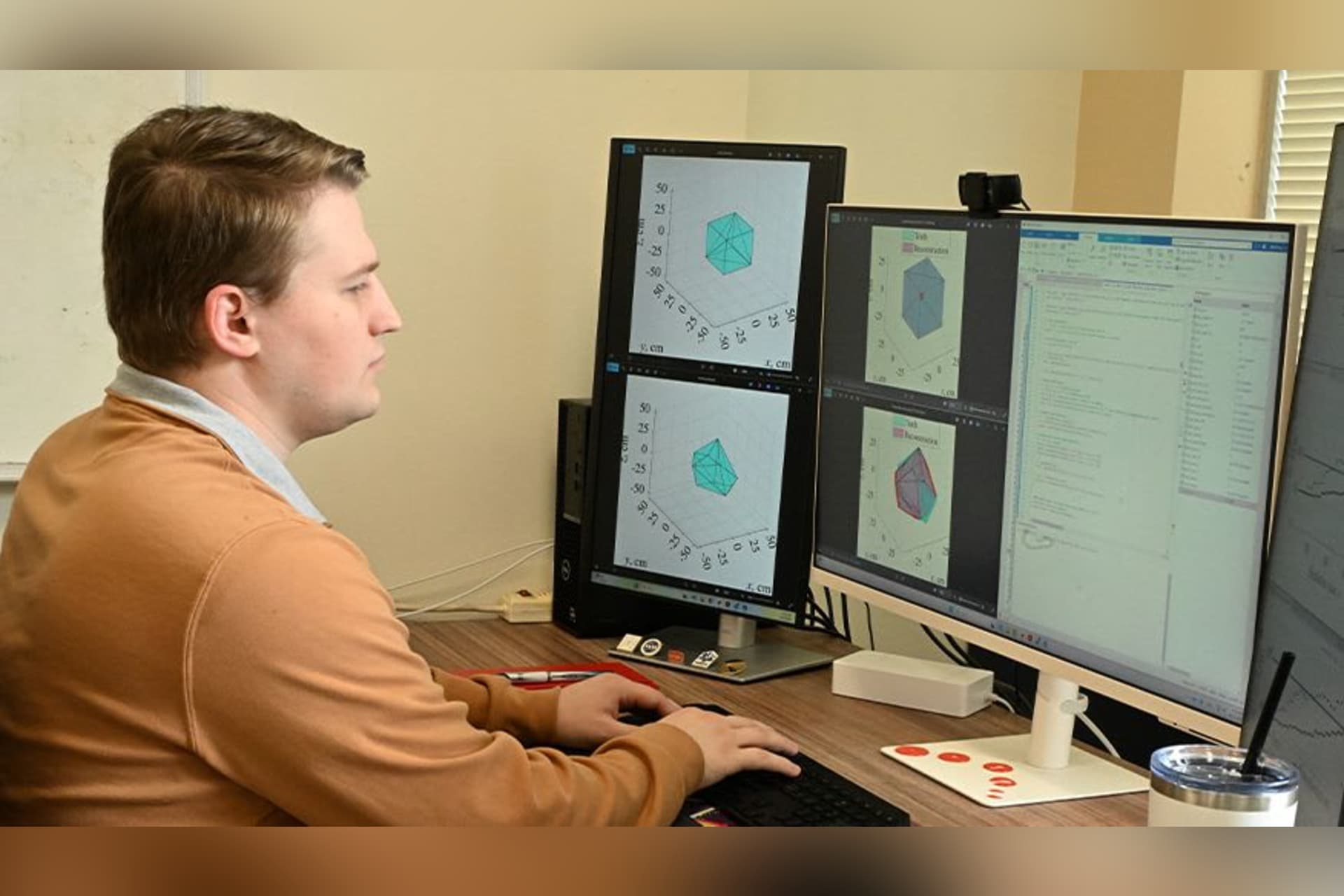
Aerospace engineering Ph.D. student Matthew Fox’s research advances the theoretical foundation needed to begin the commercialization of space-based lasers for orbital debris remediation. The research offers a way to estimate the size and properties of orbital debris which helps in planning laser-based removal missions.
By addressing the uncertainty of the operation, it allows the risks associated with orbital debris to be safely reduced without increasing the probability of creating additional debris through debris-debris or debris-satellite collisions while performing laser-to-debris engagements with space-based lasers.
The broader impacts of the research enable a future where the benefits of space-based operations such as global communications, disaster monitoring and scientific missions are not wasted due to negligent sustainable on-orbit practices. These operations include activities that are performed by a spacecraft in orbit including but not limited to monitoring, avoiding and removing orbital debris, and using lasers aboard the spacecraft to change the trajectory of orbital debris to reduce the danger it poses to active satellites.

“This research is imperative to ensuring sustainable space-based operations,” Fox said.
Although his research may not have been an easy feat, it all paid off for Fox as he was one of two WVU recipients of the John V. Breakwell Student Travel Award from the American Astronautical Society for the submission of his paper entitled “Space-Based Laser Remediation, Estimation, and Characterization of Irregularly Shaped Debris.” Nijanthan Vasudevan, a second-year Ph.D. student in aerospace engineering, was the other award recipient. This is the first time that WVU students have received this award.
Fox said, “Working on this research has required the use of all the problem-solving skills and technical education that I have acquired through my undergraduate and graduate studies at West Virginia University.”
The paper was selected through a highly competitive process involving a review panel of subject matter experts from across the nation where awardees were provided $2,000 in travel support to attend the Astrodynamics Specialist Conference hosted by the American Astronautical Society and cohosted by the American Institute of Aeronautics and Astronautics (AAS/AIAA). The quality of research that is accepted and presented at this conference consistently pushes the state of the art in astrodynamics and space-based operations research.
Working alongside him was undergraduate student Jonah Forinash as he contributed to the writing that led to the effective scientific dissemination of the completed research. Forinash also invested time and effort to advance the technical context of the paper for which the award was won.

Assistant professor in mechanical and aerospace engineering and director of the Space Systems Operations Research Laboratory, Hang Woon Lee, also played a part in the research process as he participated in innovative research that focused on active debris removal using space-based laser phenomenology.
Working under the guidance of Lee, Fox received funding by an Early Career Faculty grant from NASA’s Space Technology Research Grants Program to conduct their research.
The award not only highlights the dedication of Fox, Forinash and Lee but it also emphasizes the competitive research that is being conducted within the Space Systems Operations Research Laboratory at the Benjamin M. Statler College of Engineering and Mineral Resources.
“I am honored to have the opportunity to showcase to the broader astrodynamics community the quality of research that the Space Systems Operations Research Laboratory and the mechanical, materials and aerospace engineering department can produce,” said Fox.
Learn more about their research and other opportunities available in the mechanical and aerospace engineering department.