Community Bulletin
Hank Ellis Insurance Agency in Buckhannon is urging drivers to ask about an auto insurance rate lock — a way to hold a rate steady as premiums climb. The independent Erie agency, owner-operated since 2006, writes auto, home, life and commercial coverage. Read more →
This story brought to you paywall-free, courtesy of the My Buckhannon team and our community partners
Some of the latest advancements in technology are now enabling researchers at West Virginia University Davis College of Agriculture and Natural Resources to identify and monitor invasive species more efficiently than ever before.
By using state-of-the-art tools like drone-mounted thermal imaging cameras and AI image-recognition models, Yong-Lak Park and his team can survey large areas of land to look for signs of invasive species. Through a combination of human and AI identification, these signs can indicate where invasive species are located and help inform the best way to contain or remove non-native species.
Park’s research is made possible by nearly $1.7 million in support from multiple USDA agencies, including the National Institute of Food and Agriculture, U.S. Forest Service and the Animal and Plant Health Inspection Service.
Park, a professor of entomology at the Davis College, said AI automation was essential for sifting through the massive amounts of data they have gathered so far, but using scientists’ expertise in species identification is the key to getting accurate results.
“Specific insects make specific signs and symptoms, but sometimes different insects will leave similar symptoms, and that’s the hard part,” Park explained. “We can tell if something is wrong, but we cannot pinpoint the cause. That’s why we have a human in the loop, so they can go and check.”

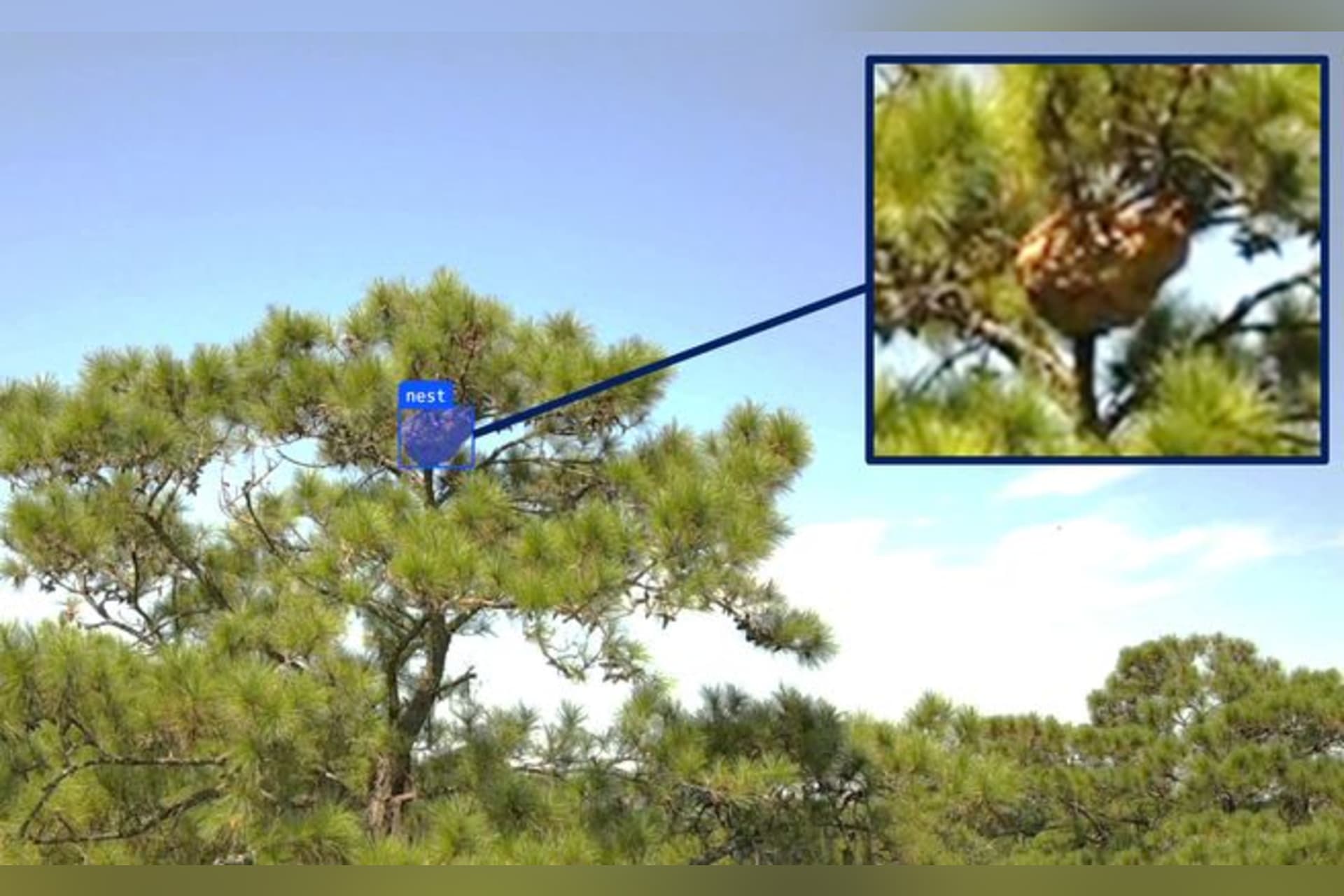
Park’s team is using an AI model called “YOLO,” or “You Only Look Once.” However, image recognition models like YOLO can’t inherently identify certain objects, like the invasive yellow-legged hornet; it first needs to be trained on hundreds or thousands of pictures of a particular species before it can recognize them with confidence.

Training an AI for specialized tasks, like invasive species identification, can be a long and tedious process. To develop a state-of-the-art deep learning AI model, Sruthi Valicharla, a postdoctoral fellow for AI in entomology, speeds up the AI’s training by reinforcing correct identifications and rejecting false positives.
“A human is always part of the learning curve,” Park said. “We reinforce to reduce error. It’s really new right now, but AI development is so fast. In six months, this model will be old again, so we always try to use the state-of-the-art AI model.”
Luckily, the team has huge amounts of information that can be used for AI training thanks to the use of drones. Because of West Virginia’s hilly landscape, Park says that drones are often the only way to reach or survey particular areas for invasive species. Over time though, the effectiveness of drones and the use of higher resolution cameras has posed a challenge for Park’s team: over a million unique images, totaling more than 40 terabytes of data.
A picture that used to be 15 or 20 megabytes five years ago now takes up to 48 megabytes, which starts to add up when you take thousands of photos. Besides the massive amounts of storage needed to keep these pictures, processing this much information manually is becoming unrealistic for a single human, which is why automated tools like deep learning AI models are perfect for Park’s research.
“If we fly a drone for an entire day, we might end up with an entire terabyte worth of images. So without AI or an automated system, we can’t go through the data,” Park said.
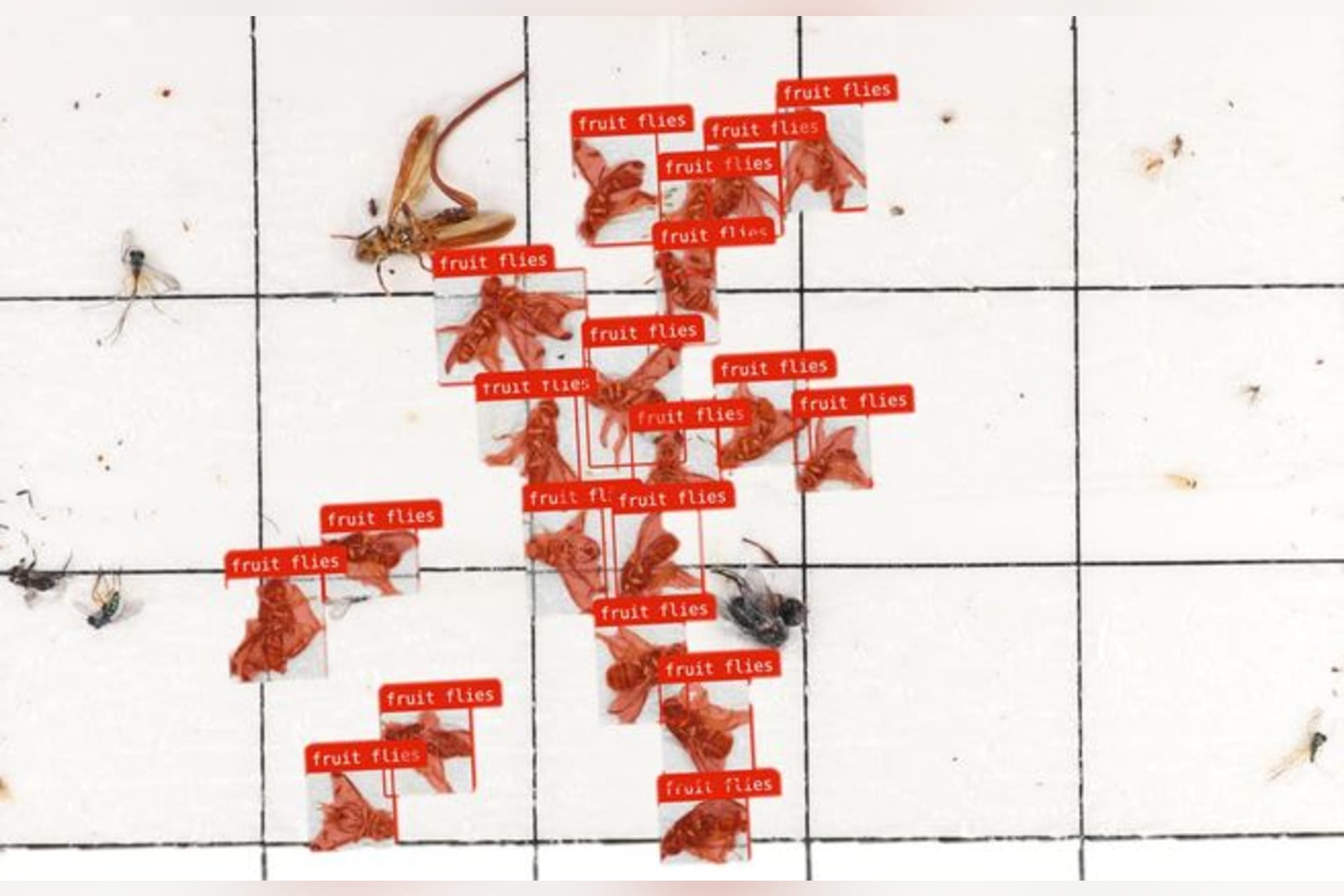
Using AI automation has been a huge improvement in the scale of Park’s research. Now, the team can tackle invasive species identification outside of West Virginia, like the yellow-legged hornet in Georgia and South Carolina, or invasive fruit flies in California, Texas and Hawaii.
While monitoring invasive species in other regions might seem unnecessary, Park says the knowledge gained can prove invaluable if a species were to later appear in West Virginia or elsewhere in the United States. Instead of responding to an invasive species reactively, data on other invasive species can be used to prepare for their arrival or even prevent an invasive species from ever taking root in the first place.