Editor’s note: This story was originally published by Mountain State Spotlight.
By Lauren Peace, Mountain State Spotlight
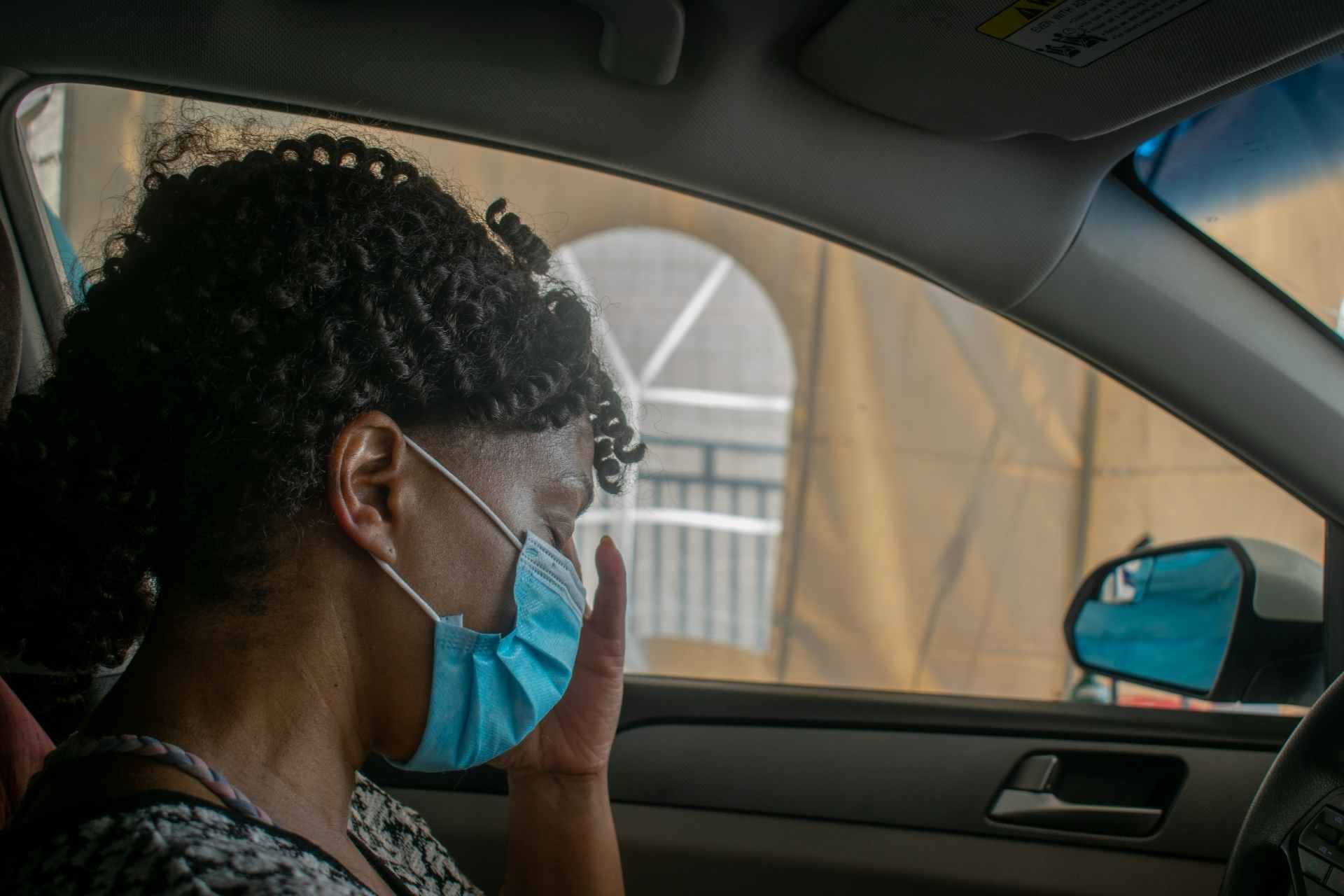
Since the pandemic began more than a year ago, Black community leaders have raised concerns about disparities in COVID-19 testing rates among Black and brown West Virginians. They’ve said testing has been inaccessible, with clinics out of reach or taking place during the work day when people can’t get time off. And even when testing is available, it can be hard to motivate people to show up.
Now, there’s academic research that backs their anecdotal evidence up.
In a study published last month in an epidemiology journal, West Virginia University researcher Brian Hendricks examined coronavirus testing across West Virginia and found that communities with higher Black populations had a testing rate six times lower than the state average during the first six months of the pandemic. As a result, it’s likely the state didn’t have good data on how prevalent the coronavirus was in these communities — identified by census tracts in Fairmont, Wheeling, Bluefield, Beckley, Huntington, Dunbar and Charleston.
While testing was low in these areas, the study also found that communities deemed food insecure, but with predominantly white populations, had higher rates of testing — a sign that state officials may have been targeting the rural areas.
The study also incorporated various socioeconomic factors, including household crowding or working blue-collar jobs. Hendricks said early in the pandemic, heavy emphasis was placed on social distancing as the primary form of prevention. But that emphasis failed to take into account a variety of socioeconomic factors that impact a person’s ability to do so.
“Certain populations can’t social distance the same as others, ” Hendricks said. “That’s what motivated this study.”

Although previous research has looked at testing data across state and county levels, Hendricks’ research tapped into more granular level data, examining testing across West Virginia’s 484 census tracts. That’s important because there’s a lot of variation in the social make-up of counties, which can skew understanding of results, Hendricks said.
By breaking down West Virginia’s 55 counties into unique census tracts, Hendricks said that researchers were able to get a more accurate look at who was being tested for COVID-19 and who wasn’t.
That’s important because the findings not only showed disparities in testing rate, but in test positivity rate, too. The study found that tracts with larger Black populations had lower positive test rates than those with white residents. But that doesn’t necessarily mean that there was less virus present in the community, it just means that if it was there, people didn’t know about it.
Hendricks said less testing means a less clear understanding of a community’s true positivity rate, which ultimately impacts the way public health officials respond. The state Department of Health and Human Resources did not return requests for comment on the findings, but DHHR data was the basis for the study and State Health Officer Dr. Ayne Amjad is credited as an author.
While Hendricks’ findings provide new insight into pandemic response, West Virginia University Health Sciences Senior Associate Dean Linda Alexander said it’s important to remember that disparities in health care delivery across white and Black communities is not new.
“The disparities that have been highlighted because of COVID have long existed,” Alexander said.
Alexander, who is a mentor to Hendricks at the School of Public Health, has been researching racial health disparities for the last 30 years. She said what differentiates this moment from those in the past is that the broader community is finally paying attention and more focus is being placed on addressing inequity.
Alexander and Hendricks both said that solutions to more equitable health care — within the pandemic and beyond — must involve the community. Researchers, said Alexander, need to look beyond their microscopes and look to the people doing work on the ground for the answers.

People like Romelia Hodges in Fairmont, who sent a letter to state coronavirus czar Dr. Clay Marsh more than a year ago, describing “delays in testing and obstacles when trying to receive adequate care.” Hodges’ efforts led to the establishment of a pandemic minority health taskforce after the virus tore through a Black Baptist church in her community.
People like Pastor Matthew Watts, who when the state didn’t coordinate testing or vaccination events that were accessible to his community on Charleston’s West Side, worked with local pharmacies and local leaders to organize his own.
While there isn’t data yet to indicate disparities in vaccination rates at the same level of analysis that Hendricks’ research did for testing, Hendricks said that we can expect studies of that in the future.
But in the interim, both Hendricks and Alexander said that in order to prevent the same disparities in testing from continuing and showing up in vaccination rates, researchers and politicians need to turn to people on the ground in communities impacted and ask them what they need and how they can be supported.

“Community advocates… the faith community, the health department, agencies and organizations specifically for African Americans like the NAACP. These are there to help reduce misinformation. These are there to help,” said Alexander.
Politicians and researchers alike need to include them, she said.
Reach reporter Lauren Peace at laurenpeace@mountainstatespotlight.org.