Community Bulletin
Dogs will be $50 and cats $25 at an Oct. 17 adoption day at Lewis-Upshur Animal Control in Buckhannon, where LUV 4 Animals and Jenkins Subaru invite visitors to walk a dog or hold a kitten before they decide. Read more →
This story brought to you paywall-free, courtesy of the My Buckhannon team and our community partners
Nearly 160 years have elapsed since Alexander Martin, the first president of West Virginia University, was inaugurated in Morgantown’s Presbyterian Church. WVU hadn’t even opened its doors to students yet, and Martin faced the task of launching a new land-grant college in a brand-new state during the chaotic period of Reconstruction that followed the Civil War.
But in many ways, the distance between him and Michael T. Benson, WVU’s 27th president, is no farther than the walk from Stewart Hall to Woodburn.
With the first year of President Benson’s presidency inscribed in the record books, he takes the podium October 15, 2026, to celebrate the legacy behind the mantle he has assumed and lay the University’s path forward.
It’s a task many presidents before him have undertaken in inauguration speeches that represented the realities of their times and the twists and turns of history, while echoing, again and again, the central truths of WVU: a commitment to education for all, a belief in the mission of service to the state and a conviction that research is an essential function of any world-class university.
Follow WVU Stories on a journey through time, narrated by some of the presidents whose visions for the future have become the lived experiences of Mountaineers today.

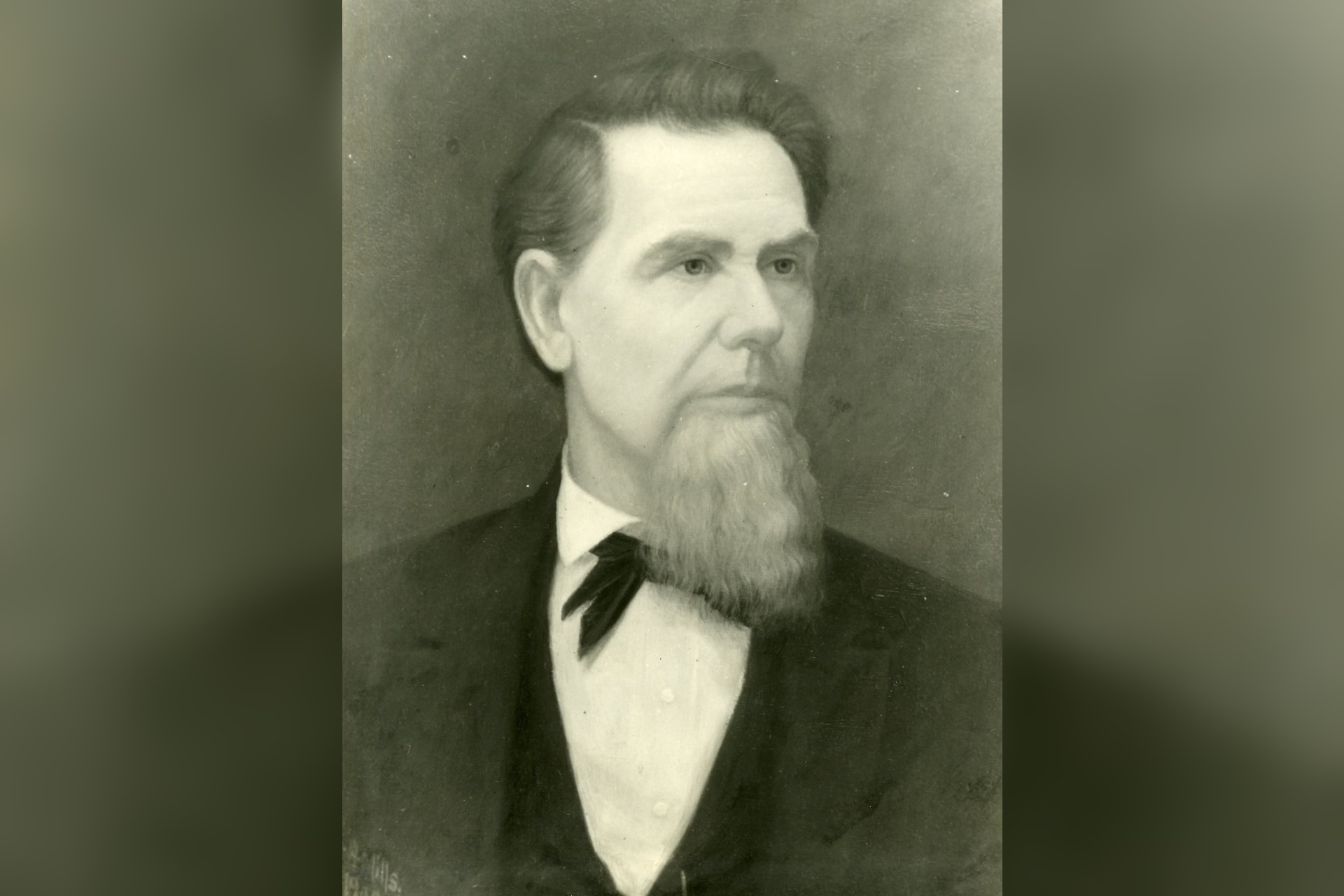
Alexander Martin, first president of WVU: 1867–1875
A Methodist minister born in Scotland, fierce Union supporter Alexander Martin pushed for the renaming of West Virginia’s land-grant institution, from the Agricultural College of West Virginia to West Virginia University, motivated by a firm belief in the value of an accessible liberal education.
The force behind the founding of the WVU Alumni Association, Martin was also an advocate for public education and the coeducation of women.
While Martin was at the helm of WVU, the U.S. purchased Alaska and completed the Transcontinental Railroad, construction began on the Brooklyn Bridge, P. T. Barnum launched the “Greatest Show on Earth,” and the “velocipede” or “boneshaker” (a predecessor of the modern bicycle) took America by storm.
From Martin’s inaugural address

One century ago and this beautiful valley, now so richly embellished by the enterprise of man, with pastures, and orchards, and fields, and dwellings of neatness and comfort, was a vast, uncultivated wilderness. Strikingly picturesque and magnificent in its natural scenery, it only exhibited in its wild and savage growth the untold forces of a virgin soil.
What a change in that time have the wondrous expansion and boundless activities of free institutions produced? The desert has been turned into a garden, and the wilderness and solitary places made to rejoice and blossom as the rose. And not here alone, but all over the land it has cleared the forests, explored the rivers, dug the canals, constructed the railroads, established the telegraph, multiplied villages and cities, created manufactures, opened the mines, unlocked the secret treasures of the earth, increased the discoveries of science and the inventions of art, whitened the lakes and the seas with its fleets, poured wealth into the treasuries of patriotic, beneficent, and philanthropic institutions, developed the energies, diversified the labors, and stimulated the hope and the mind of the world, and on this continent aggregated an Empire, compared with which European kingdoms are dwarfed into provinces.
Who shall compute the dimensions of the finished structure, or calculate our unparalleled and irresistible progress in the ages and centuries to come — when, even in less than another half century, a civilization like that which now brightens the coast of the Atlantic, or bears sway in our great central valley, shall penetrate the vales of the far Rocky Mountains, and wield the destinies of the Pacific slopes.
Ye are blind, and cannot discern the signs of the times, or read either the past or the future as you should, who say West Virginia shall not then have a College equal to the best of those now in our land.
Thomas Edward Hodges, eighth president of WVU: 1911–1914
Thomas Edward Hodges’ inauguration was remarkable for the fact that U.S. President William Howard Taft attended — and delivered his own “World Wide Speech” on the porch of Purinton House.
Formerly the principal of Marshall College, now Marshall University, Hodges led a wave of expansion at WVU, including the founding of WVU Extension and the establishment of a WVU program in pharmacy.
During Hodges’ tenure, the Titanic sank, Roald Amundsen’s expedition became the first to reach the South Pole, Archduke Franz Ferdinand was assassinated, Henry Ford introduced the first moving assembly line for the Model T car and the first crossword puzzle was published in the New York World.
From Hodges’ inaugural address

I believe in the college yell. I like to hear the class yells, fraternity yells, sorority yells, and all other yells that are right and proper. But the best of all is the yell for the Old Gold and Blue, and if there be any one upon whose ears this grates harshly, I am sorry for him; for there is a serious lack in his makeup; he is without power to appreciate a very fine thing.
Listen! What breaks into the night’s quiet? As the sound takes form, one says, “The students are out.” I hear them in the distance. Faintly at first break on our ears the waves of their rallying cries, but out of the confusion of tongues we catch one articulate word, “West Virginia!” Here they come; now yell and cheer and song become an avalanche of sound; but a curious clearness, resonance, and penetration characterize the rhythmic union of the words in full volume, “West Virginia!” Now they swing past in the full blaze of a mighty enthusiasm. On, on, they go, and from far in the distance is wafted back, faint and clear, the magic words, “West Virginia!”
John Roscoe Turner, 10th president of WVU: 1928–1934
An economist who came to West Virginia from Manhattan, John Roscoe Turner was assertive about WVU’s role in supporting the state’s extractive industries and was a proponent of graduate research. Elizabeth Moore Hall and the University Library, now the Charles C. Wise Library, opened during his term.
He led the University through the 1929 stock market collapse, the Great Depression and the launch of the New Deal.
During Turner’s time in Morgantown, “The Star-Spangled Banner” became the national anthem, Pluto was discovered, Amelia Earhart crossed the Atlantic solo and Prohibition ended.
Turner was also a dedicated cigarette smoker whose flat refusal to acknowledge the West Virginia fire marshal’s ban on smoking inside WVU buildings restored ashtrays to campus.

From Turner’s inaugural address
A teacher should not only stimulate interest; he should also promote the self-development of students. When the great biologist Agassiz was at Woods Hole, some young men went to study with him. No doubt they expected a thoughtful lecture course from the scientist. Instead, he handed them an old pickled fish to study. He did not say, “look for this or that.” He said: “Observe for yourselves,” and left the room. They looked over the detested object a number of times and awaited the turn of Agassiz to tell him all about it.
When he returned, their self-satisfying answers were to him superficial. He gave no instruction, but kept them looking at that fish for days. Under prolonged and intensive observation, the old fish took on symmetry and beauty. Each part was found to be of faultless proportion, and, by the natural law of correspondence, all parts were in the perfection of design, made to supplement one another. They learned, as in the case of Newton when he observed the falling apple, that to observe truly is to look beyond the object in view to the eternal law of its origin.
What they thought of Agassiz then is not recorded, perhaps “not fit to print.” In later years, however, they said: “He did for us what no money could buy.” They learned to do by doing. They met a master too wise to do for them what they could do for themselves.
Elvis Jacob Stahr Jr., 14th president of WVU: 1959–1961
A decorated World War II lieutenant colonel, Stahr spent fewer than two years at WVU before John F. Kennedy called him to serve as Secretary of the U.S. Army, a position he held through the Berlin crisis and the Bay of Pigs invasion.
Following his service to the nation and throughout the 1970s, Stahr led the National Audubon Society through a transformation into a formidable environmental lobbying force.
Despite his short time in Morgantown, Stahr guided WVU through the Greensboro sit-ins and the signing of the Civil Rights Act of 1960, the first-ever televised U.S. presidential debates, FDA approval of the first oral contraceptive and the debut of the 50-star U.S. flag.

He also established the WVU Order of Vandalia, the University’s highest award for loyal service.
From Stahr’s inaugural address
As you know, I have been performing the duties of the presidency, in my own fashion, for eight months. Already I have had more than theoretical confrontation by a remarkable variety of the kinds of problems university presidents are said to be heir to: irate parents, disappointed students, “unappreciated” faculty members, habit-bound administrators, covetous rival institutions, ambitious empire-builders, suspicious politicians, irresponsible rumormongers, demanding program chairmen, brilliant second-guessers, truculent negotiators, uninformed critics, chronic letter-writers, cranky telephone callers, narrow-minded crusaders, grasping people who think the University is “loaded with dough,” and who want some of it, other grasping people who know the University needs money but are afraid we will ask for some of theirs. I haven’t even mentioned those two perennials: football and parking.
And yet, believe me, I’m enjoying the job! Enjoying it tremendously. The above mentioned problem-makers are more, far more, than overbalanced by the infinitely greater numbers of proud and interested parents; of diligent, successful, cheerful students; of dedicated, brilliant, cooperative faculty members; of helpful government officials, sincerely constructive legislators; imaginative, energetic, forward-looking administrators, friendly sister institutions; creative “idea-men”; loyal, sacrificing employees; generous benefactors; courageous, wise, and stalwart Board members; public-spirited civic leaders; dependable alumni who love their alma mater unselfishly; affirmative-minded editors and reporters; and the legions of friendly, warm-hearted, well-wishing citizens throughout the length and breadth of this beautiful, sprawling, wonderful State of West Virginia.
David C. Hardesty Jr., 21st president of WVU: 1995–2007
Celebrated for his commitment to putting students first at WVU, Hardesty was at the helm for the creation of WVU Welcome Week, WVUp All Night, the Mountaineer Parents Club and other student-centered initiatives that contributed to a 5,000-student surge in enrollment.
It was during his tenure that the WVU hospital system and the WVU Forensic Science Program — the world’s first dedicated undergraduate degree program in forensic science — were established.

Hardesty doubled grant funding and sponsored research at WVU. During his presidency, Mountaineer Football had two back-to-back 11-win seasons, Mountaineer Basketball reached the NCAA Tournament three times and the WVU men’s and women’s soccer teams won Big East Conference titles.
On Hardesty’s watch, WVU navigated the rise of e-commerce and social media, the birth of the Harry Potter series, the turn of the millennium, the terrorist attacks on the World Trade Center and Pentagon and the first landing of NASA rovers on Mars.
From Hardesty’s inaugural address
This past fourth of July I represented West Virginia University in a parade in Morgantown. As Susan and I stepped from the vehicle to take our position on the speakers’ platform, I was greeted by an elderly gentleman, who said to me: “Mr. President, I wanted to meet you. You see, I didn’t go to college myself, but I sent all eight of my children to WVU.”
As Basil Callen’s eyes filled with pride in the accomplishments of his family, my heart filled with emotion. In his eyes I saw the eyes of my parents. At that moment I was again reminded of both the extraordinary importance of the institution I had been chosen to lead and the challenges this position presents to those that are privileged to be its president.
One of our most illustrious graduates, Jerry West, recently said, with simplicity and humility, that as he looks back on his life, he realizes that almost all of his personal dreams have come true. He went on to say that the roots of his good fortune were firmly planted at West Virginia University.
What is notable about his remarks is that they are representative of testimonials that can be given by leaders in almost every walk of life in our society. Our 120,000 living alumni know that dreams come true at, and because of, WVU.
But our alumni are not alone in their realization. The citizens of our state and region are touched daily by our service and research. This is the true greatness of the comprehensive university. This is the historical significance of land-grant universities.
As you leave today, and every time you walk across our campuses, look into the eyes of the students you encounter, and just imagine. Will you see a future faculty member who is more than anything else dedicated to teaching future generations of our students? Will you see a future public servant who may change the course of history? Will you see a young man or woman who will by his or her research relieve others of misery? Will you see our next major athlete, or a social activist who will bring justice to our society?
See if you can find the budding novelist who will achieve national recognition. See if you can find the next Fortune 100 CEO. See if you can find the next president of a university. Just as important, see if you can find a successful parent, friend, neighbor. Look hard. They are all here, in the form of dreams yet to be realized.
WV, flying
Through the rebuilding of the American union, the rise of the automobile, the voyage to space, the civil rights movement and the birth of social media, WVU presidents have protected and championed the values of service, curiosity, respect, accountability and appreciation.

Like his predecessors, Michael T. Benson, 27th president of West Virginia University, is issuing a rallying cry to all Mountaineers. He calls on WVU to lead with pride, empower through education, transform lives, stake the University’s claim, grow its reach and, at every step, outperform the competition:
Let’s Go!
Compiled by Micaela Morrissette. Excerpts from speeches are edited and abridged.