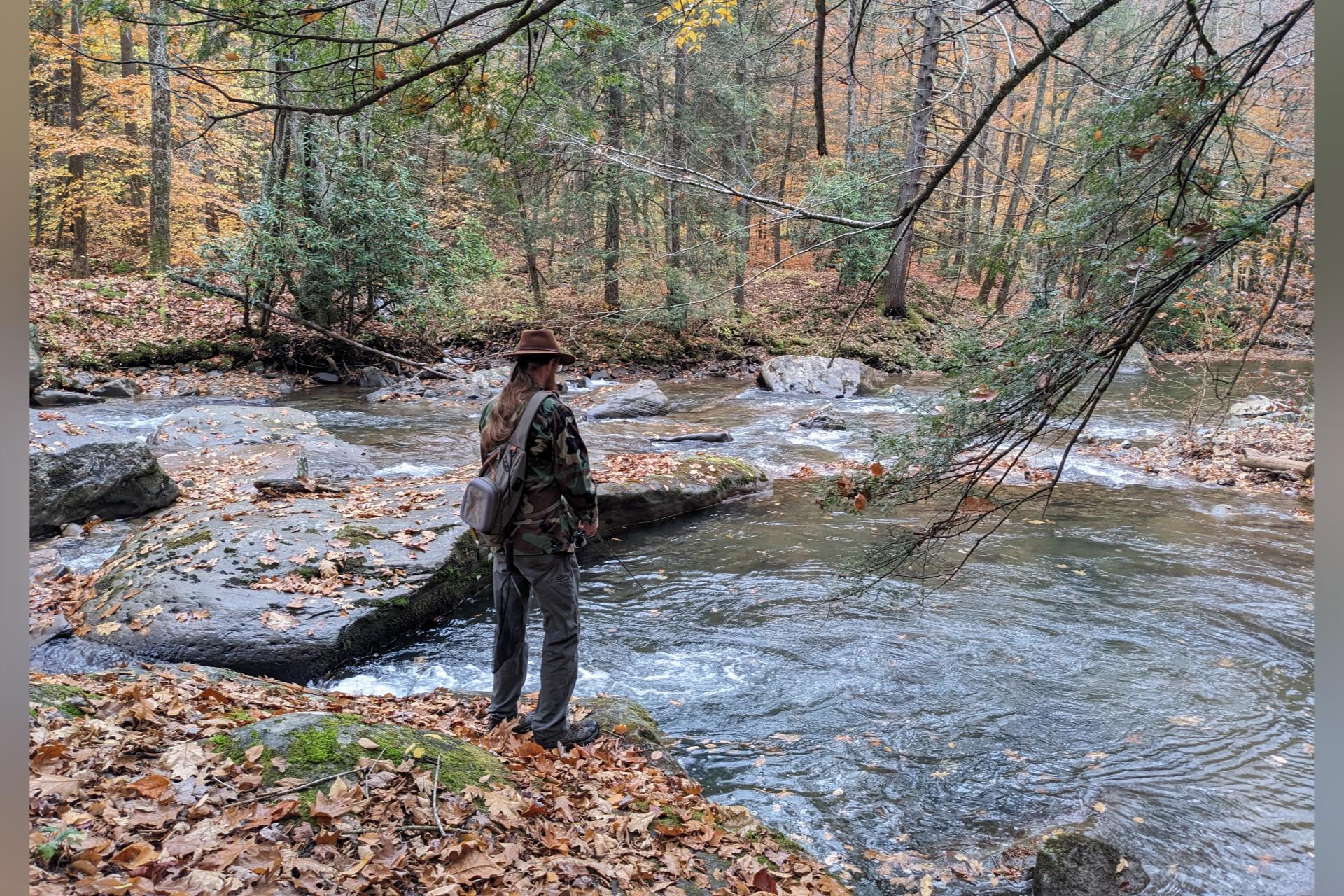
When West Virginia University biology undergraduate student Isabella Tuzzio tested fish from central Appalachian streams, her research revealed microplastics in every fish she sampled.
Tuzzio said her results from the study, which was the first of its kind in Appalachia, suggest significant environmental risks, as well as potential risks to human health.
Microplastics can disrupt hormones and carry harmful chemicals like heavy metals and antibiotics. Additionally, there is evidence they accumulate as they pass through the food chain, potentially reaching humans at high concentrations.
A junior from Shepherdstown in the WVU Eberly College of Arts and Sciences, Tuzzio found microplastics — plastic particles less than 5 millimeters in size — in juvenile northern hogsucker fish from seven streams across the Cheat, Monongahela and Ohio River watersheds. Each fish contained an average of 40 pieces of microplastics.

Tuzzio published her findings with WVU Davis College of Agriculture and Natural Resources faculty members Caroline Chaves Arantes, assistant professor of wildlife and fisheries, and Brent Murry, assistant professor of aquatic ecology. She found microplastics in 100% of the fish, and nearly 2,200 particles were documented across 55 samples.
“Microplastics are coming from everyday sources like synthetic fibers from laundry and plastic beads in exfoliating face washes,” she said. “They’re now everywhere, from our streams to remote deserts and even the human body.”
Big Sandy Creek in Preston County had the highest concentration of microplastics. Tuzzio said sites with the most contamination also had higher levels of E. coli bacteria in the water and were associated with agricultural land use, suggesting wastewater runoff from farms may play a role in getting microplastics into streams.
“These plastics are small, but their impact is massive,” Tuzzio said. “They carry pollutants, heavy metals and antibiotics. And while the microplastics are spread out in smaller fish, the bigger fish eat those smaller fish. As you work your way up the food chain, there are heavily concentrated levels of these plastics. It’s a problem for them and for us, too.”

In humans, microplastic concentrations interfere with biological systems and may be linked to chronic illnesses like diabetes and even congenital conditions that affect developing fetuses. Studies have found microplastics in placentas, brains and other human organs.
The particles Tuzzio’s team extracted from the fish included fibers, fragments, sheets and foams. Fibers accounted for 96% of all particles.
While past microplastic contamination studies have been done in saltwater environments, it’s not just an oceanic problem.
“Microplastics have been identified in animals throughout the world,” Murry said. “And we’re still really getting a handle on how extensive the problem is. Most work has been done on marine species that we eat, and much less work has been done in freshwater systems and even less throughout Appalachia.”

Next, the researchers plan to include additional fish species in the study and examine the potential role of precipitation or other deposits from the atmosphere in spreading microplastics throughout ecosystems.
Tuzzio said public awareness will be key to any solution for combatting microplastic pollution. Sustainable solutions for reducing microplastics in the watershed include recycling, choosing environmentally friendly detergents and installing filters on washing machines. Improving waste management and water treatment infrastructure can also help.
“I think it’s definitely an emerging contaminant,” she said. “People don’t know much about it, and we hope our research sparks conversations about sustainability and inspires action to protect the streams and communities of Appalachia.”
Arantes agreed. “Isabella’s work not only fills a major gap in our understanding of microplastics in freshwater systems but also sheds light on links between land use, atmospheric deposition and pollutant exposure.”