Community Bulletin
My Buckhannon's free weekly football pick 'em is back for 2026 with a rebuilt page, pick stats that go public once they lock and a leaderboard that crowns a season champion. Seven high school and college games a week, no entry fee and no password to sign in. Read more →
This story brought to you paywall-free, courtesy of the My Buckhannon team and our community partners
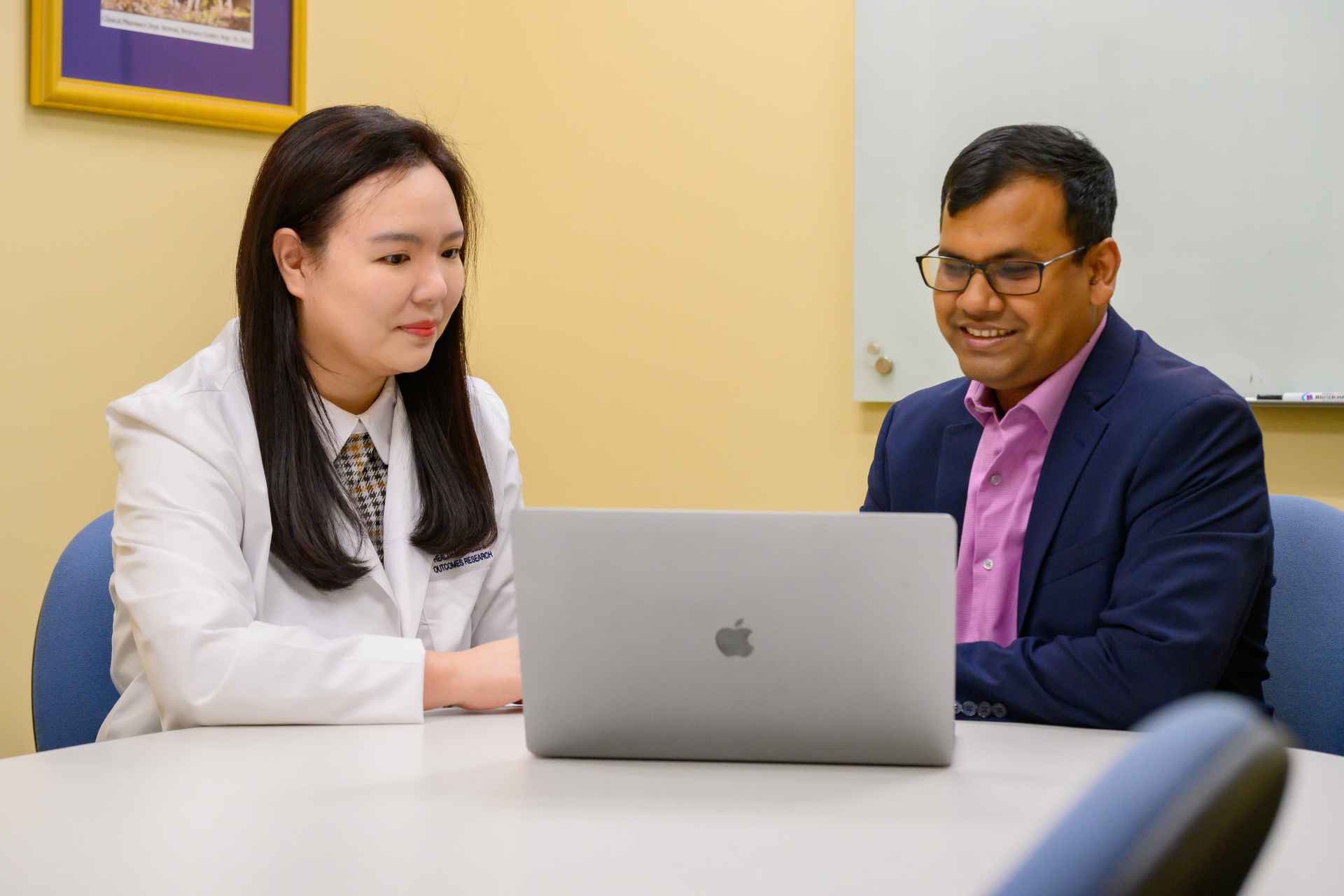
An artificial intelligence tool West Virginia University health data scientists are developing could lessen medication errors that send recently discharged patients back to the hospital while reducing health care costs.
At least 1.5 million people are harmed by medication errors every year, according to the Academy of Managed Care Pharmacy, and the cost for treating these drug-related injuries occurring in hospitals alone is estimated at $3.5 billion annually.
“Because of this we need to provide better tools to our clinicians,” said Abdullah Al-Mamun, assistant professor in the WVU School of Pharmacy Department of Pharmaceutical Systems and Policy, who is leading the project. “We will develop a tool where we’ll go through each of the patient’s records for the medication reconciliation process. Our goal is to build an alert system that shows if the patient has a higher chance of getting readmitted.”
Medication reconciliation is a standard practice clinicians perform before patients are discharged from the hospital. The process is a review of prescriptions and over-the-counter treatments they were taking prior to and during their stay. The result should be a comprehensive list of what to take — and not take — along with specific dosages when they return home. However, Mamun said since information is gathered from multiple clinicians to make care recommendations, the procedure oftentimes becomes convoluted.
“This is where 85% of the errors happen,” Mamun said. “During a patient’s time in the hospital, medications are changed to improve the outcome. The patient cannot go home with the same amounts of medications they were given in the hospital. There should be an adjustment.”

As a remedy, Mamun points to studies showing a 50% reduction in 30-day readmission rates when a transition-of-care pharmacist took over medication reconciliation. His project aims to make the pharmacist’s job more efficient and effective through this AI-driven tool.
Mamun explained hospitals use electronic data systems containing information on medications and billing, along with notes from physicians, nurses and pharmacists. For medication reconciliation, a pharmacist spends between 30 to 50 minutes reviewing those records for each discharge patient, which can number around 200 a day in a facility the size of J.W. Ruby Memorial Hospital.
Mamun and members of his HealBig research lab want to streamline the process.
“That’s where the AI comes in,” Mamun said. “It will pull all these data and using different algorithms will build a profile for the patient. That will make the process more accurate and much faster and improve medication safety.”
The HealBig team will employ the AI method of deep learning for natural language processing to allow the program to understand certain words and phrases in clinicians’ notes. Based on factors — such as medical history and current physical condition — in each patient’s profile, the tool will also be able to determine the risk of readmission and create an alert system for pharmacists.

“Let’s say patient X is feeling better, but my tool says he has a 90% chance of coming back to the hospital in 30, 60 or 90 days. That would raise a flag,” Mamun said. “The pharmacist could go back to the interprofessional care team so they could go over the patient’s profile one more time to see if they should keep him in the hospital a couple more days. Something like that could save a patient’s life.”
The use of AI technology will also benefit students in Mamun’s lab by giving them the experience of learning data science tools they can use later in their professional careers.
“They will learn different dimensions of how to ultimately improve patient outcomes,” Mamun said. “When they are exposed to projects like this, they become more motivated to do research.”
Ki Jin Jeun, a graduate research assistant majoring in health services and outcomes research, will work on the statistical analyses. Other students in the WVU Pharmacy doctoral programs will join the project as it progresses.
With a two-year, $100,000 grant from the American College of Clinical Pharmacy, Mamun is working on the project with Kazuhiko Kido, clinical associate professor.
The team will first develop an alert system prototype. Mamun said the next step will be to integrate the tool into a hospital’s electronic data system and run a pilot test. For that phase, the team plans to seek a larger grant.
“The next phase will be challenging because that’s where the real interaction comes into the system,” Mamun said. “We will need a lot of resources and clinical experts. It’s very exciting to bring health data science and AI technologies into the medical field, especially in pharmacy. This will help payers, medical providers and, ultimately, clinicians to make better decisions.”