New measurement tools developed by researchers at the West Virginia University Davis College of Agriculture and Natural Resources are combining agriculture and data science to dramatically improve efficiency for cattle herds around the country.
Since 2019, Matt Wilson, a professor of animal sciences at the Davis College, has worked to precisely measure the food and water intake of beef cattle. In addition to cattle drinking normally, water is also used to create the food they eat. With more than 85 million beef cattle in the United States, Wilson says that even small improvements to growth efficiency can result in massive reductions in overall water usage. However, water conservation is just one part of a larger effort to improve sustainability in the industry.
“Our research shows the potential impact is enormous,” Wilson explains. “A 5% improvement in drinking water-use efficiency would save the equivalent of about six weeks of water flowing over Niagara Falls, while a 5% improvement in feed efficiency would save the equivalent of roughly two years of Niagara Falls flow.”
By measuring the animal’s weight, food and water intake, farmers will be able to identify specific animals in their herd that are putting on more weight while eating less or similar amounts of food compared to other cattle in the herd. Cattle that are shown to be more efficient can then be used for breeding, spreading favorable traits to future calves in the herd.
Because of the sheer volume of data needed for the project, Wilson admits his research into feed efficiency was met with skepticism. In a controlled environment like an indoor feedlot, measuring cattle food intake is more straightforward compared to when they are grazing in a field. But with 80% of cattle out grazing, Wilson said it was critical to develop a way to measure food intake in all environments.
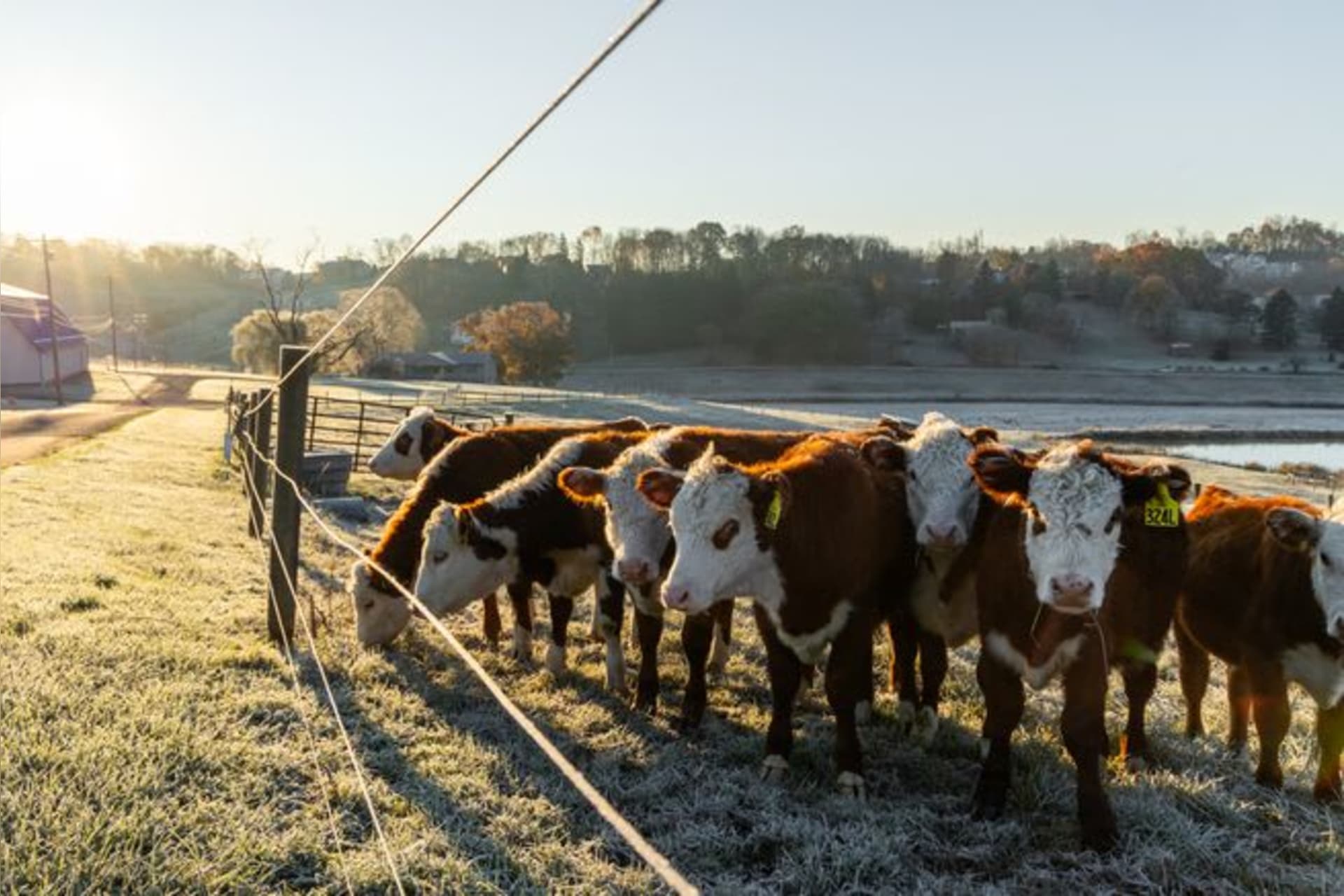
To do this, Wilson partnered with Vytelle (formerly GrowSafe). Vytelle uses RFID tags to identify individual cattle and weighs the animal when it eats or drinks. The amount of food or water consumed is measured, too, which lets farmers record feeding habits and weight gain over time. Nearby NOAA weather stations are also used to see how temperature and weather conditions affect a herd’s efficiency throughout the year.
Where cattle graze can also be monitored and controlled through “virtual fencing” collars that send GPS tracking information back to farmers, ensuring cattle only drink water from sources that can be accurately measured.
“Our work is kind of marrying data science with animal agriculture,” Wilson said. “That ability to determine grazing intake at scale is probably one of our biggest accomplishments so far. It has a lot of potential impacts.”
With the university’s research farms at the forefront of this technology, students have the opportunity to learn about this new style of herd management alongside WVU researchers and local producers.
“There’s a lot of technology coming to animal agriculture in general, but especially for beef cattle farming. The work we’re doing now is letting us answer questions that have been largely unanswered for a long time, and we’re doing that while training students,” Wilson said. “We’re not just exposing them to animal production, but also data science and how to work with a lot of information at once.”
Wilson says these data-driven tools can be used to precisely measure all kinds of variables and how much of an effect they can have on cattle. How does weather affect a herd’s efficiency? What role does a specific bacterium play in cattle metabolism? Does grazing around solar panels impact growth? How does accurate grazing data improve life cycle analyses? These are just a few of the questions Wilson hopes to answer going forward.
“It took us a while to get there, but we’ve opened up all kinds of opportunities to find new answers to old questions,” Wilson said.
Help Wanted
Central West Virginia Aging Services is hiring caregivers to serve elderly and disabled residents across the state. The nonprofit organization, which has been providing in-home services since 1974, has seven offices throughout West Virginia. Read more →
This story brought to you paywall-free, courtesy of the My Buckhannon team and our community partners