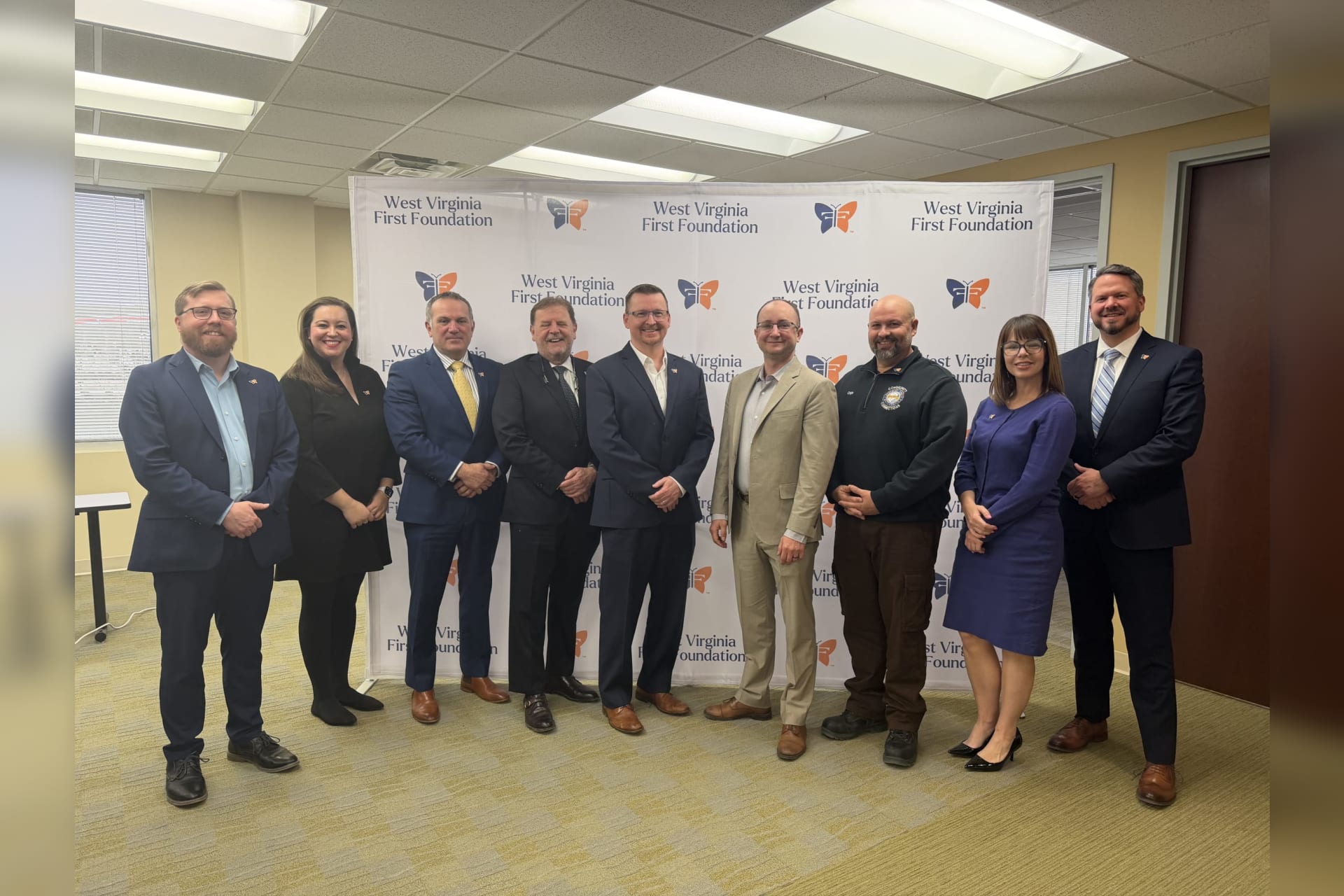
The West Virginia First Foundation (WVFF) Board of Directors held its first quarterly meeting of 2026, advancing key initiatives that will guide the Foundation’s work in the months ahead and strengthen how resources reach communities across West Virginia.
Among the major announcements, the Foundation shared that a West Virginia University team, led by the WVU Health Affairs Institute in partnership with the Institute for Policy Research and Public Affairs and Data Driven WV, has been selected to lead the Foundation’s statewide Needs Assessment focusing on the challenges of opioid and substance use disorders. The initiative has formally been named the West Virginia Wayfinder, reflecting its role in helping guide future funding decisions through statewide data and community insight. Additional details will be released next week.
Board members approved the launch of the Community Catalyst Grant, the Foundation’s next grant cycle, with applications scheduled to open June 1. Additional details about the funding opportunity will be shared soon.
The Board also approved the Regional Contingency Allocation Program (RECAP), a new funding model designed to provide each region with added flexibility to address emerging local needs through targeted mission-aligned investments. The program is intended to support timely responses to community priorities while maintaining accountability and alignment with the Foundation’s broader mission and is set to launch July 1.

“Together, these efforts reflect the Foundation’s continued commitment to thoughtful planning, responsive funding, and building stronger pathways for communities across West Virginia,” said WVFF Chairman Greg Duckworth. “Each step helps position this work to be more informed, more intentional, and more responsive to the needs we continue to see across our state.”
The meeting opened with a moment of reflection centered around the Foundation’s Chair of Remembrance, displayed at each board meeting to honor lives lost to substance use disorder and to recognize the families and communities affected across West Virginia. The empty chair serves as a visible reminder of the purpose behind the Foundation’s work and the responsibility carried in stewarding these resources.
“Every decision we make is grounded in the reality of who is no longer here and the families across West Virginia who continue to carry that loss,” said Jonathan Board, WVFF Executive Director. “That chair reminds us at every meeting that this work is not just about programs or funding, it is about honoring lives, strengthening communities, and doing everything we can to help prevent more empty seats at tables across our state.”
The next regular meeting of the Foundation’s Board of Directors is scheduled for June 18.