Community Bulletin
Job seekers in Upshur County can browse local help-wanted ads in one place on My Buckhannon's job listings page, where every opening comes from an established local employer or community partner. Read more →
This story brought to you paywall-free, courtesy of the My Buckhannon team and our community partners
MORGANTOWN, W.Va. — The first signs of trouble unfolded quickly and could have been easy to ignore.
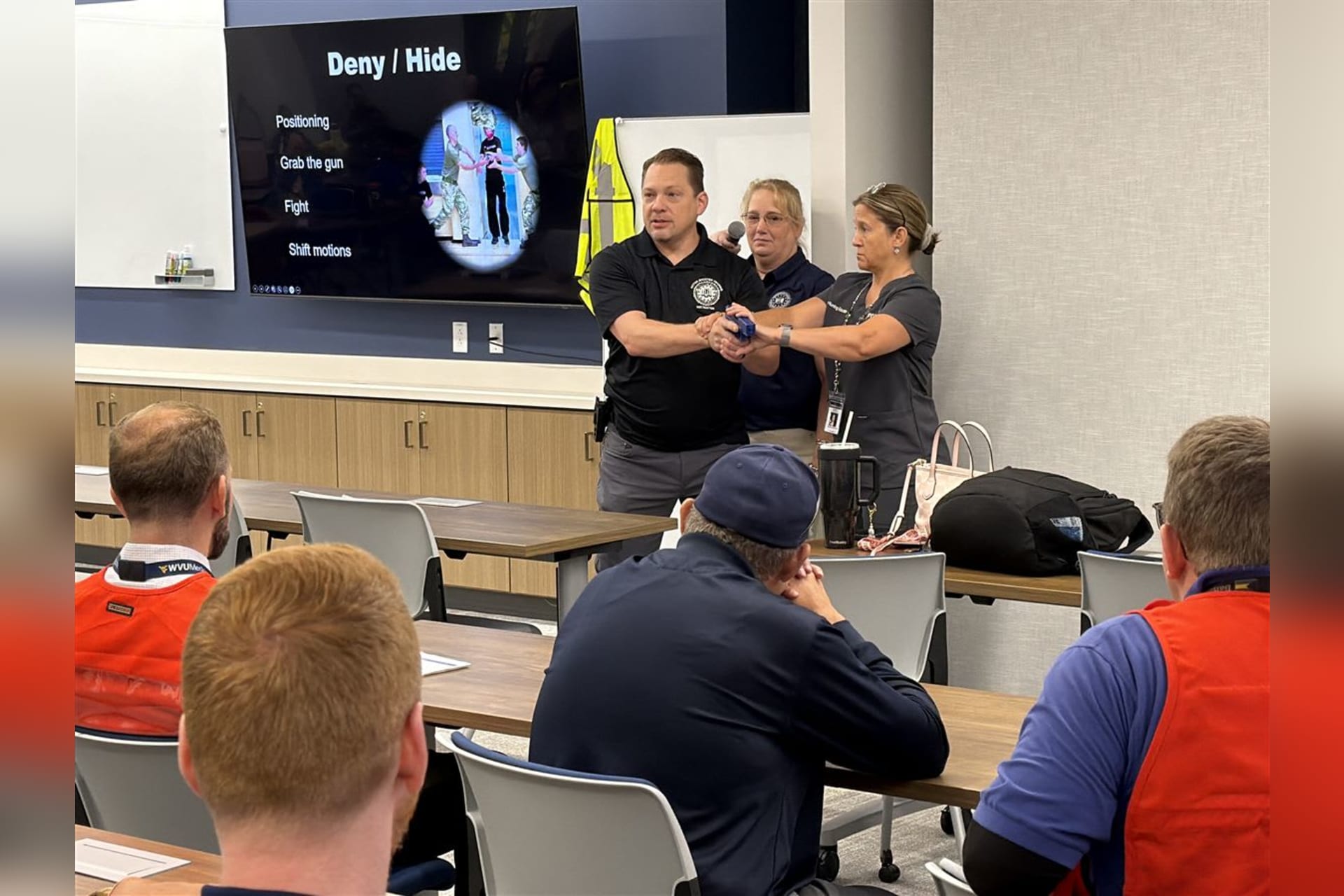
The day’s events included a thought-provoking presentation by the FBI, in which participants learned how situational awareness and forethought are crucial in a real emergency.
The halls of the WVU Medicine Center for Nursing Education (CNE), normally filled with future health care professionals, were quiet, as classes were not in session. Built to mimic a working patient care floor, the CNE is the perfect environment for teaching nursing students how to handle a variety of serious scenarios. Friday, July 24, silence was interrupted by a distant popping noise.
Some loud expletives followed — then another “pop” — as a tall man in a backward ballcap entered one of the school’s simulation lab areas with a handgun. In a real hospital setting, the shots might have been mistaken for a dropped clipboard, perhaps going unnoticed. Fortunately, this was only a drill.
Staff representing several WVU Medicine hospitals and clinics were assembled at the CNE to practice making split-second decisions in a simulated active-shooter emergency, working alongside multiple law enforcement officers and first responders.

The full-scale exercise put WVU Medicine employees alongside the WVU Police Department, the Federal Bureau of Investigation (FBI), local emergency medical services, fire departments, emergency management agencies and other first responders. Together, they tested the plans, communication and partnerships that would be essential during a real emergency.
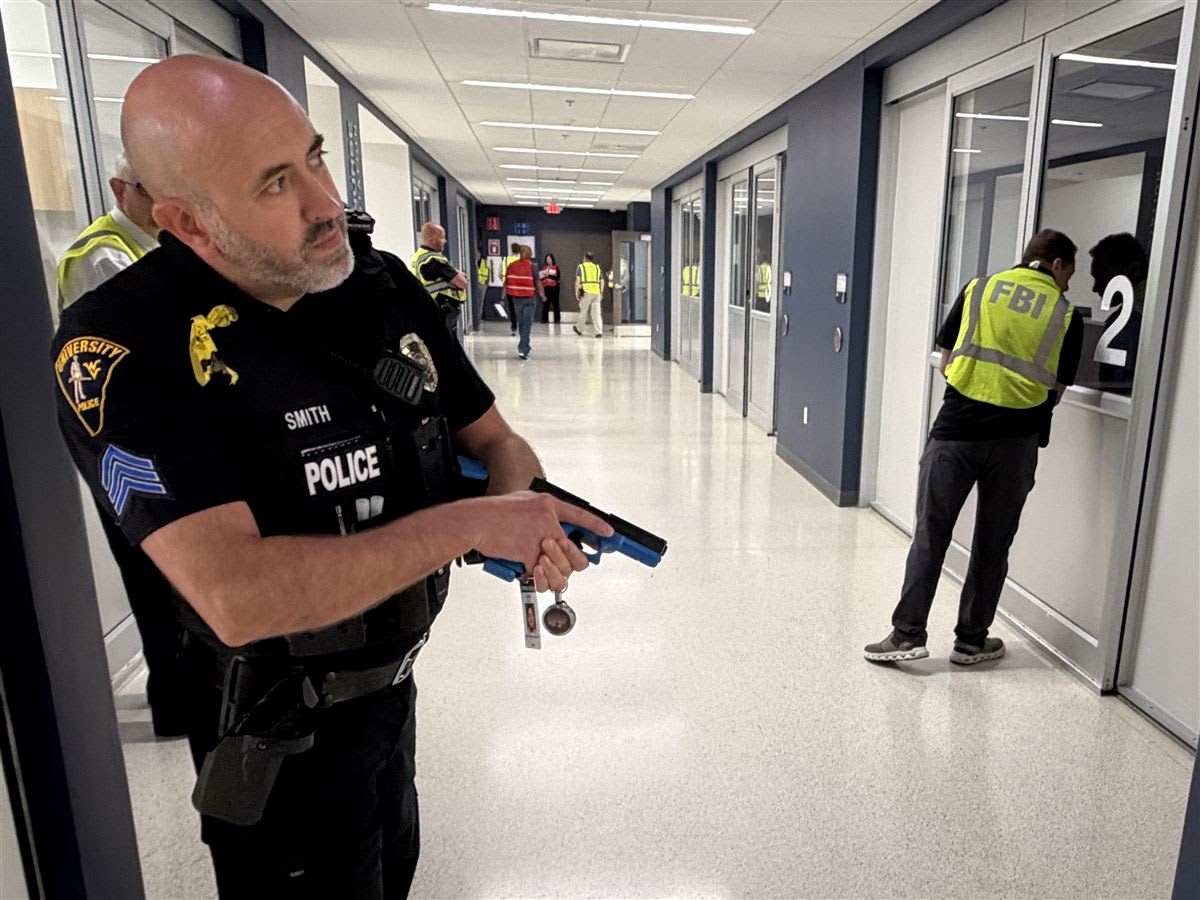
Participating law enforcement agencies, first responders and hospital security agreed on the importance of clear and constant communication, especially when searching for patients and victims in an unfamiliar environment.
Unlike traditional tabletop exercises, this event required participants to respond in real time.
“The biggest difference was that participants had to do more than talk through a scenario,” WVU Medicine Enterprise Director of Emergency Management and Business Continuity John Comer said. “During this full-scale exercise, employees had to recognize the threat, make decisions, communicate, take protective action, and continue caring for patients in a realistic setting.”
Led by Comer and WVU Hospitals Director of Emergency Management Josh Cook, the exercise required almost a year of planning involving clinical teams, security personnel, emergency management professionals, executive leadership and community partners. Organizers carefully developed a realistic scenario while ensuring patient care and normal hospital operations continued safely throughout the day.

As WVU Medicine continues expanding its presence across West Virginia and the surrounding region, exercises like this have become increasingly important. Emergency preparedness is no longer the responsibility of a single department. It requires physicians, nurses, security officers, administrators, educators and support staff across the health system to understand their roles before a crisis occurs, Cook noted.
“Our goal is to make sure growth does not create gaps in readiness,” Cook said. “The larger WVU Medicine becomes, the more important it is for us to train together, communicate consistently, and learn from one another across the system.”
While the Center for Nursing Education provided an appropriate simulated setting for this exercise, CNE faculty and students had the opportunity to train alongside experienced clinicians and public safety professionals.
“We focus every day on improving the health and well-being of our faculty, staff, and students,” WVU Medicine Center for Nursing Education Assistant Vice President of Nursing Education Tanya Rogers, Ed.D., M.S.N., R.N., C.N.E., said. “This was the perfect opportunity to engage with our community partners and WVU Medicine teams to ensure that we are ready to provide safety in a real emergency.”
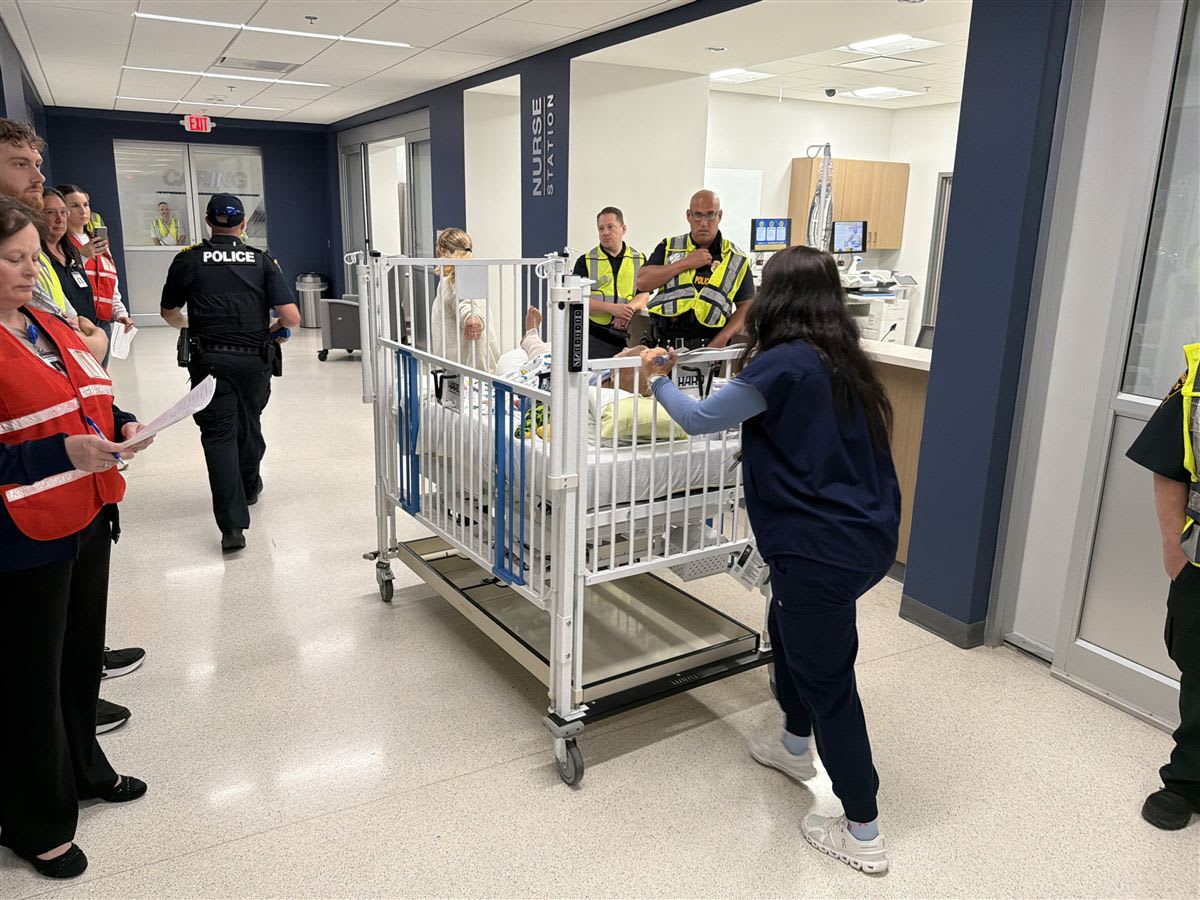
Once the threat at hand was deemed under control, participating clinical professionals were directed through the process of moving patients.

The involvement of law enforcement, emergency management agencies, EMS organizations and other public safety partners strengthened relationships that would prove invaluable during an actual emergency.
“These types of training collaborations across organizations improve safety for the entire community,” WVU Police Chief Sherry St. Clair said. “We appreciate the opportunity to participate alongside WVU Medicine representatives and other first responders, test the skills of several of our seasoned and new officers, and support emergency preparation on multiple fronts. It takes all of us working together to ensure the safety of the people we serve.”
For Comer and Cook, those partnerships are among the most important outcomes of the exercise.
“We do not want to be exchanging business cards or learning how another organization operates for the first time,” Comer said. “We want established relationships, familiar faces, and a shared understanding of how we will communicate and coordinate.”
For Katelyn Wall, ambulatory clinic coordinator at WVU Medicine’s Waynesburg Outpatient Center in Waynesburg, Pennsylvania, participating in the exercise emphasized just how quickly everyday routines can change.

“This drill really showed how fast a normal day can turn into the worst day you will ever experience,” Wall said. As the would-be gunman fired blanks down the hall, Wall and a colleague worked quickly in a simulated patient room to turn out lights, draw curtains shut and barricade themselves — and their patient — inside the space with whatever was around them and available.
“For me, the main takeaways from this drill were that it is so important to stay vigilant when it comes to protecting ourselves and patients,” she added.
For the organizers, the day’s most memorable lesson could not be measured by response times or emergency protocols.
“The most surprising takeaway for me was seeing the extraordinary level of commitment our nurses and clinical teams have to their patients, even in the middle of a simulated active assailant threat,” Cook said.
Christopher Goode, M.D., WVU Health System executive vice president, chief clinical integration officer and chair of the WVU Department of Emergency Medicine, echoed this sentiment.

“Our team can train people on how to respond to a threat, where to go, how to communicate, and how to protect themselves and their patients,” Dr. Goode said. “But the level of compassion, professionalism, and commitment to patient care we witness daily cannot simply be taught. It reflects the caliber of the people who make up WVU Medicine.”