Legends compiled by William Hal Gorby, teaching associate professor of history at the WVU Eberly College of Arts and Sciences, and edited and abridged by Micaela Morrissette, with reporting by Jonathan Cribbs.
Dancing Sally
At the turn of the 20th century, a giant Victorian brick building called Commencement Hall was located where the Mountainlair is today. And like the Mountainlair, Commencement Hall was huge — it even had a bowling alley. Operas were performed there, lectures were given, and large, elaborate dances were held: dances to which not only students were invited, but faculty, staff and their families as well.
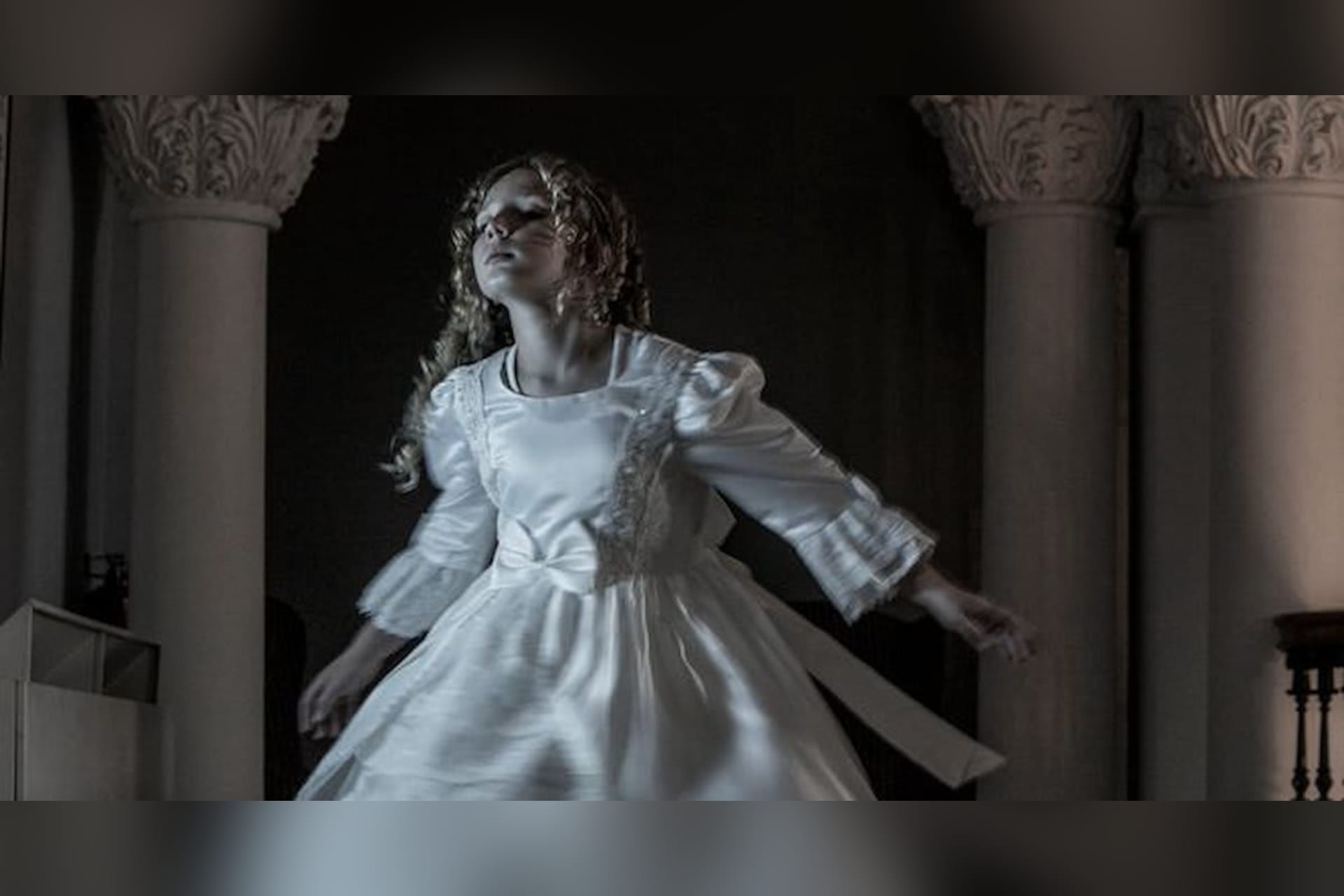
One such dance was attended by a WVU professor, his wife and their young daughter Sally. Sally loved to dance and sing. The night of the party at Commencement Hall, she wore her favorite dress and put ribbons in her hair. Eight years old and carefree, she danced with abandon.
That evening coincided with a major typhoid epidemic in Morgantown, and not long after, Sally died of typhoid fever. But she had been so happy at the party, the legends say, that she longed to return.
Today, one of the ghosts frequently seen on the Morgantown campus is a young girl on the second floor of the Mountainlair, dancing her life away.
Most of the custodial staff of the Lair have glimpsed Sally over the years. They usually don’t think much of it and assume she’s someone’s daughter until they see her go around a corner, they follow her, and she’s gone.
Sometimes people with offices in the Lair observe that items on their desks disappear, then reappear. That’s curious Sally taking things to play with them for a while before she politely returns them.
Sally is a friendly ghost, and if you ever see her, you can talk to her. But she won’t talk back.
There may be another reason Sally dances on through the decades. She was buried in United Methodist Episcopal Cemetery, but her remains were disinterred along with all the other bodies that had rested there.
Why? Well, so that Stewart Hall could be built on the grounds of the graveyard where Sally had been laid to rest.

After a glamorous party held on the current site of the Mountainlair, little Sally perished of typhoid. Her body was later dug up to lay the foundations for Stewart Hall. Today she can be glimpsed dancing or playing with objects borrowed from the living. Photo by Raymond Thompson Jr. / WVU
The curious cats and the constant custodian
Sally isn’t the only WVU ghost animated by the spirit of curiosity. For years, students studying in the Wise Library reading rooms have heard rustlings on the floor near their bags and looked down to find cats sniffing their books and weaving around their legs.
Some have seen a black cat, others a little gray tabby. The cats jump right up on the table, but if you try to pet them, your hand will pass right through.
While there are claims that the hauntings are the work of a single ghostly cat who was once the pet of a female librarian, it’s notable that the library, White Hall and Clark Hall were all erected on land that was originally the family farm of Professor Israel White, a respected WVU geologist who also raised livestock.
Professor White would have had barn cats who were used to a life of stalking and prowling, and once their spirits could no longer roam farmland, they likely had to adjust to a life in the stacks.
To keep them company, the cats have the ghost of a maintenance worker who accidentally backed into an open elevator shaft while cleaning an upper floor during construction of the library in the 1920s, falling to his death.
Ever since the building opened in the early 1930s, students on high floors of the library have been reading at their carrels when suddenly they hear a chair nearby scoot out, as if somebody is sitting down. But when they get up, no one is there.
What’s more, the elevator sometimes travels to the library’s upper floors, only for the doors to open on a car that’s seemingly empty.
Some believe the custodian’s instincts toward the students are protective, but others say he must be vengeful about being doomed to spend eternity at work.
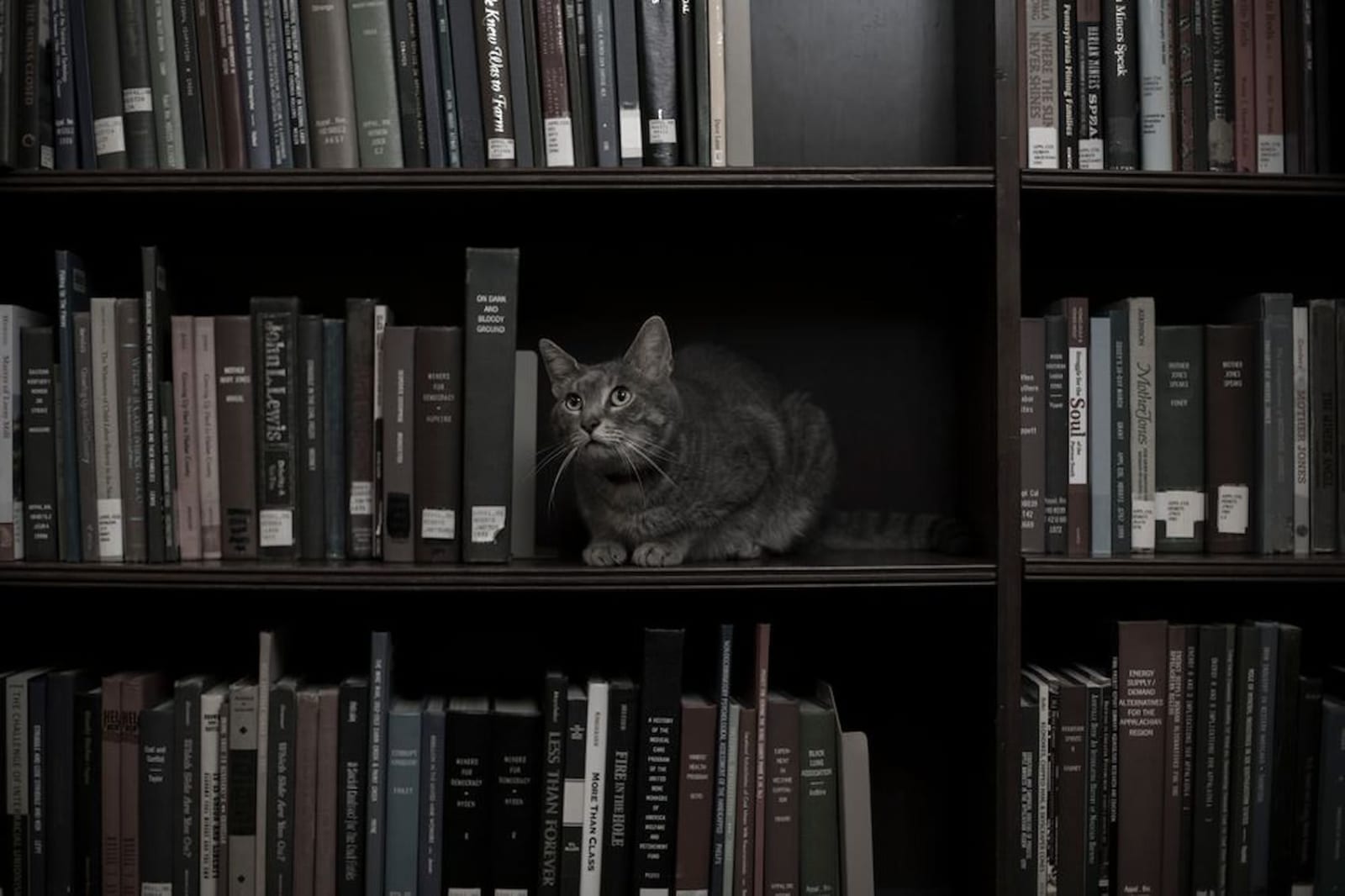
The WVU Wise Library is haunted by a cat who may once have prowled downtown Morgantown when cattle grazed on farmland there. Today, the cat stalks students instead of mice. Photo by Raymond Thompson Jr. / WVU
The redoubtable Mrs. Moore
In late April of 1863, before WVU was founded, Morgantown was attacked by Confederate cavalry troops.
They rode in from Preston County and began ransacking the downtown, burning one of the only bars on High Street and raising the Confederate flag over the courthouse.
They were looking for shoes, horses and U.S. Senator Waitman T. Willey, one of the key forces behind statehood for West Virginia. They asked a group of young women if they knew where Willey was, and one told him, “Well, I’m sorry, sir, he’s already left, so you’re not gonna be able to capture him.” She didn’t reveal that she was his daughter.
The soldiers began feeling frustrated, and they could see Woodburn Female Seminary, which was located where Woodburn Circle is now: a large white wooden building up against the skyline.
One of the commanders called on the troops to light the seminary on fire. So they set off up the hill, a bunch of men on horseback with torches. As they arrived, they were greeted by a matronly woman, Elizabeth Moore, who was the seminary’s principal.
She met them, had a whole dinner already prepared for them, and she said, “Gentlemen, I was expecting you. Won’t you sit down to the table to eat?”
Moore and her staff served the soldiers food and mended their wounds, while the female students hid in the basement so as not to be accosted by the troops.
And when the Confederates were done, they decided to leave the building intact after all — perhaps in part because they were starting to worry that Union troops were getting fairly close. But in some measure, Moore’s bravery may have helped to save the city.
After the Civil War, Moore became an unofficial advisor to WVU, consulting on issues like housing and student life. She lived to be 98 and witnessed historic changes take place at WVU. She played a role in the implementation of co-education for women at the University and in creating safe spaces for women on campus, including E. Moore Hall, which was originally a women’s gymnasium.
Since her death, scores of Mountaineers have seen the ghost of Mrs. Moore in a white dress with black shoes: going up and down the stairs of E. Moore, peeping through the windows, inspecting the drapes for dust.
During co-ed swim parties held at the E. Moore basement pool in the 1920s and 1930s, she frequently appeared to scowl at male and female students as they socialized in bathing suits.
And in the 1980s, when an attempt was made to replace her portrait on the wall of E. Moore Hall with that of a male administrator, the employees found the administrator’s portrait on the floor facing the wall each morning, while hers was back in pride of place. She repeated the procedure until the University relented, and her picture was permanently restored to its position of prominence.
These days, Mrs. Moore is generally well-respected and rarely forced to take corrective action. Indeed, she sometimes has a pot of hot coffee waiting for the first staff member who shows up to E. Moore Hall for work in the morning.
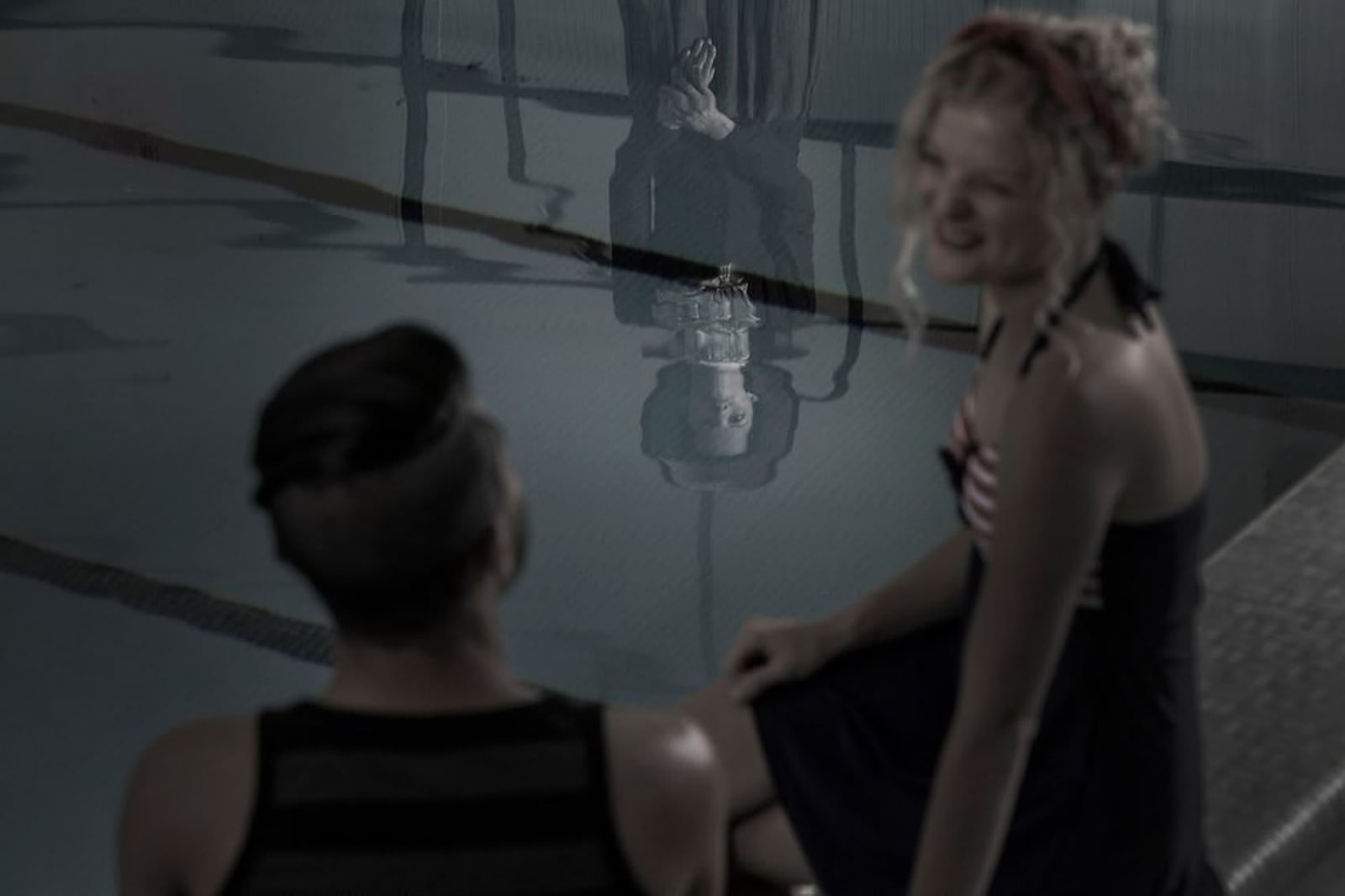
Before WVU was founded, Elizabeth Moore ran a women’s seminary where Woodburn Hall stands today. She protected her students from Confederates and helped women find a home at WVU, then died and commenced haunting E. Moore Hall. Photo by Raymond Thompson Jr. / WVU
Community Bulletin
When a burst pipe, leaking roof or major storm hits a home, Foster's Marketing Group offers emergency repairs 24/7 — water mitigation, pipe and roof repair, drywall, and insurance assistance — from a Buckhannon company licensed and insured in West Virginia. Read more →
This story brought to you paywall-free, courtesy of the My Buckhannon team and our community partners