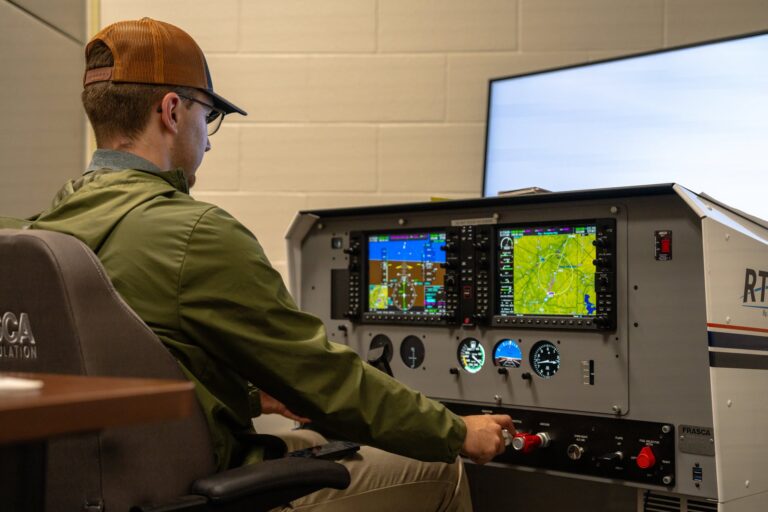
In one room, students hunted for problems hidden inside sabotaged computers. In another, they styled fantasy updos that would put prom hair to shame. Down the hall, they framed walls, hung doors and cut out staircases.
It was competition day at the Fred Eberle Technical Center, which hosted the SkillsUSA local competition Feb. 10. Students across six career and technical programs competed head-to-head for a chance to advance to the state contest in March.
SkillsUSA is a national career and technical education organization where students demonstrate real-world skills in their chosen trades, evaluated by industry professionals. Local winners advance to state competition, then to nationals in June — and eventually to a world championship.
Rebecca Bowers-Call said the annual competition is both a showcase and a stepping stone for students.
“If they compete well at the state level, they get a chance to go to the national contest in June and eventually the world,” Bowers-Call said. “They get to compete in their own occupational area. Each of their programmatic areas has several different skills they have to perform, and we have our industry judges here. Those are our business partners that help us out throughout the year, and they are wonderful to take a day out of their lives to come and spend a day at the school with the students, watching — a lot of times one-on-one — what the students can do within their respective areas.”
She said that in her nine years at Fred Eberle, the school typically sends a strong group of students to nationals.
“We usually have at least a couple of programs that win first place at the state level, which takes them to the nationals,” Bowers-Call said. “I think last year we had seven or eight students in different programs, so we usually do pretty well. I don’t want to jinx us or anything, but we’re pretty proud of our success over the years.”
Chad McKisic, instructor of information technology, had four students competing in the competition.
“I have two one-year programs. I teach computer repair and robotics and drones. We can do a lot of different competitions, and there are a couple of different robotics ones that we’re not doing this year,” McKisic said. “Urban search and rescue and commercial drone — we’re not doing those — but we’re going to do Cisco networking, computer programming and telecommunications cabling.”
He said he saw two computer repair students go to nationals three years ago, and a Cisco networking student went to nationals six years ago.
“One of the contests has us sabotage a computer with hardware — you just mess up everything, you unplug stuff and flip the little chips around — and they have to fix it,” McKisic said. “We are always looking for good candidates for these programs.”
Mary Hull, cosmetology program coordinator, said her students had to complete two haircuts and a fantasy updo during the competition.
“A fantasy updo is a little bit crazier than a prom hairdo or a wedding hairdo would be. It’s a little bit more elaborate and requires thinking outside of the box,” Hull said. “We have 21 competing today; we have seven adults and 14 high school students. We’ve competed for nine years, and four out of the nine years we have gone to nationals. We’ve had a third-place winner at nationals, we had a top 10, and we’ve had a top five.”
The cosmetology program is accepting applications now to begin in August.
Carpentry instructor Randy Cunningham said his eight competing students were required to build a simulation for a wall with a door in it and rafters, and they had to cut out a set of steps.
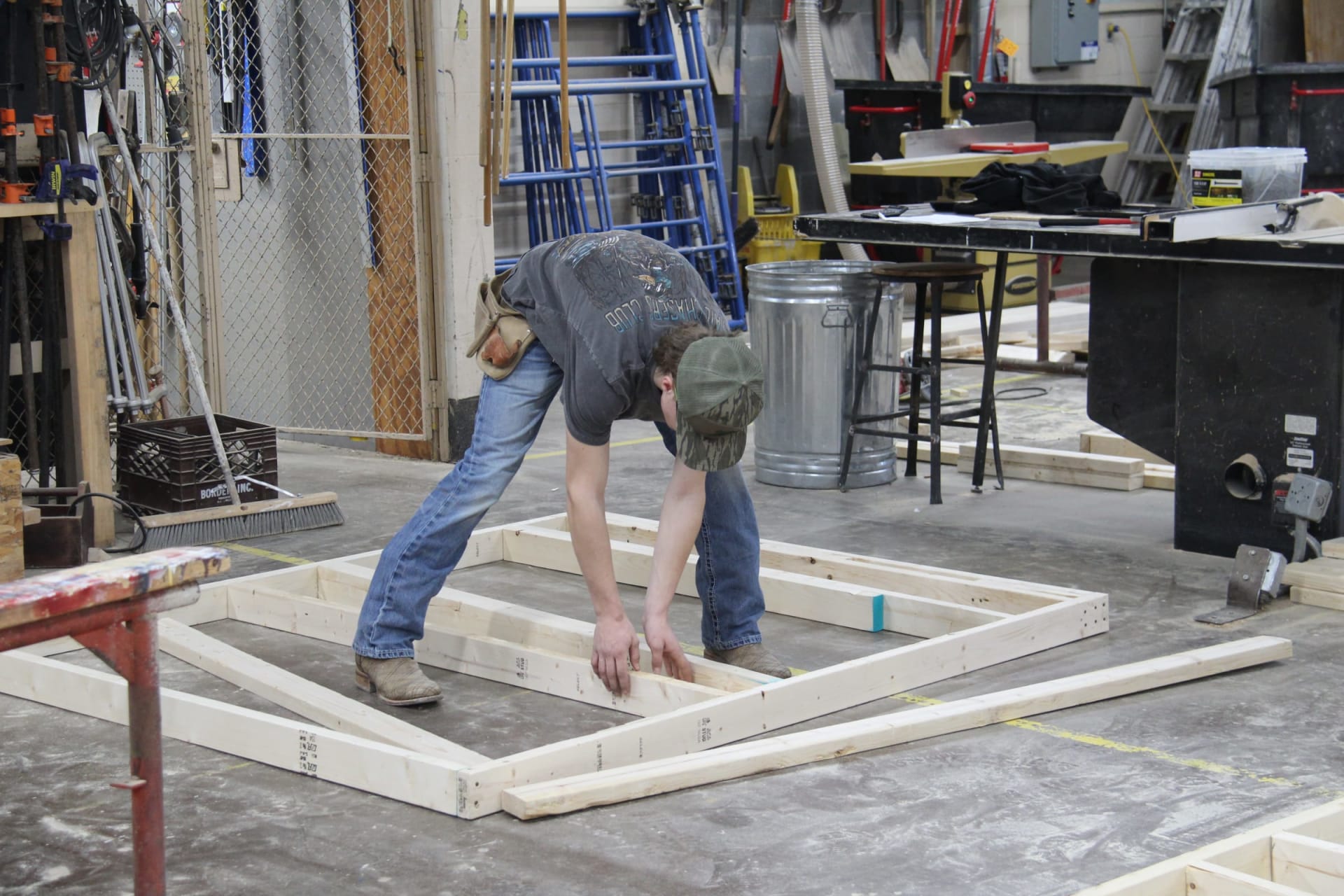
“It’s a great career. I recommend it to anybody who is really good at working with their hands and likes working with wood. If I have 100 people graduating out of this class, I can put them all to work every year without a problem,” Cunningham said. “We do a little bit of commercial stuff, but it’s mostly residential carpentry. I can have both adults and students, but I don’t have any adults this year. This is the first year I haven’t had adults.”
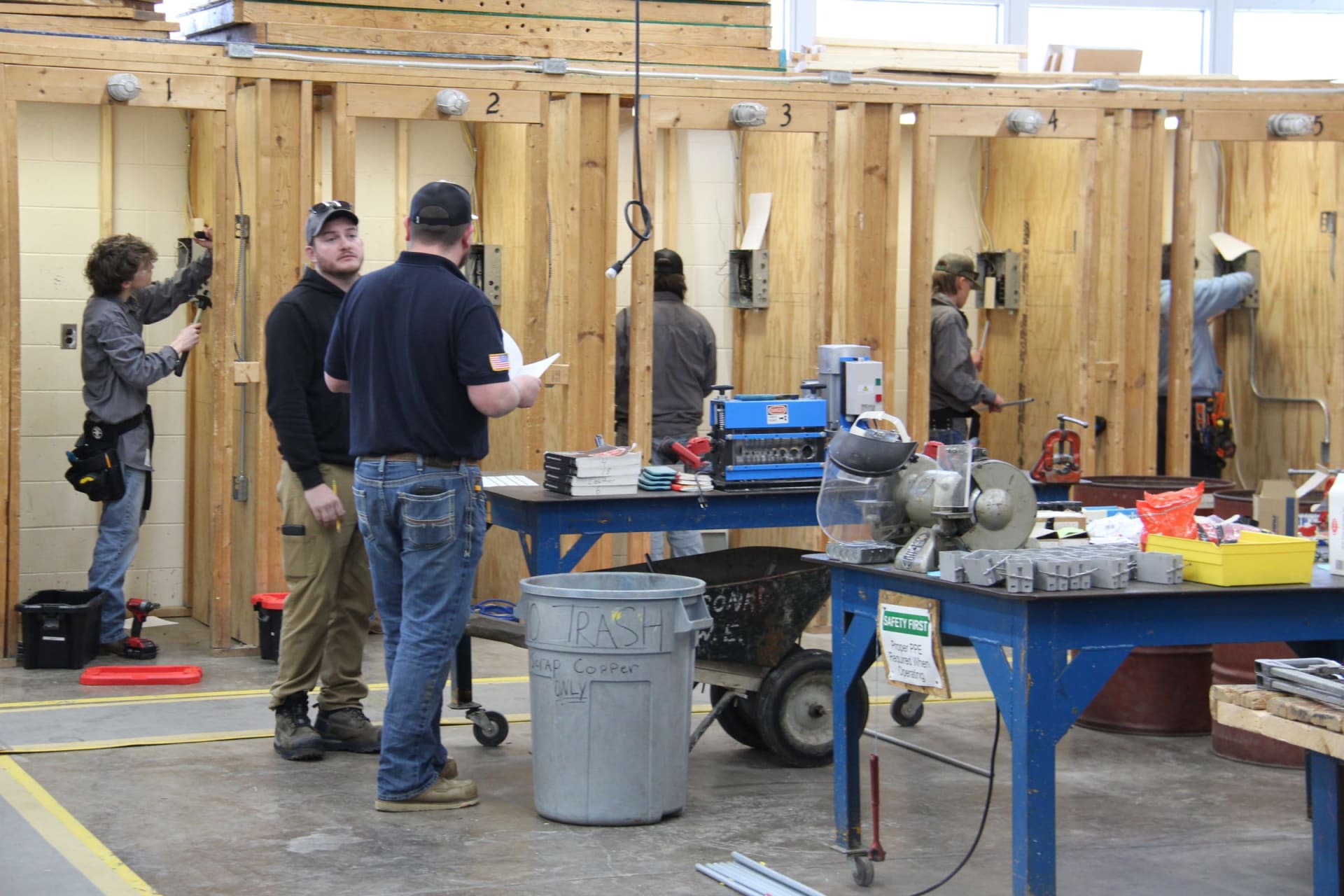
Robert Lowther, electrical technician instructor, said he had 16 competing students in electrical construction wiring and five competing in industrial motor controls.
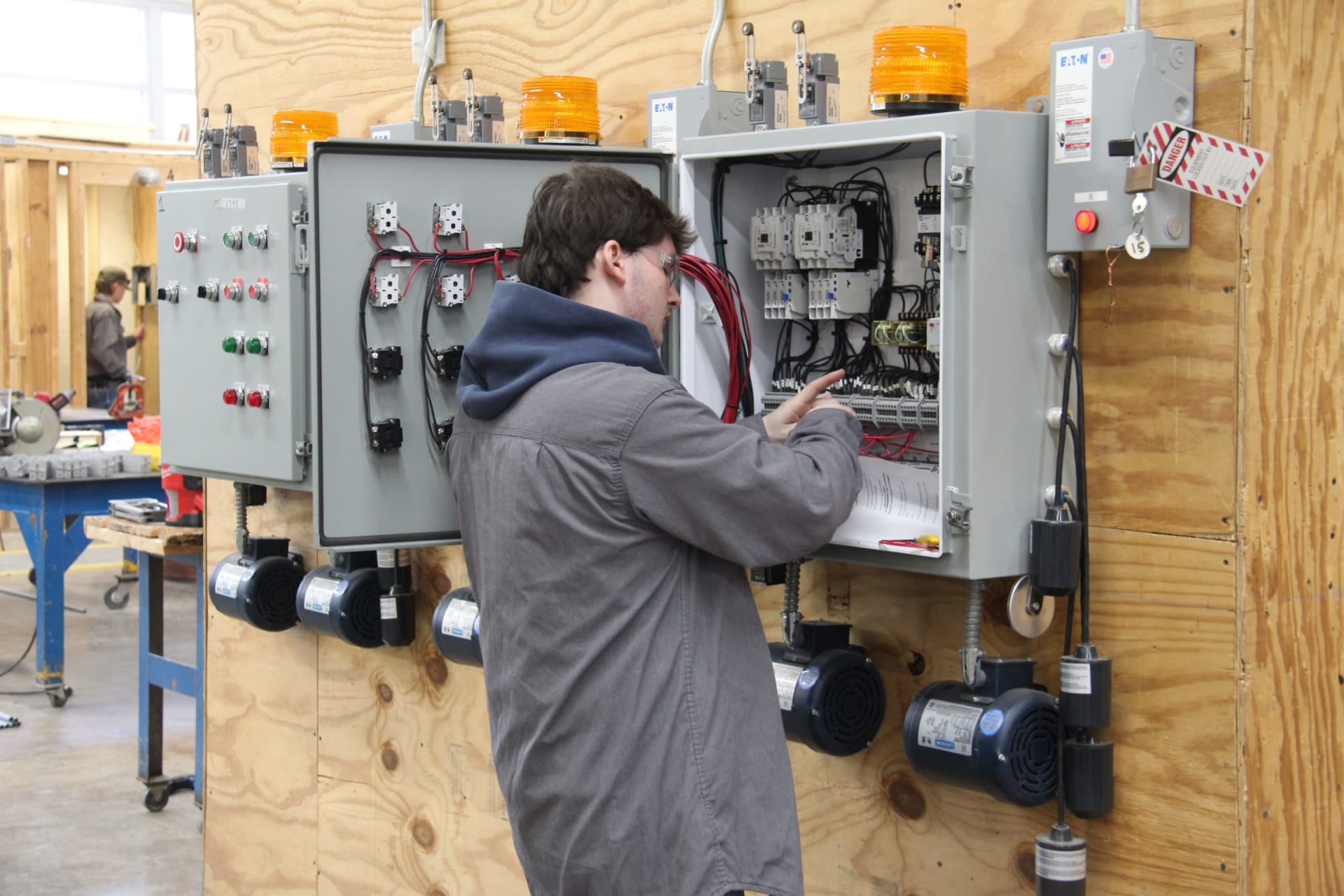
“The students took a written test, and whoever scores the highest on the written test earns their way into the hands-on portion of it. The residential project is a combination of a light commercial conduit project and basic residential wrapped into one project — it’s pretty much just entry-level wiring,” Lowther said. “The idea is to see who can do it the neatest, the fastest and the most electrical code compliant.”
Lowther said his students typically make it to nationals.
“We usually have a pretty good showing at nationals. Generally, our students are in the top 10 in the nation, and I think the best we’ve ever done in this program was a fourth place,” Lowther said. “This is a good place to learn basic electrical. If you’re interested in learning the trade, this is a great place to be. We try to get your license and get you out to work.”
Automotive instructor Terry Ervin said their contest comprised 10 different stations.
“For example, we have a live vehicle here that has four bugs they have to figure out. We have 50 parts they have to ID, we have a brake measurement station, we have an engine measurement station, and we have a suspension diagnosis station,” Ervin said. “This is a great experience for the students. I think it’s a fun time. It’s good they get to compete against each other and get experience of what it is in the real world.”