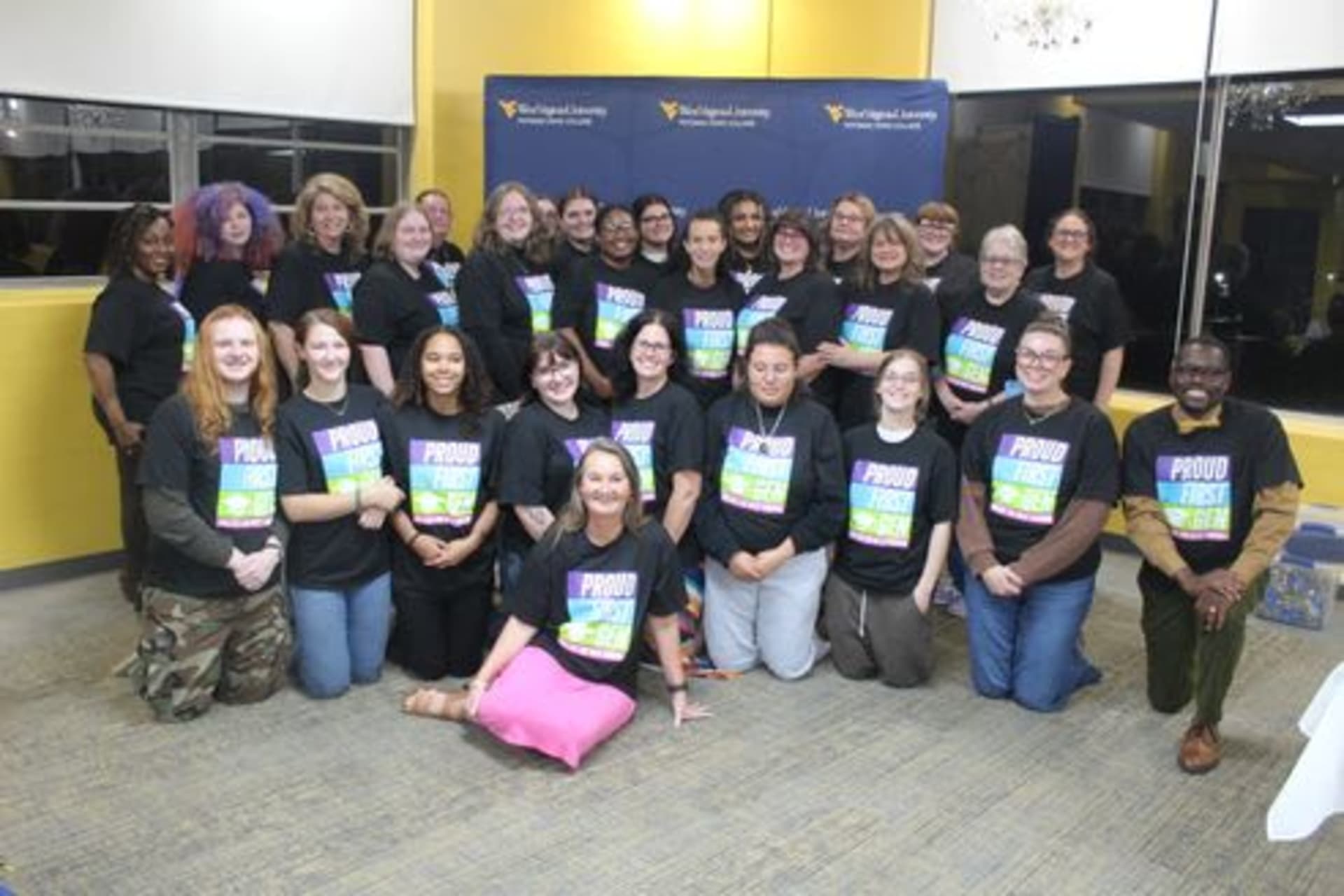
What does it mean to be a “First Gen”? In college settings, the term refers to anyone who is the first in their family to attend an institution of higher learning after graduating high school. It includes students who are the first in their families to attend colleges, universities and even trade schools for degrees and certificates that require specialized training and further educational study.
The annual National First-Gen College Celebration honors the anniversary of the signing of the Higher Education Act of 1965. This act was passed to allow every person access to higher education regardless of his or her status and background. It provides financial assistance through federal funding to give students grants, scholarships and make loans available to those who would not have otherwise been able to attend. That singular act of 1965 is credited with opening the floodgates for community and junior colleges to increase enrollment because potential students from rural and often underserved populations could now include attending college as a personal aspiration.
At WVU Potomac State College, that observation includes an annual celebration dinner held around the anniversary date of that national act. This year, this dinner included remarks from WVU PSC President Dr. Jerry Wallace, academic advisor Bonnie Lawson, Norma Hart of the registrar and academic affairs office, academic advisor Michele Labar, PSC First-Gen and nontraditional student Kori Cutter, alumni relations coordinator Donna Gardner and keynote speaker Sharon Imes of the Allegany County and Mineral County Toastmasters Club.
“I am a proud First-Gen because I can now take care of my parents,” said President Dr. Jerry Wallace, recalling his own personal story as the first of his family to attend a four-year school. “I grew up in a low-income family.”
Wallace said when he chose his dissertation to receive his PhD, he chose the topic of “First-Generation Low-Income Students Experiencing Survival Guilt While They Are in College.” He said he decided on that topic because it was one with which he was familiar and passionate.
“I felt bad because I was taking a chance at wanting a better life,” he said. “And I knew there were more people who felt like that, and my research on that indicates that 70 percent of First-Gen students feel a tug of guilt. It’s not necessarily that you are leaving your family behind but that you are going on to something new and not everybody can come with you. I knew what my family was facing back home.”
Wallace said taking an evening to celebrate other First-Gen students is an important observation.
“I just want to commend the students for taking that step because it can be a tug on the heart,” he said. “But remember, First-Gen students also serve as examples for others to go to college. Since my brothers and I all went to college, it became more normal in my family for others to go to college now. It doesn’t have to be two- or four-year schools. It can be trades. Education is education.”
He said attending college as a first-generation student showed him the value in asking for and receiving help.
“It’s okay to say, ‘I didn’t know that’ or ‘I wasn’t prepared for that.’ That’s what college is for,” he said. “And the people who are around you who have attended college have had the same experiences, and we want to see the next generation succeed. College changes lives, so hopefully each of you here tonight persists. Even if it takes you six years. That’s fine. Be intentional. That’s okay. Education is the great equalizer, and I believe that, and that is why I am in education. Education allows me to see something in myself that I didn’t see in myself without it.”
Norma Hart of PSC’s registrar and academic affairs office commented on her own personal experience.
“I am also First Gen,” she said. “We are all here to help. I am an alum as well. I came here as an adult learner. I was a woman in my 40s with three kids coming back to school to get my bachelor’s degree. I know it can be an uphill battle for all of us, especially for First Gen and especially for adult learners. We all have jobs and responsibilities, but you push forward because you are going to make a better life for yourself and for your families.”
Academic advisor Michele Labar recounted the hardship and sacrifices her mother made when she decided to attend college as a first-generation student in her family.
“My family was receiving SNAP benefits when I announced I wanted to go to college,” she said. “My mother didn’t know where to start. She didn’t know where to find information. When I chose to go to school, I went to a private school that didn’t accept any federal money. It became a whole family effort.”
Labar said her aunt invited her family to come live with her so her mother would not be burdened by a monthly mortgage or rent payment and instead could use those funds to pay for Labar’s education.
“My mother put that money toward my school bill,” she said. “My mom found a new job so she could make more than minimum wage. I worked on campus too and worked 20 hours a week. I worked my way up from cleaning dorm bathrooms to working for the music library, and then worked for the school theater. But it was my family that made it happen. I was able to graduate with only $1,500 in debt because my whole family stepped up. I was the first on my mother’s side to go to college. Ever. I think about it now and how I didn’t appreciate it at the time, but my family made so many sacrifices. My degree was my whole family’s degree.”
Labar said her advice to First-Gen students is to ask for help when needed and take advantage of every opportunity to become involved that the campus offers.
“Those opportunities are not out there for the rest of our lives,” she said. “These things that are here for us, whether it’s getting together to make a craft or going for a walk for our mental health, these are the times, and these are the relationships where you can make that happen. It’s never like that after college. I am super grateful for those experiences. Get to know people from everywhere. People have the same ideals about their education, but everyone has something different to contribute. When you are on campus, take advantage of everything. It will open doors you don’t even know exist yet. It will make all the difference.”
Nontraditional and First-Gen student Kori Cutter also spoke at the dinner, giving a unique point of view from the perspective of a currently enrolled student. Already having an established career in the healthcare industry, Cutter said she returned to college to obtain a degree to “better my life and my future.”
“I think sometimes we put pressure on ourselves to figure everything out, but I have learned life doesn’t always work that way,” she said. “I am learning and discovering new things about myself. Being a first-generation college student comes with its own challenges. When you are the first generation in your family to navigate college, there isn’t always someone at home who can explain how everything works. Sometimes, you are figuring out your financial aid, scheduling classes, understanding degree requirements, and meeting deadlines on your own. And believe me, there are times when I felt overwhelmed and questioned whether I could do it. There have been many late nights completing assignments after taking care of everything else that needed to be done that day. But I kept going because I want to show my children it is never too late to pursue something new.”
It is because of her children, Cutter said, that she found the strength and courage to persevere and continue with educational plans.
“I want them to understand that just because something is difficult doesn’t mean you should give up,” she said. “One of the biggest things I have learned is that you don’t have to have your entire future figured out to take the first step. Sometimes you just have to be willing to try. As a first-generation student, I used to feel like I had to figure everything out myself, but I realize that professors, advisors, and even other students are there to help us all succeed.”
Cutter said she does have advice for other First-Gen students.
“Don’t compare your journey to someone else’s,” she said. “Some students know exactly what they want to do from the moment they step onto campus and others, like me, are still trying to figure it out. And that’s okay. It doesn’t matter if you are 18 or raising a family full-time or returning to school after being years away. What matters is that you are making an effort to better yourself and create opportunities for your future.”
Keynote speaker Sharon Imes is the chairman of the Toastmasters Club for both Allegany County in Maryland and the new chapter recently formed in Mineral County in West Virginia. Imes told those in attendance about her background as a Wall Street broker, a Standard and Poor’s and Fortune 500 rising star and even promoted her newly published book. Her genesis story, she said, began as a girl growing up in Trinidad who was determined to be the first in her family to attend college.
“I grew up as a little girl stuttering her way through adulthood,” she said. “I could not even enunciate the S in my own name. I couldn’t pronounce Ws either. I thought I was broken. I thought somehow God had made me broken and for a long time I thought my life had no value, and I had no place in this world, a world of booming voices.”
She said at age 17, she made the decision that college would provide her with the exposure to other cultures and “finding ways to improve myself.” Graduating early, she attended a Dale Carnegie course and was the youngest person in the class. That inspired a lifetime of learning and enrollment at New York University, and it was an education, as a first-generation student, she had to discover and navigate on her own.
“And that thought would take me to places I never thought I could even dream of,” she said. “Today, at this college, students have people who will help them. Back then, I had no one. I had to learn the way myself and find my place. If you feel broken, if you are like me and you feel you don’t know where you are going, and the world has no place for you, I am here to tell you there is a place for you. Specifically, you. And as you take advantage of the many opportunities at college, you will find a place for you.”
Imes said assistance exists now that did not exist when she was attending college.
“Continuously learn. Find a point person. Find the help you need. And there is help and support. You don’t have to figure it out by yourself. Take advantage of all the people on this campus who want to help you and will serve you to make sure you succeed,” she said. “I didn’t have that. I am a First-Gen individual who has now inspired my siblings, and nieces and nephews to go to college as well.”
The author of the book, From College to Corporate and Beyond, Imes called First-Gen students “real trailblazers.”
“You are making a road for others who will come behind you,” she said. “Don’t take that lightly. Don’t be so hard on yourself. It’s okay to mess up. You have people here to guide you. Don’t be afraid to ask questions. Don’t be afraid to dream. Refine those gifts and skills inside you. Invest the time and learn. Anything you want to do starts here. Anything you see that was created started first in the mind. You are leaders of yourself, your family, and of the next generation. Don’t take that for granted.”
The annual First Gen dinner is organized by PSC academic advisor Bonnie Lawson. She was also the first in her family to attend college.
“This dinner really does mean a lot to me,” she said. “We all need someone to help us through the hurdles, as we do have several along the way. Speed bumps, sometimes, as we want to call them. But we are all here for each other to get through that and to offer support.”
Help Wanted
The Sheriff of Upshur County is accepting applications for a full-time tax deputy position with benefits. Applications are available at the Tax Division, 38 W. Main Street, Room 101, in Buckhannon and must be received by 4 p.m. Friday, Nov. 20. Read more →
This story brought to you paywall-free, courtesy of the My Buckhannon team and our community partners