Story by Katie Short / WVU
Vicki Kondo, manager of the Linda Butler Insect Zoo and Entomological Museum at West Virginia University, starts with a simple offer, “Do you want to hold her?”
The “her” in question is a female spiny stick insect, native to the rainforests of Papua New Guinea. Lifted gently from her enclosure, the insect reaches out with her prickly legs. Because she is nocturnal, she is sluggish in the daytime, moving slowly across the visitor’s palm.
“We look at it very anthropomorphically,” Kondo said. “But we’re just a substrate to them. My hand is just something to walk on.”
It is a small shift in mindset, but one that Kondo, a research assistant in WVU’s Department of Entomology, hopes visitors will make when they encounter the animals in her care. Alongside Emily Johnson, a graduate student in entomology and the zoo’s outreach coordinator, Kondo introduces people to a space many might otherwise go out of their way to avoid.
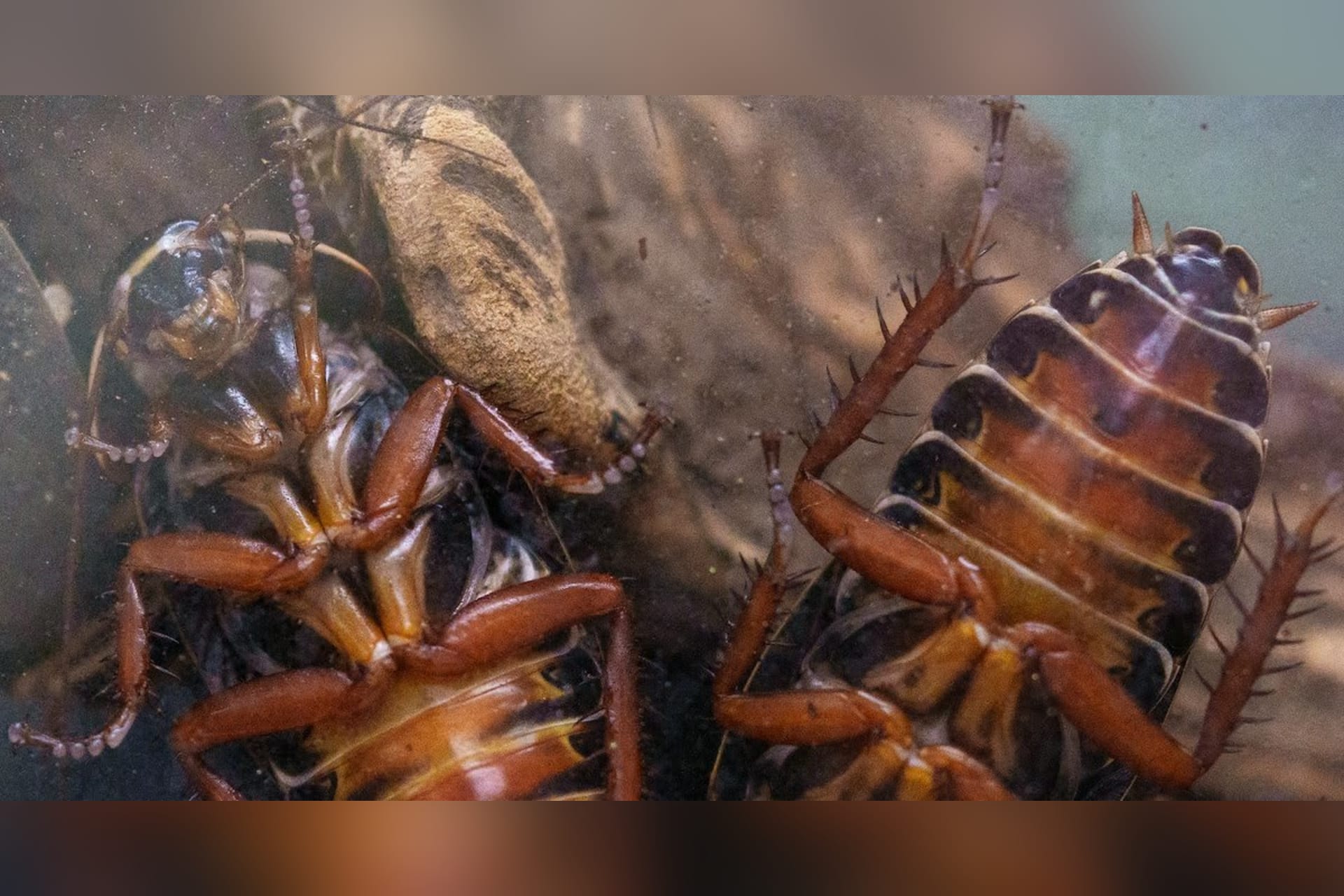
It’s a world of interactive encounters with insects of every ilk. For special events like Halloween, the Insect Zoo even hosts races in which Madagascar hissing cockroaches face off against death’s-head cockroaches.
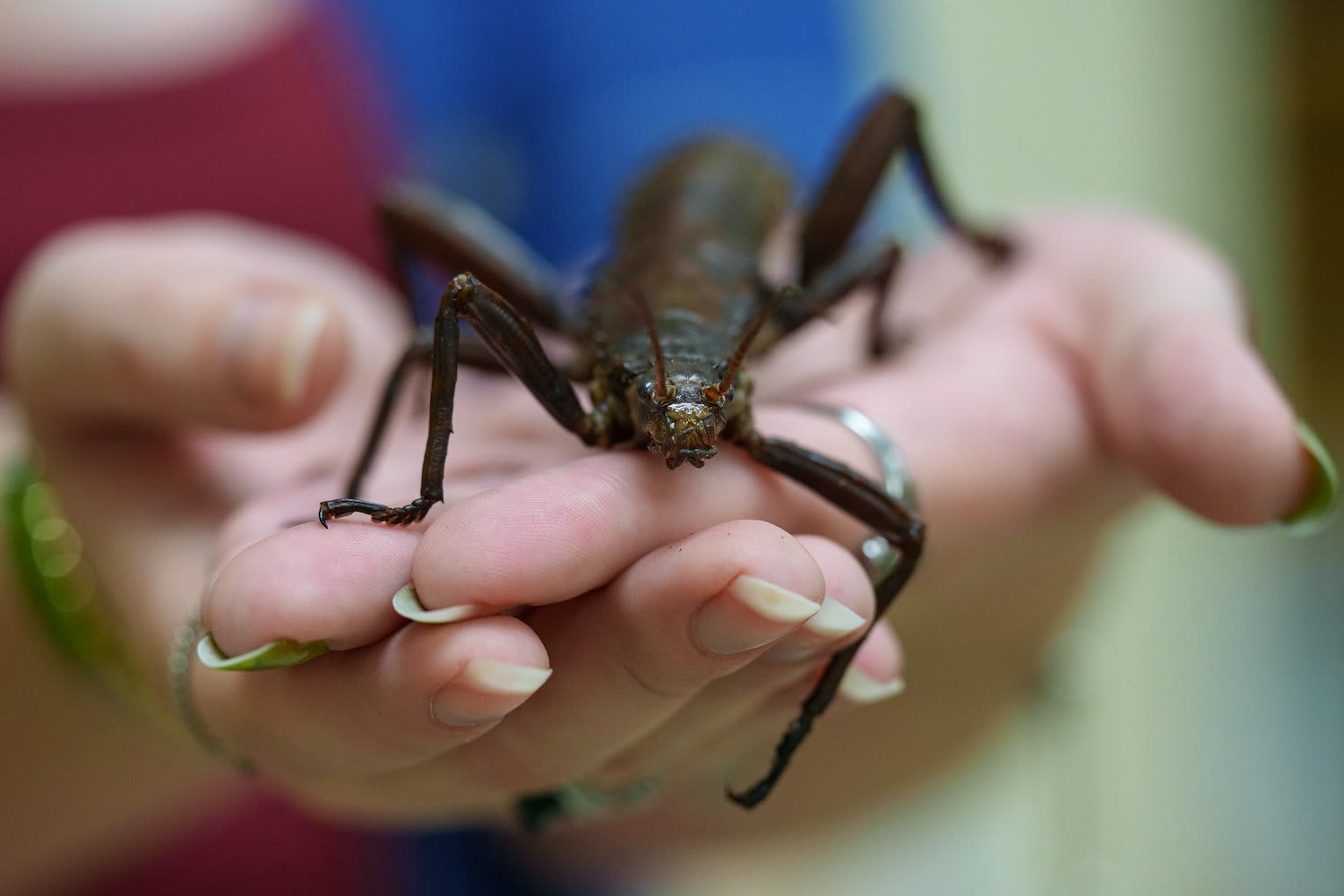
Graduate researcher Emily Johnson holds a spiny stick insect. Photo by Rebecca Particka / WVU
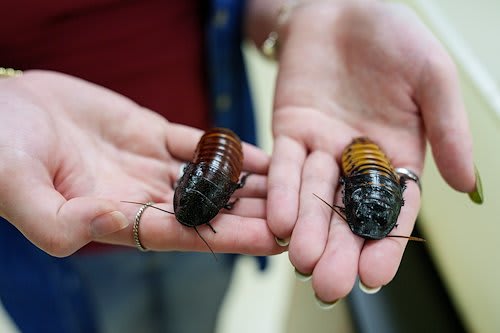
Emily Johnson holds female and male Madagascar hissing cockroaches. Photo by Rebecca Particka / WVU
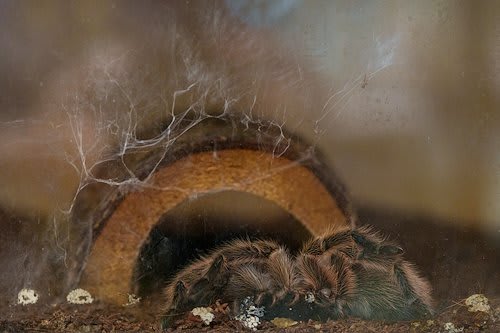
A tarantula, seen through the glass of its enclosure, sits under a web at the Insect Zoo in the Agricultural Sciences Building. Photo by Rebecca Particka / WVU
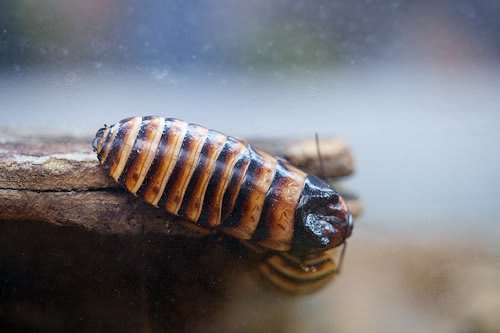
With its contrasting orange and dark markings, the Halloween cockroach adds to the variety of species visitors can discover. Photo by Rebecca Particka / WVU
Through exhibits and educational outreach, the Linda Butler Insect Zoo and Entomological Museum at WVU helps visitors learn about the animals’ behaviors, ecological roles and importance in the natural world.
Face your fears
Professor of Entomology Yong-Lak Park helped establish the Insect Zoo in 2007. Back in the early days, Kondo recalled, the collection occupied a storage room.
“I cleaned it out, and I put a few things in there, so we had maybe about 10 different species,” she said. “It’s grown a lot.”
Today, the zoo houses a rotating collection of more than 25 living species, many of them tropical animals selected for their visual appeal.
“They’re bigger, showier, they get people’s attention,” Kondo said.
Native West Virginia species can be more difficult to maintain indoors, she added, because of the seasonal changes they should experience.
Kondo wants each animal in the collection to give visitors a reason to look closer.
“I try to get species in the zoo that tell a story,” she said.
One example is the Simandoa cave cockroach, endemic to a singular cave system in Africa. The cockroach lost its natural habitat after the area was heavily mined for bauxite, an ore used to produce aluminum.
“It’s actually extinct in the wild,” Kondo said.
She said the species has survived in captivity, kept alive by people who maintain cockroach colonies.
“Since 2011, the only place that they exist is with people that keep cockroaches,” she said.
Cockroaches are a particular interest of Kondo’s.
“Out in the ecosystem, roaches are very, very beneficial because they eat leaves, wood, and they’re turning over nutrients,” she said.
In a nearby enclosure, black-and-white spotted cockroaches scurry over one another.
“It’s called a domino roach. They are originally from India. They live out in the forest, they feed on leaf litter, and they’re just kind of adorable,” Kondo said.
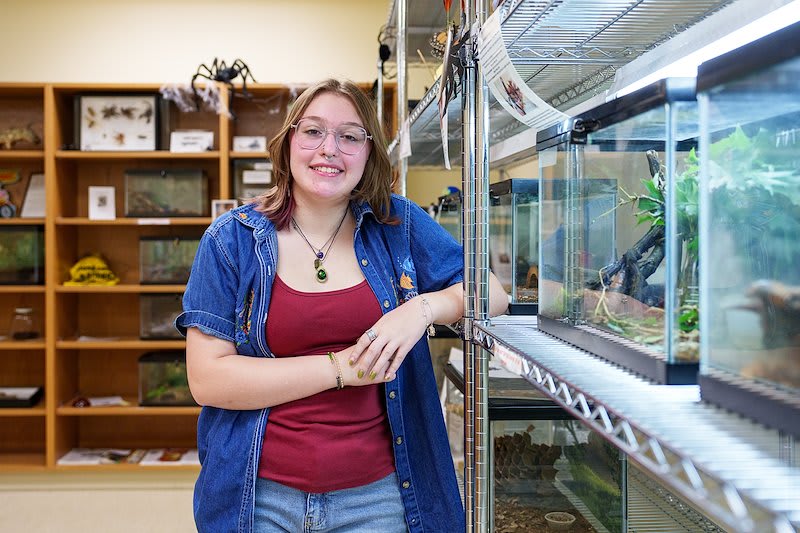
Emily Johnson, a WVU graduate student studying entomology, poses by some of the live specimens at the Insect Zoo. Photo by Rebecca Particka / WVU
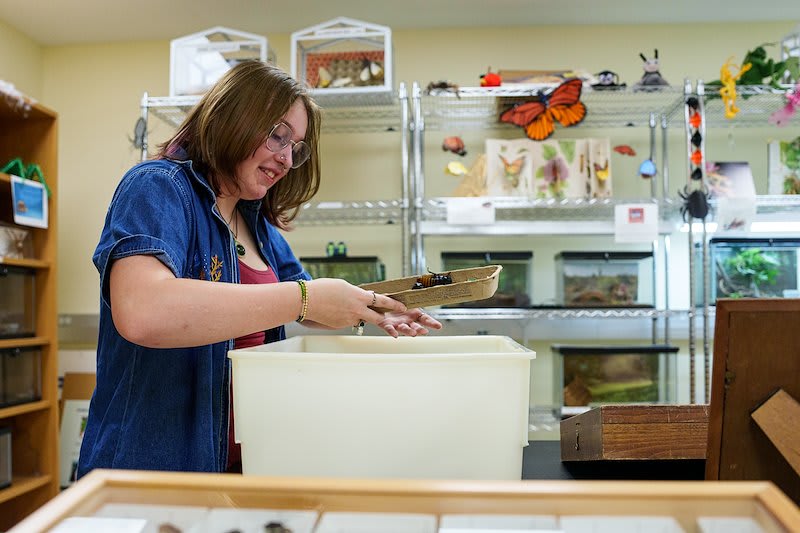
Emily Johnson removes Madagascar hissing cockroaches from their enclosure inside the WVU bug zoo. The insects produce their signature defensive hiss by forcing air through “spiracles,” specialized breathing holes along their bodies. Photo by Rebecca Particka / WVU
As outreach coordinator for the WVU Arthropod Museum and Insect Zoo, Johnson introduces visitors to the animals’ distinctive features and behaviors through hands-on encounters.
It’s a bug’s world, too
Johnson helps care for the living collection, manages daily feedings and coordinates group tours.
Her interest in entomology began in principles of entomology courses with Park. Collecting aquatic insects meant wading into streams, kicking through the substrate and flipping rocks to see what lived underneath.
“The aquatic class is definitely interactive,” Johnson said. “Getting that balance of lab work and field work made me realize I wanted to do this professionally.”
Now, her work at the zoo gives her experience communicating with the public about the natural world, a skill she hopes to carry into a career in environmental regulation.
That work can mean helping visitors see beyond an insect’s intimidating appearance. During a workshop on spiders, Johnson learned just how delicate a tarantula’s abdomen can be. A participant who brought a pet tarantula warned her that dropping the spider, even from just a few inches, could kill it.
“If you drop it, it could pop like a water balloon,” Johnson said.
The encounter underscored how easily these animals can be injured if handled carelessly.
Over time, Johnson has become more accustomed to visitors’ reactions to the zoo’s residents. Still, she remembers that what feels ordinary to her may be frightening to someone else.
“It’s definitely entertaining whenever people start overreacting,” Johnson said. “I have to step back and have a bit of empathy.”
That empathy goes both ways. She wants visitors to think about insects from the animals’ perspective, rather than treating every unexpected encounter as a threat.
She explained that many creatures are unlikely to bite unless they feel they have to defend themselves. Producing venom requires energy, and insects and other arthropods have their own reasons to avoid unnecessary encounters.
“People are very inclined to kill any insect they see, especially if they’re outside and something lands on them,” she said. “You are in its home. It lives there — that’s where it’s from. I think people need to be a little bit less defensive.”
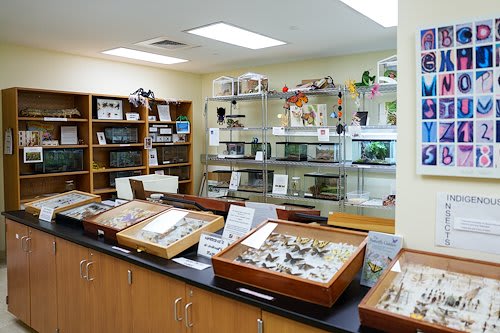
Interactive display cases, informational posters, pinned specimen drawers and shelves of enclosures fill the main gallery of the Linda Butler Insect Zoo and Entomological Museum. Photo by Rebecca Particka / WVU
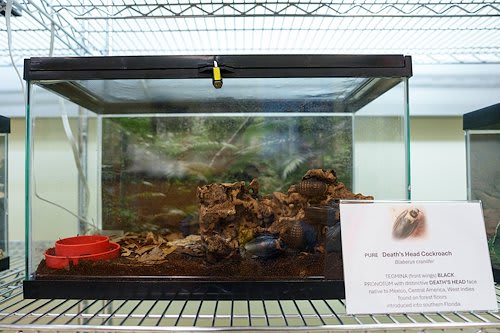
The residents of the WVU bug zoo include giant death’s-head cockroaches, named for their distinctive skull-like patterning. Photo by Rebecca Particka / WVU
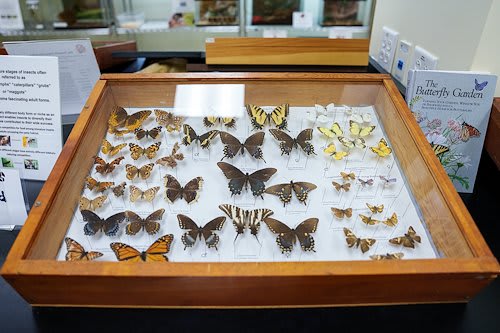
Pinned and preserved butterfly specimens are displayed in a shadow box. Photo by Rebecca Particka / WVU
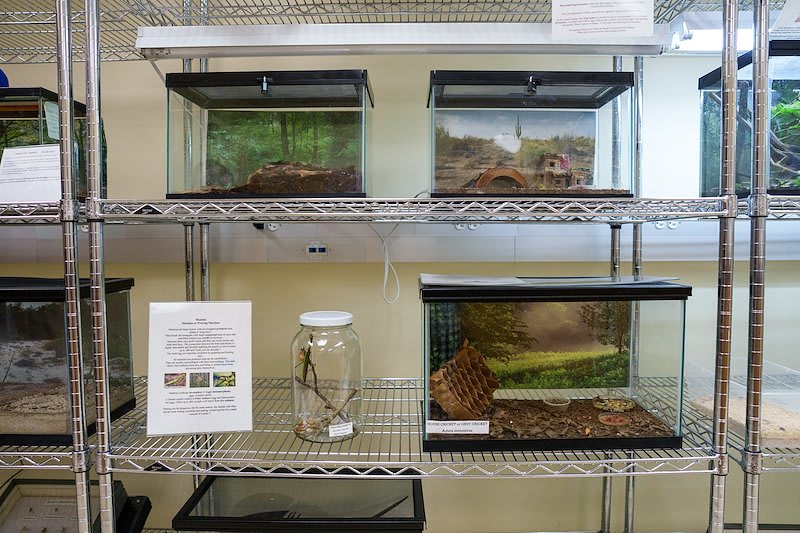
Living specimens rest in their enclosures in the WVU Agricultural Sciences Building. Photo by Rebecca Particka / WVU
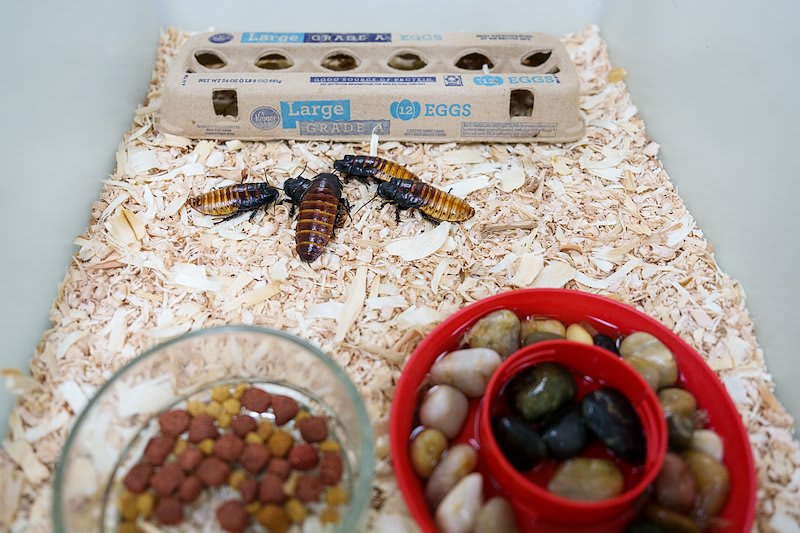
The WVU bug zoo feeds its Madagascar hissing cockroaches dry kibble and uses wood shavings to mimic their natural forest-floor habitat. Photo by Rebecca Particka / WVU
More than meets the eye
Beyond the living exhibits, the university’s research and teaching collection preserves a much larger record of biodiversity. A recent sampling estimated the collection at 916 drawers averaging 390 specimens each, for a rough total of 357,000 preserved specimens. Some date back as far as 1892, with pins bearing handwritten ink labels.
Behind the scenes in the rearing room, Kondo also maintains local native species, including western black widow spiders. In a small jar, dozens of microscopic, fresh spiderlings swarm around an egg sac, a testament to the zoo’s active breeding efforts.
But Kondo’s favorite story involves ants. In an office in their old space, ants kept returning. Like squirrels and pigeons in a mammalian-sized zoo, the ants weren’t part of an exhibit, but they always turned up.
One weekend she set a sticky trap with honey in the middle and expected the problem to be gone by Monday.
“The ants found little pieces of rock and sand from the foundation, and they built a bridge, went in there, they ate the honey, and no one died,” she said.
To Kondo, the ants’ behavior offered a glimpse of what can happen when people take the time to observe creatures many otherwise overlook.
“They’ve worked together like a brain, and they solved a problem,” she said.
“The more you learn about these things, you realize they’re not a threat to you.”
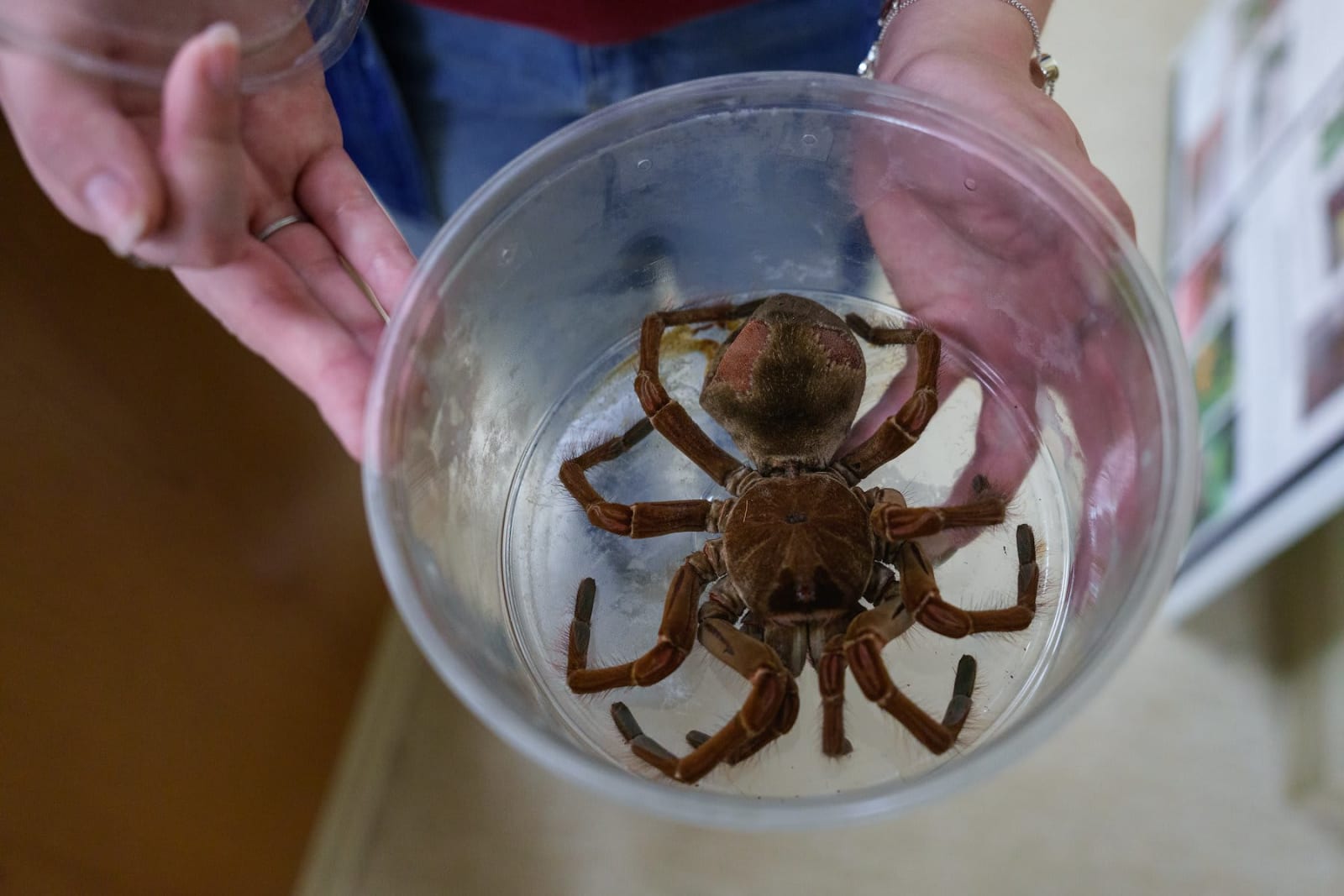
Graduate researcher Emily Johnson holds a preserved specimen of a Goliath birdeater tarantula, the largest spider in the world. Photo by Rebecca Particka / WVU
Community Bulletin
Fred W. Eberle Technical Center in Buckhannon is enrolling students in its commercial driver’s license (CDL) training program, an accelerated course that can be completed in five to seven weeks. Both daytime and limited evening sessions are available. Read more →
This story brought to you paywall-free, courtesy of the My Buckhannon team and our community partners