Community Bulletin
WVU Medicine St. Joseph's Hospital has launched Senior Life Solutions, a new outpatient behavioral health program supporting the emotional well-being of older adults in the Buckhannon area. Read more →
This story brought to you paywall-free, courtesy of the My Buckhannon team and our community partners
Somewhere, maybe right here in Buckhannon, there’s a high school girl who likes science, who craves adventure, who wants her work to matter — and who isn’t sure where she fits in.
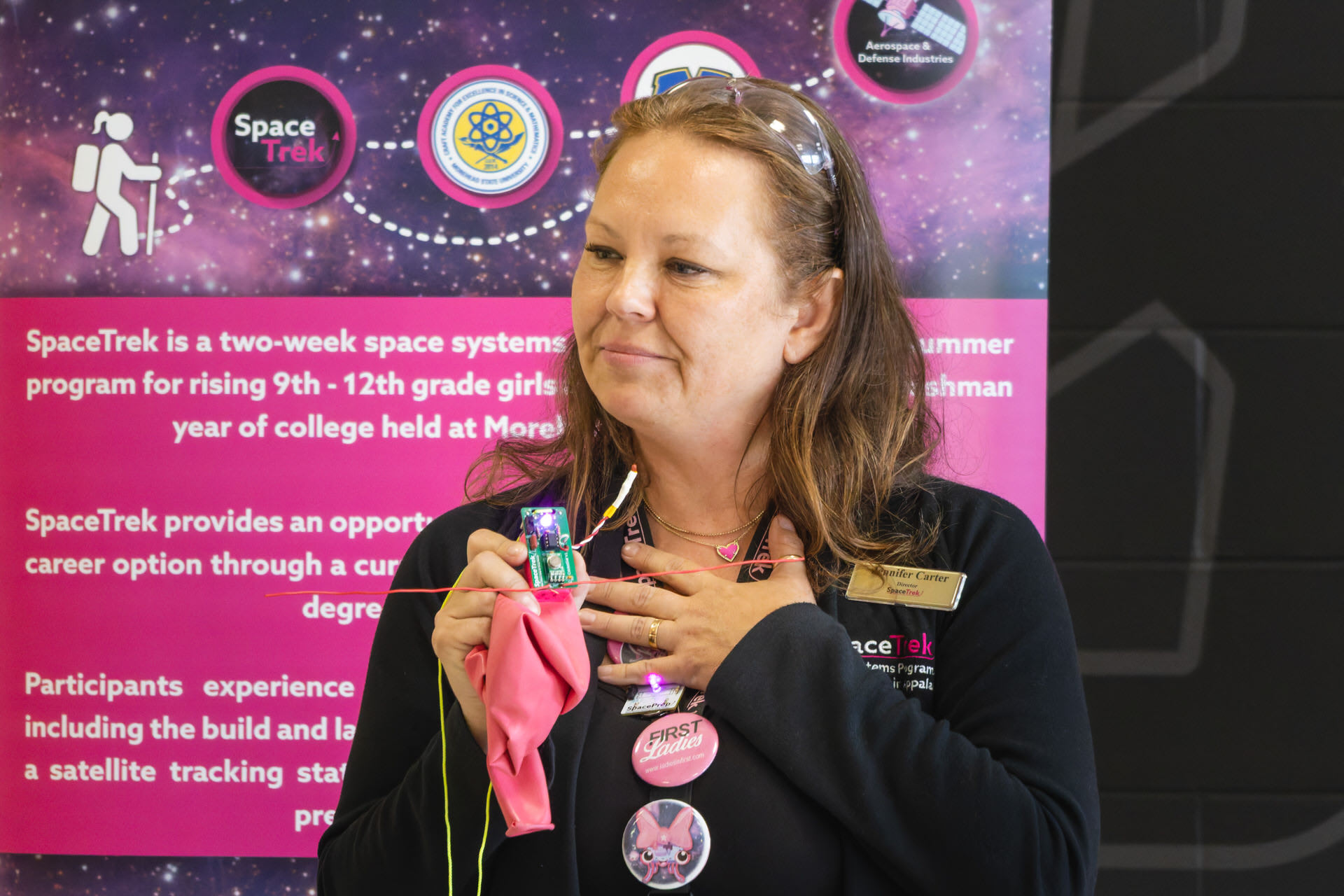
Jen Carter built a program for that girl. SpaceTrek, Carter says, comes down to two words: “I belong.”
This summer, for the first time, the two-week residential aerospace camp is coming to Buckhannon — and applications are open now. Better yet, for all 24 participants, it’s free.
Free, free. Tuition is free. Room and board are free. Food is free. All in, organizers say the experience is worth about $5,000.
And if a participant decides she loves the small-town West Virginia Wesleyan College campus enough to come back for college, there’s an additional $10,000 waiting. Graduates of the program who enroll at WVWC in a STEM major will receive a $2,500 scholarship every year for four years.

Both announcements were made at a press conference on Wednesday, April 28, marking a new partnership between West Virginia Wesleyan College, Fairmont-based TMC Technologies and Morehead State University’s Space Science Center, where SpaceTrek originated.
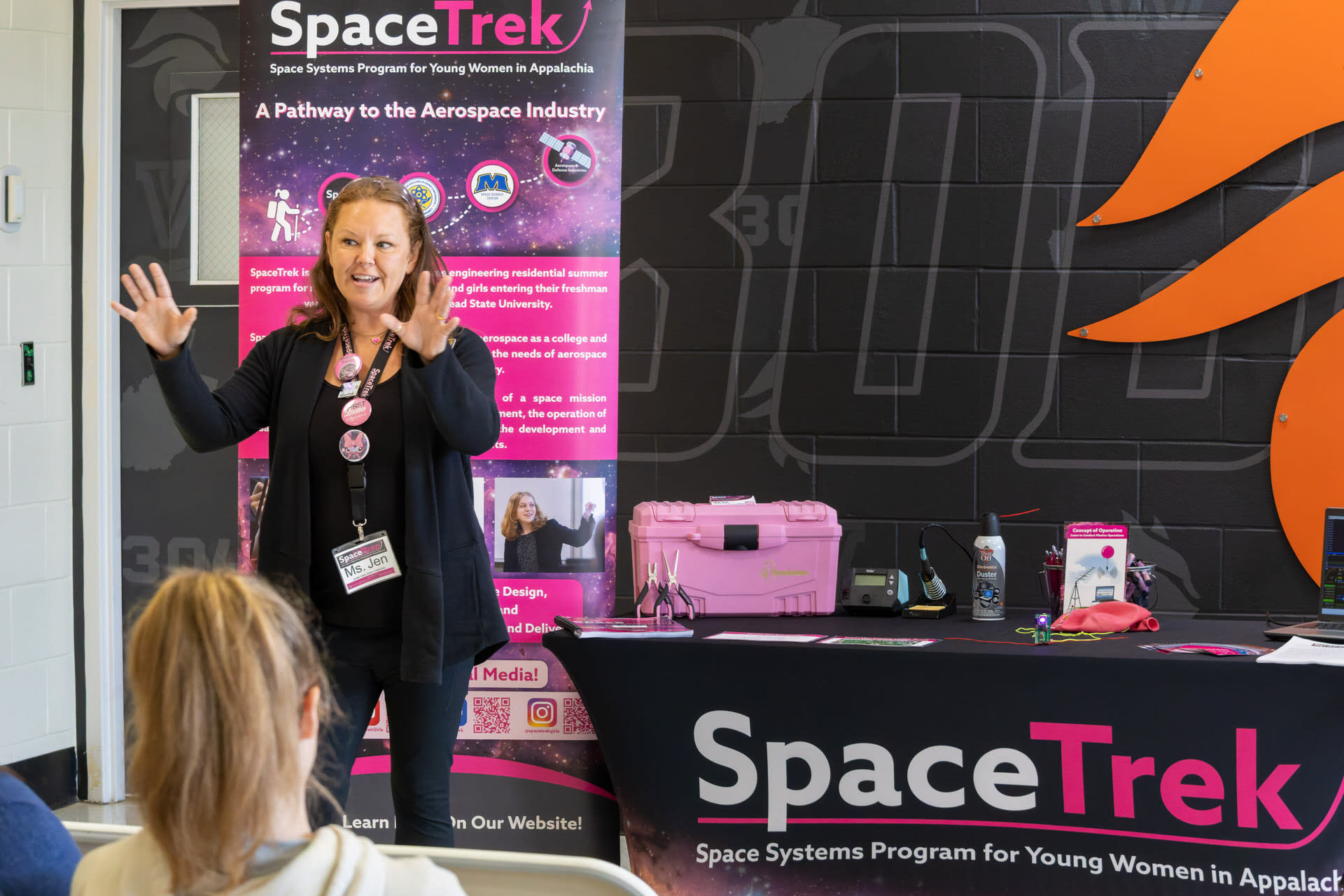
The 2026 session runs from July 12 to 25. The program accepts 24 students and is open to young women entering ninth through 12th grade or enrolling as first-year college students. The application deadline has been extended to June 13. Click here to apply.
Carter, the program’s founder and director, built SpaceTrek in 2012 around her own experience growing up in rural eastern Kentucky without a model for what a STEM career looked like. The program is rooted in space systems engineering, but Carter is quick to say it is more than a curriculum.
“It’s an empowerment program,” Carter said.
A camp that exposes students to college and career paths, she said, can spark interest. SpaceTrek aims for something more.

“It’s a whole other thing to empower them to believe, ‘This is for me. I belong,’” Carter said. “That’s what SpaceTrek does. SpaceTrek convinces young women, high school teenage girls, that space systems engineering and the aerospace industry are where they belong.”
Each cohort gets a mission: measure the temperature of the atmosphere up to five kilometers. To do it, the students have to build their own small satellites — with payload, power, communications and launch subsystems — then send them up on helium balloons and track them from a portable ground station they have assembled themselves.
“They understand every part and piece, and how they work together to perform a function,” Carter said. “Girls launch a helium-filled balloon. They then run to a portable satellite tracking station that they have assembled themselves, they operate it themselves, and they collect data. They’re collecting science data that belongs to them. This isn’t data from the internet. This isn’t data from a textbook. It’s their data. They’re the scientists of record.”
The hands-on moment, Carter said, is the whole point.
“This is an empowering moment when you do the things, when you get your hands on the things, when you say, ‘I built that, I did that,’” she said. “You know what that does for a young woman? That means I can do the things that people in the aerospace industry do. I belong. That’s the message that we want to give young people.”

For Carter, expanding the program to West Virginia is personal.
“I built this program in 2012 based upon what I needed as a teenage girl,” she said. “I didn’t have access to this kind of thing. I also didn’t really have friends who were into this kind of stuff… I grew up in very rural eastern Kentucky. I didn’t know people who worked in this industry. I didn’t know where they worked or what they did. I couldn’t see the college and career pathway. So I built SpaceTrek to lay out before young girls this college and career pathway.”
She emphasized Wesleyan’s embrace of the program.
“This is the first time since 2012 that an institution has embraced SpaceTrek the way West Virginia Wesleyan College has,” Carter said. “And on a personal level, the 15-year-old me would be so proud and happy.”
Her closing pitch was simple: tell every girl you know.

“A girl can’t take an opportunity she does not know exists,” Carter said. “Make it be known. Encourage girls to apply.”
TMC Technologies, an advanced engineering firm based in Fairmont, operates and manages the West Virginia program. President and Chief Executive Officer Jeff Edgell, a 1990 Wesleyan graduate, framed the partnership as a long-overdue handshake between industry and the classroom.
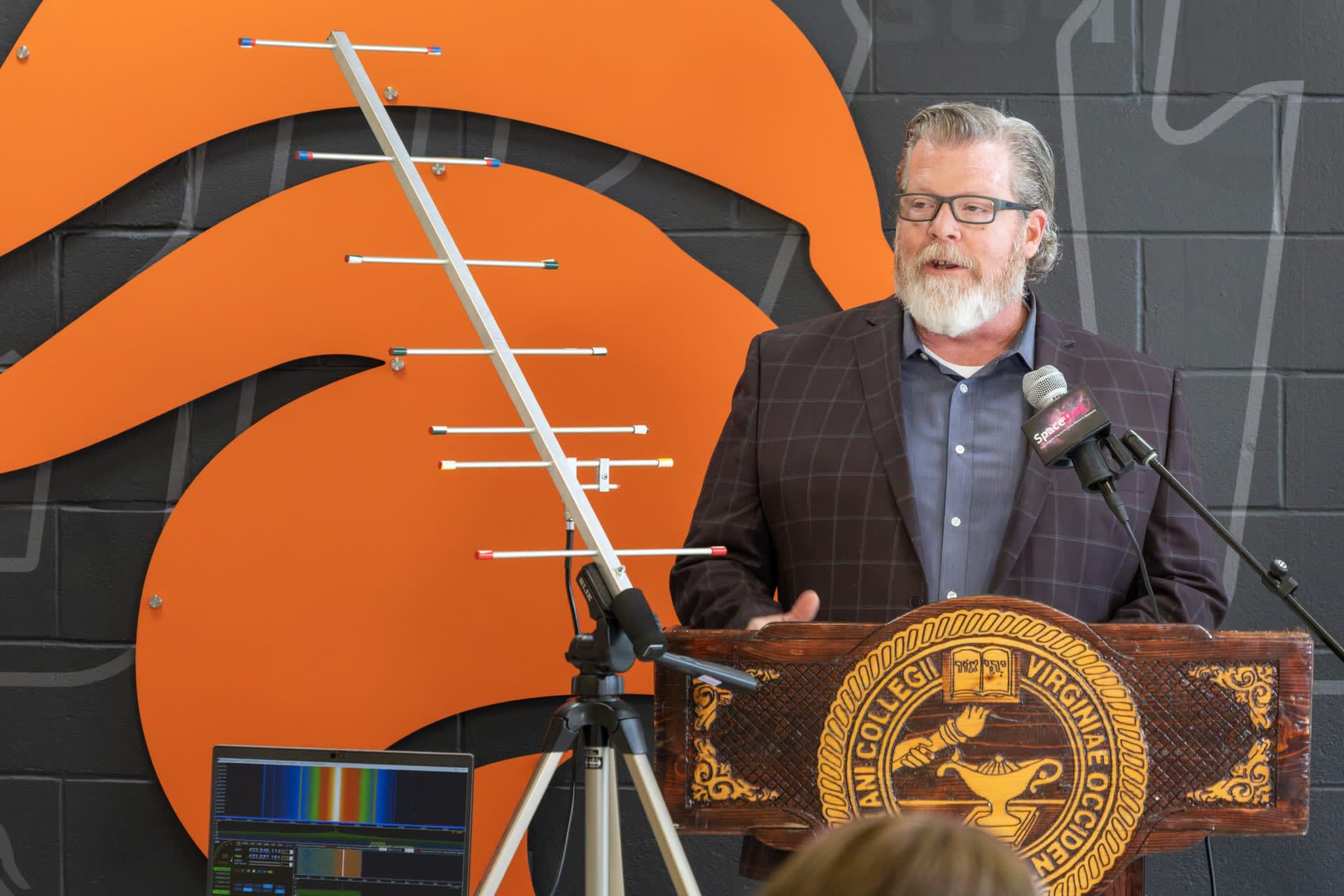
“I’ve always seen collaboration between academia and industry to be very, very important,” he said. “This partnership with Morehead and West Virginia Wesleyan is exciting. It will introduce opportunities to young ladies who might not otherwise understand what’s out there, what’s available to them, what they are capable of achieving.”
Edgell said women remain underrepresented in tech, citing a roughly 10-to-1 ratio of men to women in the meetings he attends.
“Amongst the best people I’ve ever worked with, the most creative people, are the women,” he said. “So if we can spark or ignite one single lady who wants to pursue something like this, it’s worth it.”
For Wesleyan, hosting SpaceTrek is also part of a longer recruitment plan to support STEM students. President James Moore said the college intends to follow participants from camp into freshman year, if they choose Wesleyan.
“Bringing SpaceTrek to this campus is a big win, not only for our college, but also for the endeavor of exposing young people, particularly young women, to STEM fields, and encouraging them to chase those kinds of career paths,” Moore said.
He didn’t dance around the gender history in science.
“I hope we’re long past the days where the notion that female members of society are somehow not equipped to be leading thinkers and doers and creators in STEM disciplines,” Moore said. “Women are capable of everything that men are capable of.”
The college president referenced his own family’s history.

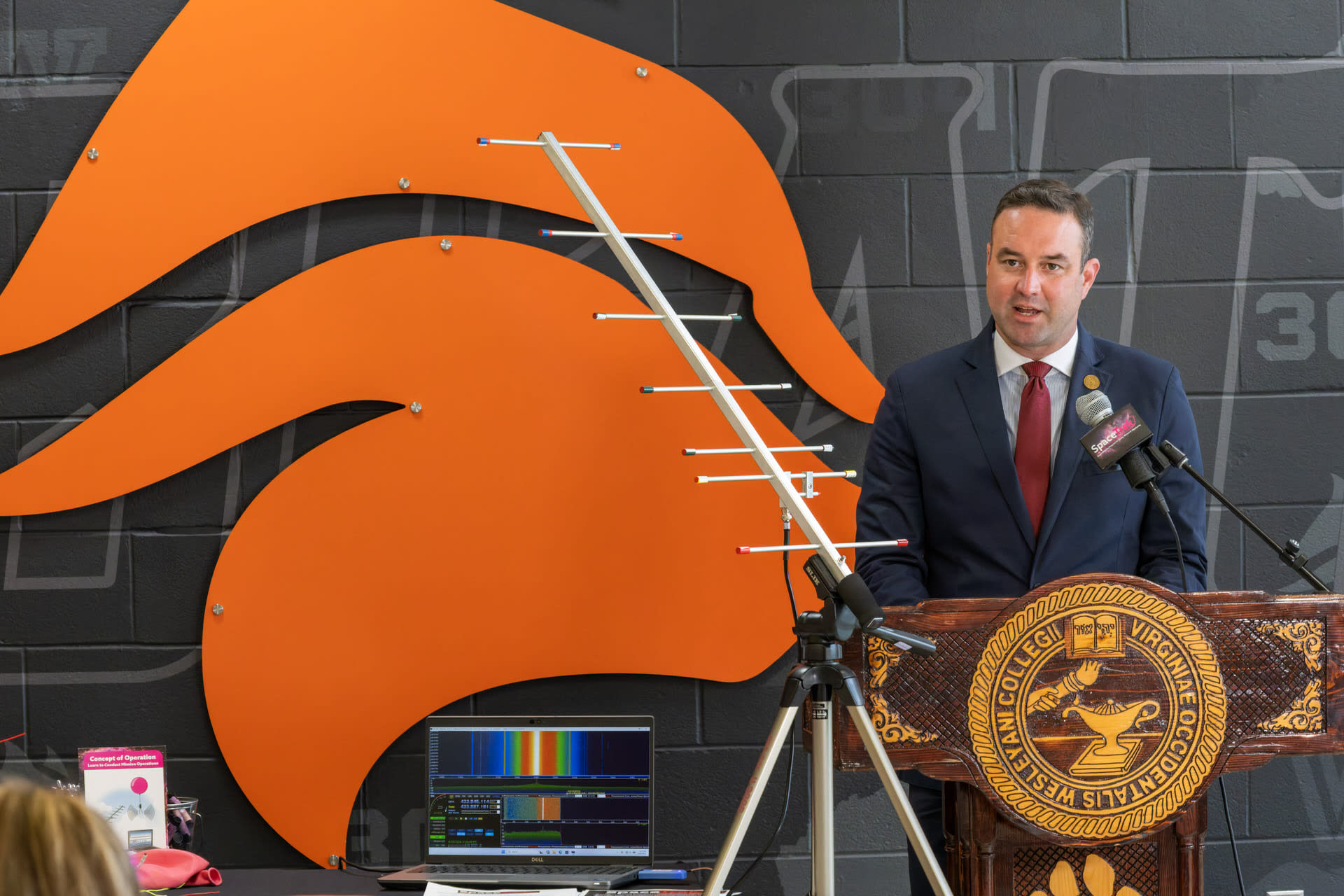
“My grandmother was a retired math teacher, and so I say this with some authority, hearing some of the stories that she shared from her time teaching in the 1940s, 50s and 60s,” Moore said. “We’re proud to do our part to continue to dispel those silly myths.”
Moore spoke about a long list of female STEM faculty whom SpaceTrek participants would work with at Wesleyan, including Dr. Joanna Webb, who has led the college’s side of the project. He framed Wesleyan as a long-term home for the students once camp ends.
“We want every one of these students to feel that their home while they’re on campus for these several weeks can extend to their college choice whenever they decide to join,” Moore said. “We will invest in them long term and make sure that they’ve got a bright future as they go out into the world to make a difference.”
The West Virginia SpaceTrek program is funded by a $3.98 million grant from the Appalachian Regional Commission, which has supported the program’s expansion as a multi-state initiative across Appalachia.
In materials announcing the partnership, the program’s leaders emphasized access and workforce impact.

“Cost should never be the reason a student misses an opportunity like this,” said Martina Wood, the newly named West Virginia SpaceTrek program manager, in a press release. “By making SpaceTrek completely free for qualified participants, we are opening the doors wider to students who are curious about space, engineering and technology, especially those who may not otherwise see themselves in these fields.”
Denise Lindsey, TMC’s chief strategist and senior vice president of federal civilian programs, said in a press release the program lines up with the kind of workforce the state is trying to build.
“SpaceTrek gives students authentic, real world experiences in space systems engineering and STEM, which is exactly the kind of hands-on workforce development our state needs to prepare the next generation of talent,” Lindsey said. “Seeing these students step into complex engineering challenges with confidence and curiosity is truly inspiring. I am incredibly proud that TMC Technologies is helping lead this effort and excited to be part of a program that is transforming futures.”
The 2026 session runs from July 12 to 25 on the Wesleyan campus, with capacity for 24 students. Applicants must be women entering ninth through 12th grade or enrolling as first-year college students, and the application deadline is June 13.
For program information, contact Wood at 304-612-6278 or martina.wood@tmctechnologies.com. More on the program is available at Morehead State University’s Space Science Center. Apply directly through the SpaceTrek application form.