All schools in Upshur County will close at 1 p.m. today. All B-UHS sporting events today are canceled.

WVU psychologists receive NIH award to seek cures for chronic traumatic brain injuries

WVU
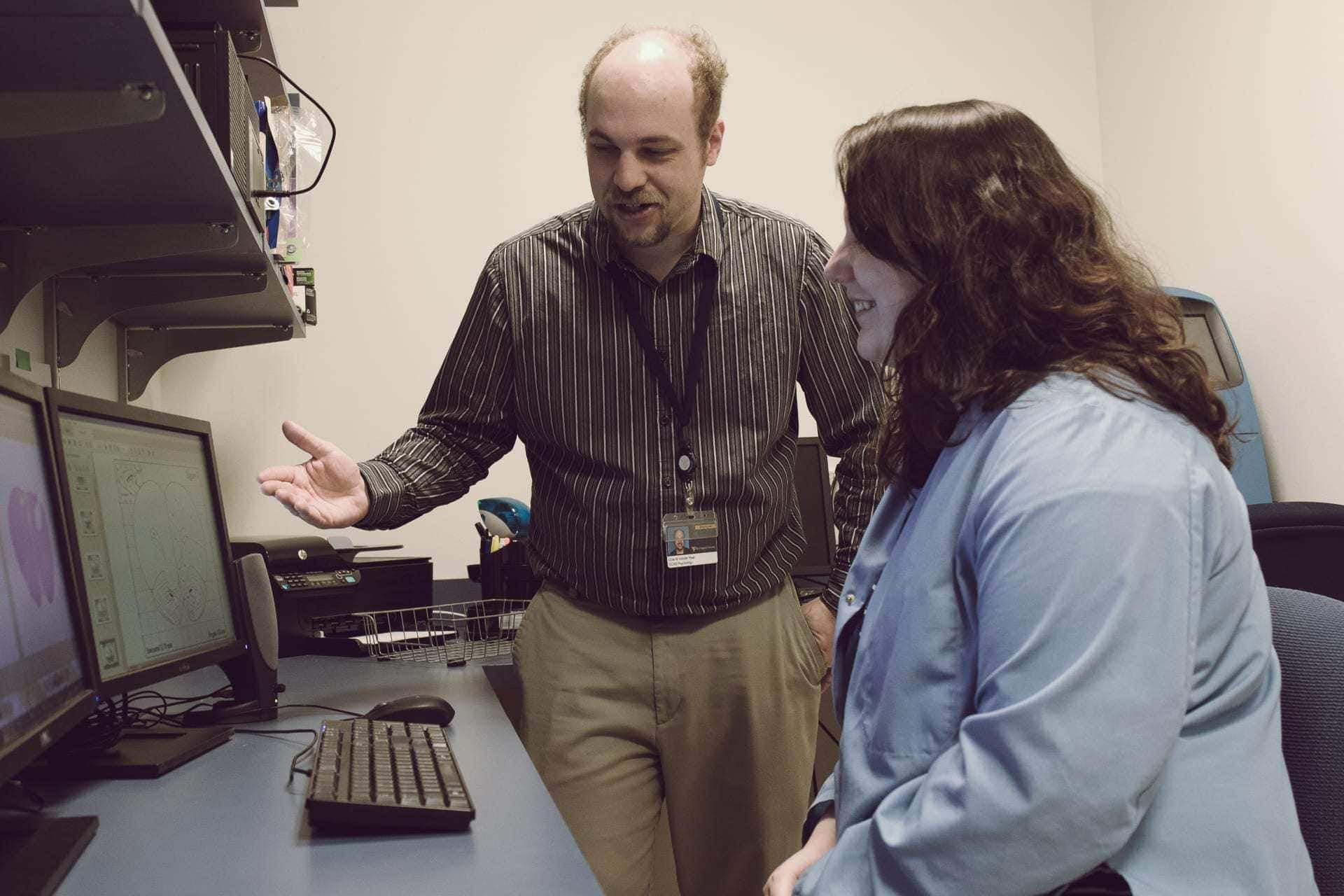
Cole Vonder Haar, an assistant professor of behavioral neuroscience in the WVU Department of Psychology, has received a five-year, $989,210 award from the National Institutes of Health to investigate potential treatments for psychiatric deficits arising from chronic TBI.

With more than 2.8 million occurring annually, traumatic brain injuries are one of the most pressing challenges facing the medical community.

Survivors of TBI often experience chronic psychiatric symptoms such as increased risky decision-making and impulsivity, yet there are not treatments available.

Researchers at West Virginia University are working to find solutions to help these patients improve their everyday quality of life.

Cole Vonder Haar, an assistant professor of behavioral neuroscience in the WVU Department of Psychology, has received a five-year, $989,210 award from the National Institutes of Health to investigate potential treatments for psychiatric deficits arising from chronic TBI.

While most research is focused on the immediate effects of TBI and preventing further damage, Vonder Haar and his team aspire to address long-term effects, including behavioral changes in decision-making, impulsivity and attention span.

“Even if we were to come up with a catch-all cure for acute TBI tomorrow, it would still leave many people dealing with these really long-term, chronic consequences,” Vonder Haar said. “What we are investigating is the potential to treat patients when their symptoms do not go away.”

Vonder Haar and his research team, including WVU Undergraduate Neuroscience Program Coordinator Kris Martens and University of Pittsburgh Associate Professor of Physical Medicine and Rehabilitation Amy Wagner, are pursuing three potential ways of addressing the chronic, long-term consequences of TBI.

The first approach will consider patients’ sensitivities to the environment, identifying environmental factors which could be engaged in rehabilitative treatment. The second is pharmacological, testing the effects of therapeutic drugs. The third is a neuromodulation approach, which involves indirect stimulation to the brain through the scalp.

These aims focus on dopamine, a neurotransmitter involved in learning, behavior and other complex cognitive processes. Because of reductions in dopamine in TBI patients, these changes may alter the effectiveness of rehabilitative efforts and therapeutic drugs.

“We hope to learn a lot about what that damage causes, how that translates to these functional impairments and how these treatments might be able to address them,” Vonder Haar said.

The five-year study will begin in June.

“It should surprise no one that an institution like WVU that assisted in the discovery of chronic traumatic encephalopathy would be able to recruit a scientist like Dr. Vonder Haar who studies the long-term effects of traumatic brain injuries,” said Kevin Larkin, chair of the Department of Psychology. “Based on the knowledge generated by this project, his team’s work will assist in the development of novel and effective approaches for rehabilitating behavioral changes experienced by patients with traumatic brain injuries.”


Share this story:

Local Businesses

RECENT Stories

Buckhannon Community Theatre honors Felicia Burger Westfall Johnston with 2025 Knorr Award

Felicia Burger Westfall Johnston, an early pioneer of Buckhannon Community Theatre who has starred in productions and served on the board of directors, received the 2025 Knorr Award.

Leadership Upshur dives into healthcare and public safety during December session

The December Leadership Upshur session offered participants a close look at the people, systems and teamwork that keep the community safe and healthy, with visits to Community Care of West Virginia, WVU Medicine St. Joseph’s Hospital and the Buckhannon Public Safety Complex.

Garnieta “Gay” Baxa

Garnieta “Gay” Baxa, 92, of Old Elkins Road died December 10, 2025; she is survived by husband Howard “Frank” Baxa, three children, seven grandchildren, 13 great-grandchildren and extended family, with services at Heavner and Cutright.

Basketball ‘Cats tumble to Point Park, 90-66

Point Park’s hot perimeter shooting and a dominant second half sank WVWC 90-66, with the Pioneers hitting 15 threes and capitalizing on turnovers while Wesleyan’s Isaiah Baker and Stephen Ovia fought inside.

Dandridge scores 30 as Wesleyan women down Point Park, 83-58

Freshman Kilah Dandridge scored 30 points as West Virginia Wesleyan shot 53% and dominated a 29‑point third quarter to beat Point Park 83-58, paced by Ana Young (18) and Emma Witt (15).

Webster Springs man arrested on strangulation charge after allegedly spitting on and choking victim

Police arrested a man on a felony strangulation charge after he allegedly admitted to spitting on, slapping and choking another person, according to a criminal complaint.

Volga man arrested after threatening officer at Upshur County Courthouse

A 59-year-old Volga man was arrested after allegedly threatening a deputy during processing at the Upshur County Courthouse following a DUI stop. He faces charges including DUI, possession of marijuana and retaliation against a public official; bail is $19,500.

WVWC’s first Master’s in Counseling students set to graduate

WVWC marks a milestone Friday as the first six graduates of its new Master of Arts in Counseling program cross the stage, bolstering West Virginia’s mental health workforce.

Robert “Bob” Linville Chaney

Robert “Bob” Linville Chaney, 90, a retired oil and gas supply worker, Air Force veteran, devoted husband, father, grandfather and great-grandfather from Fairmont and formerly of Buckhannon, died December 9, 2025.