When most people think of emergencies, they picture floods, fires, or severe storms. But behind every effective response is months – sometimes, even years – of careful planning, coordination, and collaboration. That’s where emergency management comes in.
August 2025 is National Emergency Management Awareness Month. Spearheaded by the International Association of Emergency Managers, this month-long campaign aims to raise awareness about the emergency management profession and the vital role emergency managers play in keeping our local communities safe.
In Upshur County, that mission is led by Steve Wykoff, Director of the Department of Homeland Security and Emergency Management. Wykoff said emergency management is much more than disaster response; it’s also about preparation and long-term recovery.
“Emergency management is basically ensuring that the community is ready for any type of disaster,” Wykoff said. “When people think of emergencies, they usually think of weather — flooding, blizzards — but it’s so much more than that.”

Wykoff and his team help plan for everything from structure fires and chemical spills to large community gatherings, such as the West Virginia Strawberry Festival or the 2023 WAMSB World Championships, an international band event that required extensive coordination across local, state, and even federal levels.
“That event took two-and-a-half years of planning and resulted in a 250-page safety plan,” Wykoff said. “We worked with the State Department, the CDC, and international consulates to ensure we were prepared for anything.”
Wykoff said Upshur County uses an “all-hazards” approach to planning, meaning that the vast majority of protocols are the same across most emergency scenarios. That consistency helps ensure that every agency and volunteer involved knows what to do, no matter the incident.
“About 80 to 90 percent of our response plan stays the same, whether it’s a flood, a hazmat spill, or a protest,” he said. “It keeps things clear and consistent, especially during high-stress situations.”

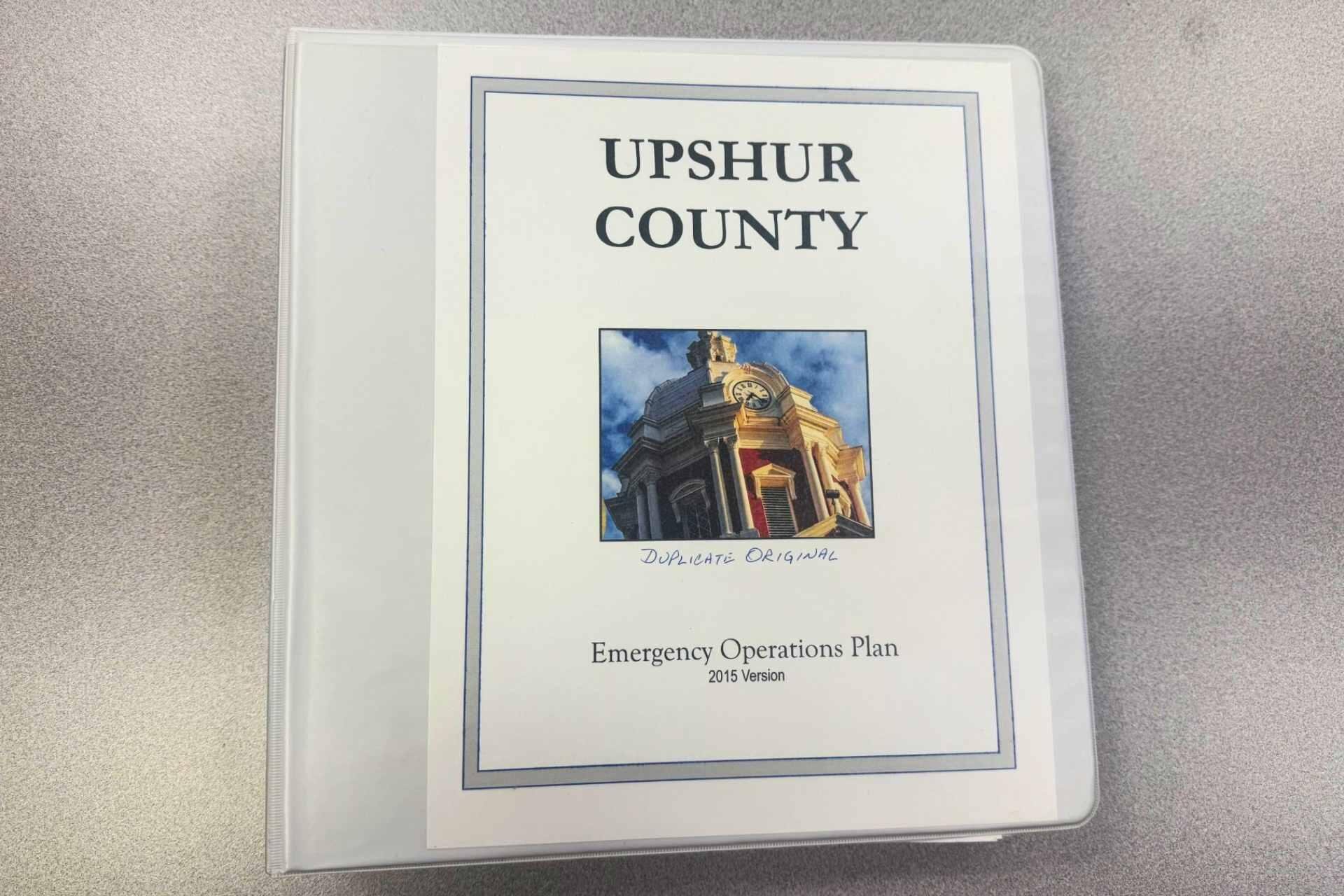
In addition to crisis response, Wykoff coordinates with police, fire, EMS, public health, the 911 Center, and local governments to build long-term plans and mutual aid agreements with surrounding counties.
“Those relationships are critical,” he said.
“A lot of this work happens before disaster ever strikes,” he said. “It’s much easier to call for help from someone you already know and trust than to start from scratch in the middle of a crisis.”
As Upshur County observes National Emergency Management Awareness Month, Wykoff hopes more residents take a moment to consider the importance of preparedness and to recognize the people behind the scenes who help keep the community safe.

“Emergency management often goes unnoticed until something goes wrong,” Wykoff said. “But if we’re doing our jobs well, you might never even know we were there. That’s kind of the goal.”